

 Vetted & approved carers
 DBS checked & insured

You know your mum needs some help, but you are not quite sure what to ask for. Can a carer prepare lunch as well as help her get dressed? Could they accompany her to an appointment? And what happens if she needs support with medication?
These are sensible questions, especially when you are arranging care for the first time.
A home carer helps someone manage everyday life at home, with support agreed around their needs, preferences and abilities. This may include personal care, preparing meals, companionship and help getting out.
The exact duties depend on the person receiving care, the carer’s skills and the arrangement you put in place. Understanding those boundaries helps you choose suitable support and allows enough time for each visit.
What a home carer is, and is not
A home carer is someone who is paid to provide practical or personal support in a person’s own home. You may also hear terms such as carer, Care Professional, care worker, visiting carer or domiciliary carer.
This is different from a family carer, such as a partner, son or daughter who provides unpaid support. Bringing in a paid carer does not mean the family has to step away. Often, the two work alongside each other, with the carer taking on particular parts of the routine.
A registered nurse has a different role again and provides nursing care within their professional training. Some people need both a home carer and support from healthcare professionals, depending on their needs.
These roles can work alongside one another. For example, a home carer might help your relative wash and prepare breakfast, while a community nurse visits separately for nursing care.
What a carer can help with
What a carer does will look slightly different for every person. The aim is not to take over everything, but to provide help where it is needed while allowing your loved one to keep doing the things they can still manage and enjoy independently.
Personal care
Personal care may include help with washing, bathing, dressing, using the toilet and continence needs.
The way this support is provided matters. Your relative may prefer a particular morning routine, want privacy while completing some tasks or feel more comfortable with a carer of a particular gender.
Discuss these preferences before care starts. Support should respect dignity, consent and the person’s usual ways of doing things.
Find out more about personal care at home.
Medication support
Medication support can mean different things. Reminding someone to take their medicine is different from administering it, where the care worker takes responsibility for giving the agreed medicine.
The Care Quality Commission states that care workers supporting people with medicines must be appropriately trained and competent. Some clinical medication tasks require specific delegation from a registered nurse.
Explain precisely what help your relative needs, and confirm the permitted support with Curam before booking. Agree who is responsible, what instructions and records are required, and who should be contacted if a dose is missed or refused.
Do not assume that every carer can provide the same medication support.
Moving around safely
A carer may be able to help your loved one get out of bed, stand from a chair, walk around the home or transfer safely from one place to another, depending on the support needed and the carer’s experience.
When posting a care job or speaking to potential carers, be as specific as you can about the kind of mobility support your loved one needs. “Needs help with mobility” can mean very different things. Mum may only need someone beside her while walking, for example, while Dad may need more hands-on support getting in and out of a chair.
If equipment, hoisting or help from more than one person is needed, make sure this is understood before care starts so the right support can be arranged safely.
If you are looking for advice after an actual fall, read what to do when an elderly person has a fall at home.
Meals, housework and shopping
A visit may include preparing meals and drinks, helping with shopping or collecting a prescription. The NHS lists these among the everyday tasks paid carers can help with.
Light household tasks can also form part of an agreed arrangement, such as washing up after lunch, putting on laundry or changing bed linen.
Be clear about priorities and allow enough time. A short visit focused on personal care may leave little room for cooking and housework too.
Companionship and getting out
Care is not only about practical tasks. Sometimes having someone to talk to, share a cup of tea with or go out to the shops with can make just as much difference to someone’s day.
Your loved one might enjoy a walk, a trip to the shops, visiting a favourite café or simply having company while doing a crossword or watching television. Wherever possible, let them decide what they would enjoy rather than filling their time for them.
Regular companionship can also help someone stay connected to the routines, hobbies and places that matter to them.
Read our guide to when to consider companionship care.
Appointments and errands
Depending on the arrangement, a carer may accompany someone to appointments, help with shopping or collect prescriptions.
Discuss travel in advance. If driving is involved, confirm that the carer can provide transport and has the appropriate insurance. Agree any travel time and expenses before the visit.
Also clarify what your relative wants the carer to do at an appointment: accompany them, help them find the right department or, with permission, make a note of information to share afterwards.
What carers do not usually do
A home carer’s role has limits. It should not be assumed to include diagnosing illness, prescribing medicines or changing a treatment plan.
Clinical tasks, such as injections or complex wound care, need appropriate professional assessment and arrangements. Some healthcare tasks can be delegated to suitably trained, competent care workers, so it would also be inaccurate to say that all carers are prohibited from every clinical task.
For a particular task, ask Curam to confirm what is permitted within the service and what qualifications, training or oversight are required.
Heavy cleaning, repairs and extensive gardening should also be discussed separately rather than assumed to be part of a care visit.
The practical rule is simple: agree the responsibilities before care starts, and review them if needs change.
How tasks differ by type of care
The person’s needs guide the tasks; the type of care determines when and how that support is available.
Hourly care provides visits at agreed times. It may suit help with getting ready in the morning, meals or the evening routine.
Overnight care provides support during the night. A sleeping night involves occasional agreed assistance, while a waking night carer stays awake to provide frequent help or supervision.
Live-in care means a carer lives in the home and provides support around an agreed routine. They still need working hours, breaks and adequate sleep; frequent overnight needs may require additional cover.
Respite care provides replacement support while a usual carer takes a break. It might involve hourly visits, overnight help or a longer stay.
Specialist support
Some people need a carer with experience relevant to a particular condition or situation.
Curam’s services include:
- Dementia care: support shaped around communication, familiar routines and changing needs.
- Post-operative care: practical help during recovery, alongside the healthcare team’s instructions.
- Palliative care: personal and practical support alongside the professionals involved in the person’s care.
- Autism care: support that takes account of individual communication, routines and preferences.
Ask about experience that matches your relative’s needs. A condition listed on a profile is a starting point for a conversation about the support required.
Agreeing tasks with your carer
With Curam, you choose the Care Professional you want to care for you and discuss the arrangement directly through our app. Before the first shift, the Service Agreement should clearly set out the care being provided, when it will take place and the rate you have agreed.
Describe the visit in enough detail to avoid misunderstandings. For example:
“Arrive at 8am, help Dad wash and dress, prepare breakfast and leave a drink within reach. He likes to choose his own clothes and can wash his face himself.”
That tells a Care Professional much more than simply writing “morning care”.
You can also agree to use care notes in the Curam app. With the appropriate permission, authorised family members can access these updates. Confirm what should be recorded and how urgent concerns will be communicated; app notes should not replace a direct call when immediate attention is needed.
Care Professionals joining Curam go through a thorough approval process before they can offer care through the platform. This includes identity and right-to-work checks, two UK work references and an Enhanced DBS, PVG or AccessNI check where applicable. Curam also requires an online approval meeting.
Before choosing someone, families can review profiles and qualifications, message suitable Care Professionals directly and use CuramMeet, Curam’s in-app audio and video call feature, to chat before booking. Families can also contact a Care Professional’s referees for additional reassurance.
Wherever possible, involve the person receiving care in choosing who supports them and how they would like the arrangement to work.
Questions to ask before you hire a carer
A useful conversation covers both experience and everyday expectations:
- Have you supported someone with similar needs? Ask for relevant examples.
- What training do you have for the agreed tasks? Discuss any equipment or specialist support.
- Can you regularly cover the times we need? Include weekends and evenings where relevant.
- What would happen if you were unavailable? Clarify how cover would be arranged.
- How would you report a change or concern? Agree routine updates and urgent contact arrangements.
- Can we contact your referees? Follow up before making your decision.
- What is included in the rate? Confirm fees, expenses and the full cost.
Give the Care Professional time to ask questions as well. They need enough information about the care required to decide whether the arrangement is suitable for them too.
Frequently Asked Questions
What does a home carer do on a typical visit?
It depends on the agreed care plan. A morning visit might include helping someone wash and dress, preparing breakfast and checking they have what they need nearby. Another visit might focus on lunch, companionship or going to an appointment. Allow enough time for the tasks agreed.
Can a carer give medication?
Some care workers can administer medicines when appropriately trained and competent, with the necessary instructions, records and arrangements in place. Others may provide reminders only. Confirm the individual carer’s responsibilities and Curam’s requirements before booking medication support.
What is the difference between a carer and a nurse?
A home carer usually supports daily living, personal care and companionship. A registered nurse provides nursing assessment and care within their professional role. Some people need both, with clear responsibilities and communication between those involved.
Can a carer help with housework?
Yes, light housework can be included where agreed. This might mean washing up, laundry or changing bedding alongside other support. Confirm the tasks and visit length in advance, rather than assuming all household work is included.
Find the right carer through Curam
Arranging care for the first time can feel like a lot to work out, but you do not need to have every detail decided before you begin. Start with the parts of everyday life that have become harder and the things your loved one would like to keep doing independently.
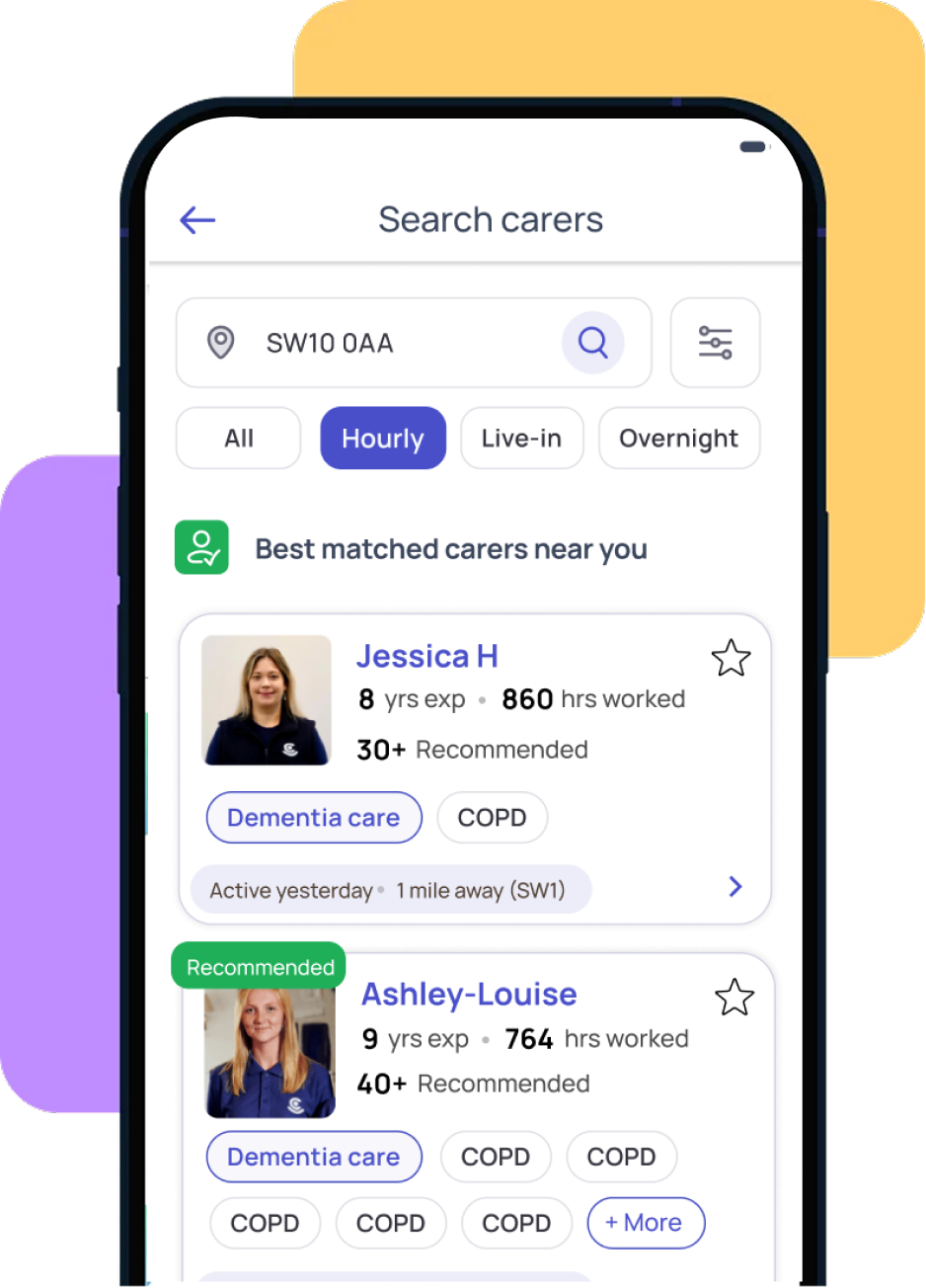
With Curam, you can search by postcode, compare Care Professional profiles, availability and rates, or post your care needs and hear directly from available carers. You can then talk directly before choosing the person who feels right for your family.
Find a Care Professional through Curam and start exploring the support available near you.