




 Vetted & approved carers
 DBS checked & insured
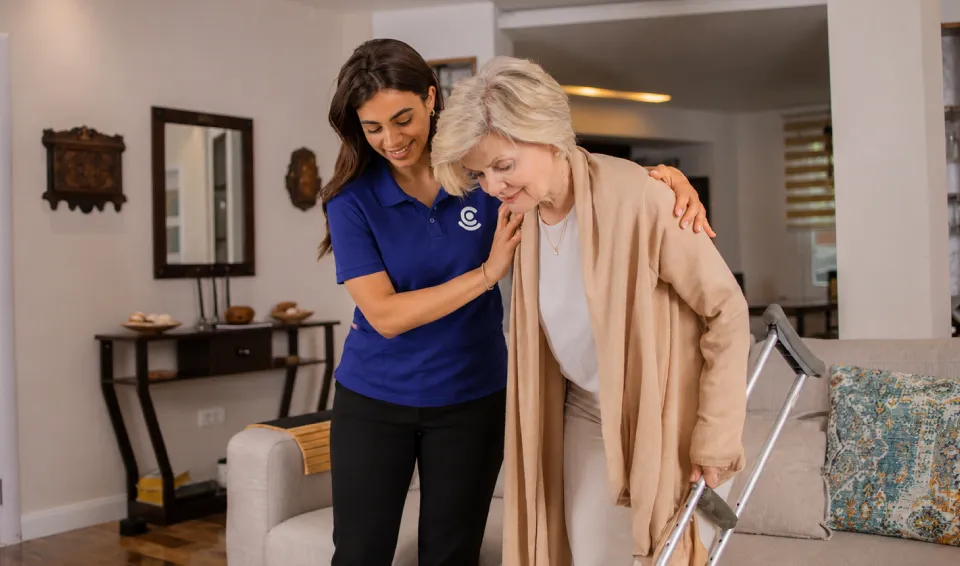
A fall can be frightening for an older person and for the family member who finds them. Even if they seem all right at first, it is natural to worry about whether they are injured, whether they can safely be left alone and what happens next.
The first priority is to make sure they are safe and get medical help if needed. Once any immediate medical concerns have been dealt with, you may also need to think about extra support at home — particularly if their mobility or confidence has changed after the fall.
Once any urgent medical needs have been addressed. Families can search for vetted Care Professionals 24/7, compare local profiles, message carers directly and use CuramMeet, our in-app audio and video call feature, before booking. Same-day care may be possible where a suitable carer is available nearby.
Important: This article provides general information and is not a substitute for medical advice. If you believe someone is seriously injured or it is a life-threatening emergency, call 999.
In the first few minutes: stay calm and check for injury
Try not to rush the person back onto their feet.
Stay with them, reassure them and give them a moment to recover from the shock. Ask whether they have pain and look for obvious signs of injury such as bleeding, swelling or an unusual position of an arm or leg.
If they appear to have injured themselves seriously, do not try to lift or move them unless emergency services tell you to do so.
When to call 999 straight away
Call 999 if the situation appears to be an emergency. NHS guidance advises calling 999 following a fall if the person may have injured their head, back, neck or hip, or if they cannot get up.
You should also seek emergency help if there are serious symptoms such as:
- Loss of consciousness or difficulty staying awake
- Severe bleeding
- A seizure
- New weakness or numbness
- Problems speaking, understanding, walking or balancing
- Signs that may suggest a stroke
- Severe or rapidly worsening symptoms
If the person has hit their head and takes medication that thins the blood, such as an anticoagulant, seek urgent medical advice even if the injury initially appears minor.
Do not try to decide for yourself whether a potentially serious injury is safe to ignore.
When to call 111 or the GP
Not every fall requires an ambulance, but that does not mean it should simply be forgotten.
If there is no obvious emergency but the person may be injured, is in pain, feels unwell or you are unsure what to do, contact NHS 111 for advice.
It is also worth speaking to their GP following a fall, particularly if they have fallen more than once, their balance has changed or you are worried about their mobility.
A fall can sometimes be the first sign that an older person needs additional support.
Getting care in place fast so they are not left alone
Once any immediate medical needs have been dealt with, families often face another question:
Is it safe for them to be at home on their own?
Someone who was managing independently yesterday may feel very different after a fall. They may be sore, shaken or less confident walking to the bathroom, preparing food or getting in and out of bed.
Family members cannot always stay indefinitely, particularly when a fall happens unexpectedly. This is where short-notice home care can help.
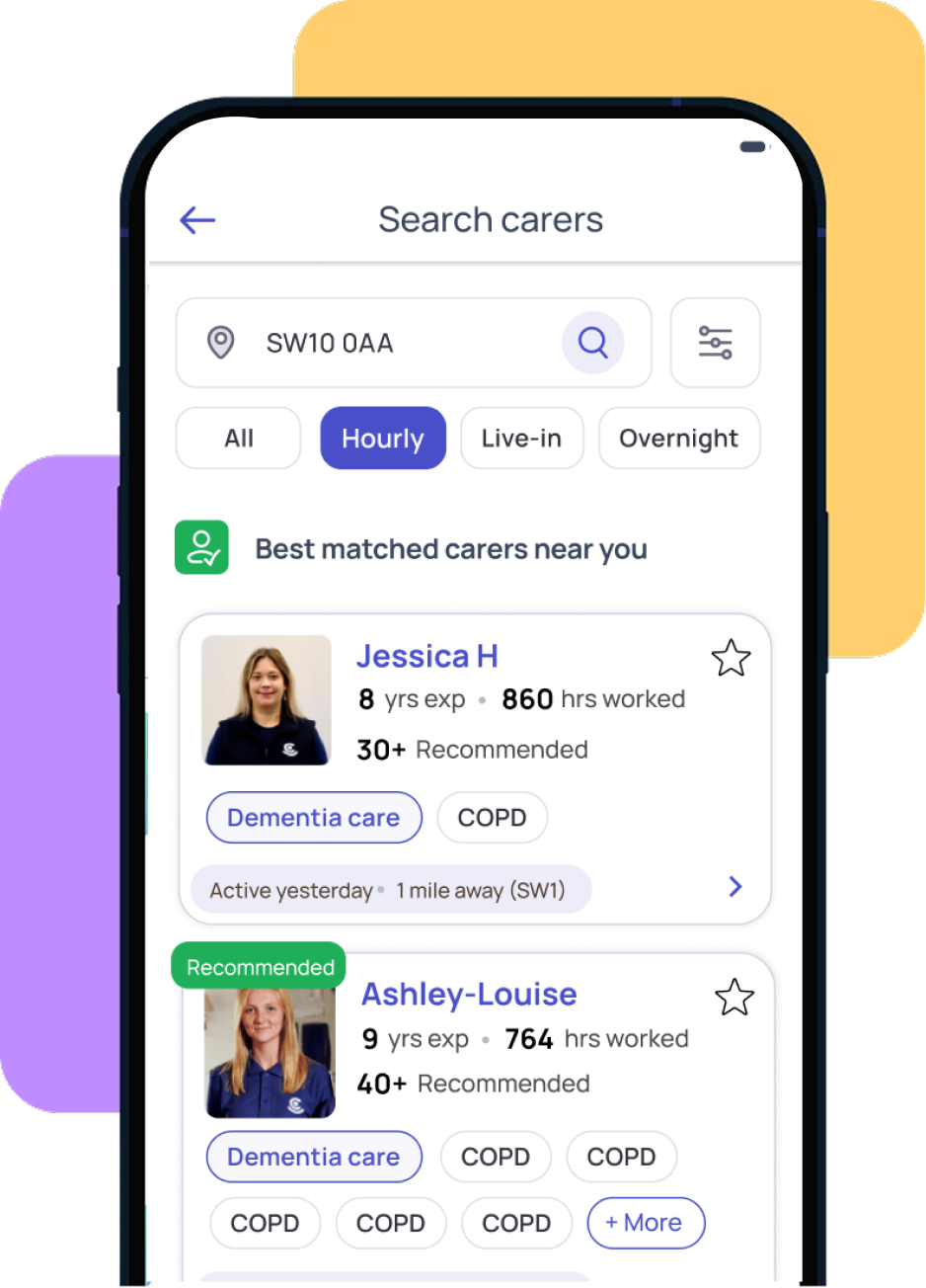
Through Curam, families can search for vetted Care Professionals near the person who needs support, compare experience, availability, rates and reviews, and contact suitable carers directly. The platform is available 24/7, so you can begin looking immediately rather than waiting for normal office hours. Depending on local availability and the support required, same-day or short-notice care may be possible.
How quickly Curam can arrange a carer
You do not necessarily have to wait weeks to put care in place.
With Curam, you can:
- Share what support is needed and where care is required.
- Browse available carers and review their experience, skills, rates and previous client feedback.
- Message suitable carers or use CuramMeet, Curam’s in-app audio and video call feature, to speak before booking.
- Agree the care required and a start date directly.
Before they can offer care through the platform, Care Professionals go through Curam’s vetting process. This includes bank-level biometric ID checks, right-to-work checks, an appropriate DBS, PVG or AccessNI check, and a verification call with the Curam team. Families can then review profiles, experience and previous client feedback before deciding who they want to contact.
That can be particularly useful when a fall suddenly changes what someone can safely manage at home.
Urgent and same-day cover, day or night
Falls do not conveniently happen during working hours. An elderly parent may fall late in the evening, over a weekend or just before a relative who has been staying with them needs to leave.
Curam allows families to search for care at any time rather than having to wait for an office to reopen.
Depending on the person's needs and local carer availability, you might arrange:
- A few hours of support during the day
- Morning and evening visits
- Temporary care while they recover
- Sleeping or waking overnight care
- Live-in care where more continuous support is needed
Explore hourly care or overnight care if you are unsure how much support may be appropriate.
How to help someone up safely, or why you sometimes should not
The instinct after seeing someone on the floor is often to pull them straight up. That is not always the safest thing to do. If they are in significant pain, cannot move normally, appear confused or you suspect an injury to their head, back, neck or hip, do not try to lift them yourself. Keep them comfortable and get medical help.
If they appear uninjured, feel able to get up and have not been advised otherwise by a healthcare professional, encourage them to take their time.
NHS guidance suggests moving slowly onto their side, then onto their hands and knees, before using something stable for support and gradually standing. Once upright, they should sit somewhere safe and rest.
Never drag someone to their feet or try to take their full body weight yourself. If they cannot get up, or you are unsure whether it is safe for them to try, call for medical assistance.
In the hours after a fall
Getting back onto their feet does not necessarily mean everything is back to normal. Some problems become more noticeable later. The person may also be less steady because they are sore, tired or nervous about falling again.
Where possible, avoid leaving them alone immediately after a significant fall until you are comfortable that they are safe and any necessary medical advice has been obtained.
Think about the everyday things they will need to manage over the next few hours:
- Can they get safely to the toilet?
- Can they get in and out of their chair or bed?
- Are they able to prepare food and drinks?
- Can they use the stairs safely?
- Do they normally need medication prompts?
- Is somebody available if they become unwell?
If the answer to several of those questions is no, even temporary home care can make the immediate aftermath much easier for everyone.
Watching for signs of a delayed injury
Continue paying attention to how the person feels after the fall.
Seek medical advice if they develop new or worsening symptoms such as pain, swelling, dizziness, confusion, unusual drowsiness, vomiting or difficulty moving.
Head injuries need particular care because symptoms are not always obvious immediately. If symptoms become severe or the person's condition deteriorates rapidly, call 999.
What a carer can help with after a fall
A carer does not replace a doctor, nurse or physiotherapist, and they should not be expected to diagnose an injury.
What they can provide is practical, one-to-one support while someone regains confidence and gets back into their normal routine.
Depending on the person's care needs, this may include:
- Support with washing, dressing and personal care
- Help moving safely around the home
- Assistance getting ready for bed or starting the day
- Preparing meals and drinks
- Medication prompts where appropriate
- Light household tasks
- Companionship and reassurance
- Accompanying the person to appointments
- Noticing changes in their usual routine or well-being and letting the family know where appropriate.
Sometimes the biggest benefit is simply having someone there.
After a frightening fall, an older person may avoid moving around because they are scared it will happen again. Having the same carer where possible can help someone rebuild confidence while helping them continue with as much of their normal routine and independence as possible.
Care does not necessarily have to become permanent either. Some families arrange extra support for a short period and review it as their relative recovers.
Why falls happen, and reducing the risk of another
There is rarely one explanation that applies to every older person who falls. Factors can include reduced strength or balance, mobility difficulties, eyesight or hearing problems, certain medicines and hazards around the home.
If your elderly parent keeps falling, it can be worrying and difficult to know what to do next. Start by speaking to their GP, as they can assess whether anything may be affecting their balance, mobility, or general health, including medication. They may also suggest further checks or support to help reduce the risk of another fall.
A previous fall can also signal that their risk of falling again needs to be reviewed, especially if they have had repeated falls or changes in balance, mobility, or confidence.
There are also practical changes that can make the home easier to move around.
Consider:
- Removing clutter and trailing cables from walkways
- Dealing with loose rugs or other trip hazards
- Improving lighting, particularly around stairs and hallways
- Using well-fitting footwear with good grip
- Keeping commonly used items within easy reach
- Considering grab rails or other appropriate home adaptations
- Ensuring prescribed walking aids are accessible and being used correctly
- Arranging regular eye and hearing checks
The NHS also recommends activities that improve strength and balance for older adults where appropriate, as well as discussing medicines with a GP or pharmacist if they may be affecting balance.
Do not make changes to prescribed medication without professional advice.
How daytime and overnight support helps
For some people, the main difficulty is at a particular point in the day.
They may be steady once they are up but need help getting out of bed in the morning. Another person may manage independently for much of the day but feel less confident getting up at night.
Care can be arranged around those times rather than taking away someone's independence. Hourly care can provide targeted support for things such as getting washed and dressed, meals or evening routines. If night-time is the concern, overnight care can provide reassurance and practical help with mobility, toileting and other agreed needs. Where someone now requires much more regular help throughout the day, live-in care may provide greater continuity.
The right arrangement depends on the individual rather than the fact that they have had a fall.
Frequently Asked Questions
Should I take my parent to A&E after a fall?
Not every fall requires a trip to A&E. However, call 999 if you believe there is a serious or life-threatening emergency. NHS guidance specifically advises calling 999 where a person who has fallen may have injured their head, back, neck or hip, or cannot get up.
If they may be injured, are in pain or feel unwell but it does not appear to be an emergency, contact NHS 111 for advice.
If they have hit their head while taking blood-thinning medication, seek urgent medical advice even if they initially appear well.
How soon can a carer start after a fall?
How quickly care can start depends on location, the support needed and which Care Professionals are available nearby. Curam can be searched 24/7, and same-day care may be possible where a suitable carer is available. In some urgent situations, support can be arranged within a few hours.
Can a carer help prevent future falls?
A carer cannot guarantee that somebody will not fall again, but they can help reduce avoidable risks.
For example, they may provide support when walking around the home, help with morning or evening routines, prepare meals and drinks, provide medication prompts and make sure the person does not have to rush through activities they are finding difficult.
If falls are recurring, they should also be discussed with a GP or appropriate healthcare professional so the underlying risks can be assessed.
Find urgent care after a fall through Curam
A fall can change a family's plans in a matter of minutes. Your parent may not need hospital care, but that does not necessarily mean they are ready to spend the next day or night alone. Putting a little extra help in place can give them time to recover while giving the family reassurance that somebody is there when needed.
Curam makes it possible to search for vetted Care Professionals nearby, compare profiles, message suitable carers directly and use CuramMeet, our in-app audio and video call feature, before booking.
Support can be arranged around what your loved one needs after the fall, whether that is a few hours of help, regular visits while they recover, overnight care or longer-term support.
The platform is available 24/7, including evenings and weekends, so if a fall suddenly changes what Mum or Dad can safely manage at home, you can start looking for support straight away.
Need care quickly after a fall?
Find a vetted carer near you and see who is available to help.