

 Vetted & approved carers
 DBS checked & insured

For many families, a relative or close friend providing care is what makes it possible for someone to remain safe and comfortable at home. So, when that carer becomes ill, it can feel like everything suddenly becomes uncertain.
If you’re the person providing care and you become unwell, you may be worried about who will support your loved one. If your family member's usual carer is unavailable, you may need to find replacement care quickly.
The most important thing is to focus on what needs to happen next. There are several options available, from asking family for temporary help to arranging professional care at short notice.
Curam helps families find trusted support quickly by connecting them with over 10,000 vetted carers. Whether you need emergency replacement care or want to create a backup plan for the future, having options available can make a difficult situation easier to manage.
Why this situation is more common than people expect
Many family carers provide regular support for months or even years, often without a formal backup plan.
Because caring becomes part of everyday life, families can sometimes overlook what would happen if the main carer became unavailable.
A family carer may suddenly be unable to provide support because of:
- Their own illness or injury
- A hospital admission
- Exhaustion or burnout
- A change in personal circumstances
- An unexpected emergency
When this happens, the person receiving care may still need help with everyday activities such as washing, dressing, meals, medication and companionship. Having a plan for replacement care can help families respond more quickly and avoid unnecessary stress.
The immediate steps to take
If a family carer becomes ill, the first priority is making sure the person receiving care is safe. Start by understanding what support is needed right now and whether the situation is urgent.
Assessing the level of urgency
Ask yourself:
- Can the person safely manage alone for a short time?
- Do they need help with personal care?
- Can they prepare food and take medication safely?
- Are they at risk of falls?
- Do they need someone with them overnight?
- Is their usual routine likely to be disrupted for days or weeks?
If there is an immediate risk to someone's health or safety, seek urgent medical support. If the person is safe but their usual care is no longer available, the next step is arranging suitable cover.
Who to contact first
Depending on the situation, there are several people or organisations who may be able to help.
You may want to contact:
- Other family members or trusted friends
- The person's GP or healthcare team if their needs have changed
- Their existing care provider, if they already receive professional care
- Your local authority social care team
- A private care provider or introductory agency
If you need care quickly, starting several conversations at the same time can help you find support sooner.
Your options for arranging cover at short notice
When a family carer becomes unavailable, there are several ways to arrange temporary support. The right option depends on how urgent the situation is, how much care is required and how long cover is needed.
Asking other family members or friends
For some families, the first option is asking relatives or friends to provide temporary help. This can work well for short periods, especially if the person receiving care only needs occasional support.
However, family and friends may not always be available, and they may not be able to provide specialist support such as personal care, mobility assistance or medication support.
If the situation is expected to last longer than a few days, professional care may provide a more reliable solution.
Arranging temporary home care
Temporary home care can provide support while a family carer recovers or while longer-term arrangements are considered.
A professional carer can help with tasks such as:
- Washing and dressing
- Medication prompts
- Preparing meals
- Mobility support
- Household routines
- Companionship
Through Curam, families can search for vetted carers, view profiles, check availability and contact carers directly. This direct approach can help families find replacement care faster than waiting for a traditional allocation process.
You can also use CuramMeet, our in-app audio and video call feature, to speak with a carer before booking. This allows you to discuss your loved one’s needs, ask questions, talk through routines and get a better sense of whether the carer is the right fit before care begins.
Contacting your Local Authority
Your Local Authority may be able to provide support if a person's care needs meet the eligibility criteria. Councils have a duty to assess care needs, and in urgent situations they may be able to provide advice or arrange short-term support.
However, response times can vary depending on local demand and available resources. If you are considering council support, it can be helpful to begin this process while also exploring immediate care options so you are not left without support while waiting for assessments.
Using respite care as a bridge
Respite care provides temporary support that allows family carers to take a break, recover from illness or manage unexpected situations.
It can be useful when:
- A family carer needs time to recover
- A replacement arrangement is needed temporarily
- The family needs time to consider longer-term care options
Respite care may include visiting care, overnight support or live-in care depending on the person's needs. While respite care is often planned, it can also be an important option when a family carer's circumstances change unexpectedly.
Having a backup care option in place before a crisis happens can make it easier to access support when it is needed most.
How to arrange emergency replacement care quickly
When a family carer becomes unavailable, finding support quickly is often the biggest priority. Whether you need replacement carer at short notice or temporary cover, knowing where to look and what steps to take can help you arrange care with more confidence.
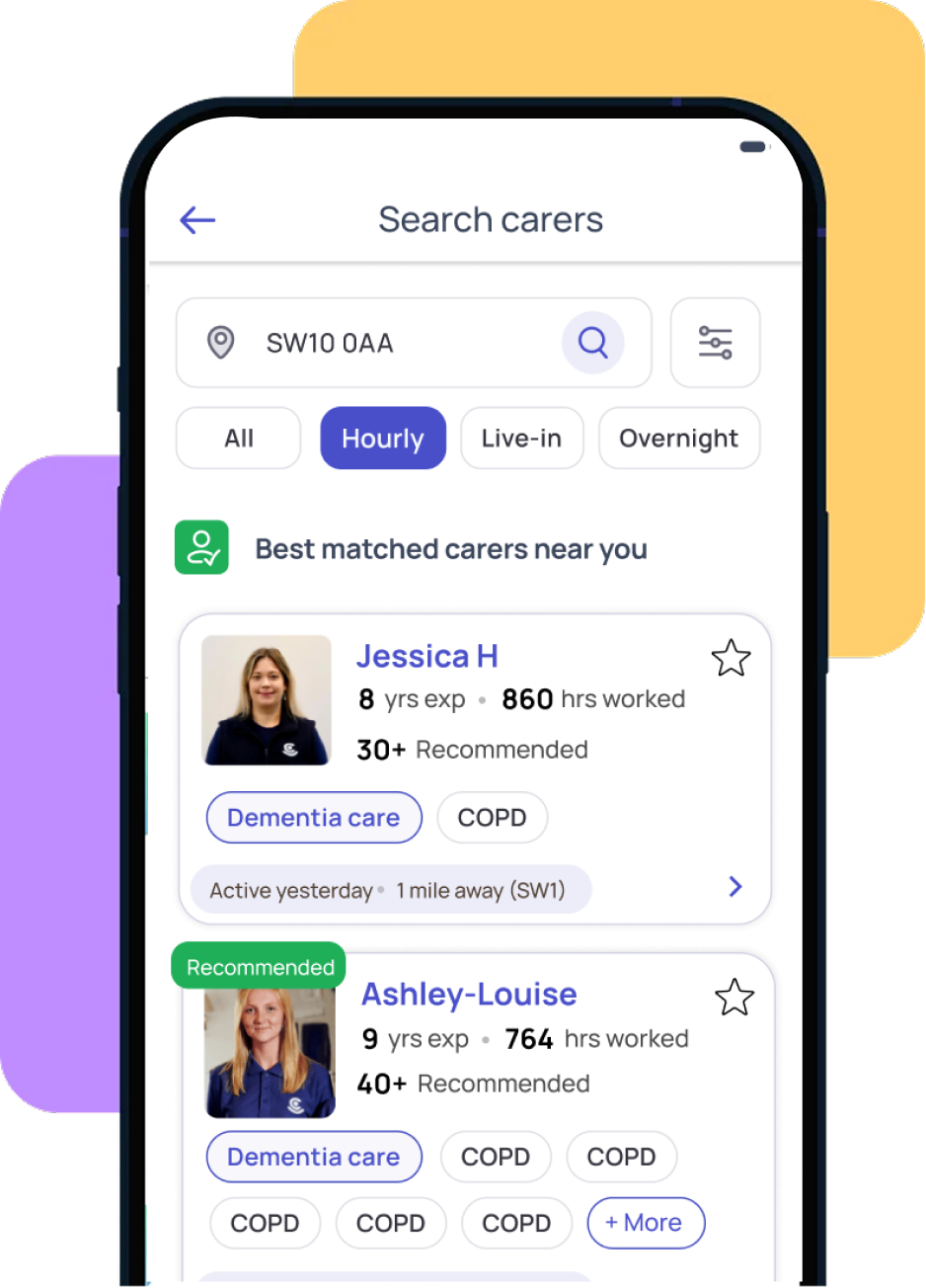
Curam makes it easier for families to find professional care quickly by connecting you directly with carers who are available in your area. The process is simple:
-
Search carer profiles
Start by searching for carers based on your location and the type of support required.
You can add your postcode to see carers who are available near your loved one's home and browse profiles that match your needs.
With over 10,000 vetted carers on the Curam platform, families can compare carers based on:
- Experience
- Care skills
- Availability
- Reviews from other families
- Hourly rates
You can also post a care job outlining the support needed, location, timings and any specific care requirements. Suitable Care Professionals can then apply directly to your posted job, giving you another way to connect with carers who may be a good fit
-
Filter by location and care needs
Every care situation is different, so finding someone with the right experience is important. You can search based on the type of care support needed, including:
- Personal care
- Companionship
- Dementia care
- Mobility support
- Medication prompts
- Live-in care
- Overnight care
This helps you find a carer who understands your loved one's requirements rather than simply assigning someone based on availability.
-
Message or video call carers directly
Once you have found potential carers, you can contact them directly through Curam.
This gives you the opportunity to explain the situation, ask questions and discuss what support is needed.
Using CuramMeet, you can also arrange a video call before making a decision. This helps families feel reassured by meeting the carer, discussing expectations and making sure they are the right fit.
-
Agree a start date
Once you have found the right carer, you can agree the details directly, including:
- When care should begin
- The hours required
- Tasks and routines
- Any specific preferences
In many cases, care can begin the same day, depending on your location, availability and the type of support required. Curam carers have already delivered more than 6.5 million hours of care, helping families access trusted support when they need it most.
Finding care you can trust
When arranging emergency care, families often worry about making a quick decision.
Curam helps provide reassurance by giving families access to information before they book. Carer profiles include details about experience, reviews and ratings, and all Curam carers go through vetting processes including DBS checks. This allows you to move quickly while still making an informed choice.
Planning ahead so you are ready next time
A family carer's illness can happen unexpectedly, but having a simple backup plan can make the situation much easier to manage.
Many families only look for a backup carer once a crisis has already happened. Preparing in advance means you can act faster if circumstances change. A simple one-page contingency plan could include:
- Emergency contact details
- A summary of your loved one's care needs
- Their daily routine
- Medication information
- Important medical contacts
- Where key documents are stored
- Details of preferred care providers
It’s also worth considering who could provide temporary support if the main carer becomes unavailable.
Registering with Curam before you need care means your family already has an account set up and can move quickly if an unexpected situation occurs.
Having access to a trusted network of carers in advance can provide reassurance that support is available when it matters.
Support available for family carers who are unwell
Family carers often focus entirely on the person they support and may not realise that help is available for them too. If you provide regular unpaid care for a family member, you may be entitled to a carer's assessment from your Local Authority.
A carer's assessment looks at how caring affects your own wellbeing and what support may help you continue in your role.
Support may include:
- Information about available services
- Help accessing breaks from caring
- Advice about managing your caring responsibilities
- Support from local organisations
Organisations such as Carers UK and local carer support groups can also provide advice, guidance and practical support.
If you are struggling because you are unwell, exhausted or unable to continue providing care temporarily, reaching out early can help prevent the situation from becoming a crisis.
Written by: Max Huianu, Marketing Assistant at Curam
Reviewed by: Eve Leefe-Griffiths, Marketing Manager at Curam
Last updated: July 2026
Frequently Asked Questions
What happens if a family carer gets ill?
If a family carer becomes ill, the first step is to make sure the person receiving care is safe. You can then explore options such as family support, respite care or a replacement carer at short notice through services like Curam.
What should I do if my carer is unwell and cannot work?
If you are unsure what to do if a carer is unwell, start by assessing what support is needed immediately. Then look for temporary care options and contact potential replacement carers as soon as possible.
Can I find a backup carer quickly?
Yes. Curam allows families to search for carers, check availability and contact carers in real time 24/7. Depending on location and requirements, care can sometimes be arranged on the same day.
How quickly can emergency replacement care be arranged?
The timeframe depends on the person's needs and available carers in the area. Curam helps speed up the process by allowing families to search, message and speak with carers directly through our app.
How do I know an emergency replacement carer is trustworthy?
Curam provides access to vetted carer profiles, reviews and ratings. All Curam carers are DBS-checked and have undergone bank-level ID checks. Families can also use CuramMeet, Curam’s in-app audio and video call feature, to speak with carers before confirming care. This gives you the chance to ask questions, discuss your loved one’s needs, talk through routines and feel more confident that the carer is the right fit before care begins
What is the difference between respite care and emergency replacement care?
Respite care is usually planned to give family carers a break. Emergency replacement care is needed unexpectedly when a usual carer becomes unavailable due to illness or another sudden change.
Find replacement care through Curam
When a family carer becomes ill, having access to trusted support quickly can make a difficult situation easier to manage.
Curam connects families with over 10,000 vetted carers, allowing you to search local carers, compare profiles and arrange support quickly 24/7.
With real-time availability, transparent pricing, CuramMeet for video calls and FamilyCircle to help relatives stay connected, Curam gives families the tools they need to find care quickly and confidently.
Whether you need a replacement carer at short notice or want to create a backup plan before you need one, start your search with Curam today.