

 Vetted & approved carers
 DBS checked & insured

Your dad has seemed comfortable for much of the day. As evening approaches, he starts walking from room to room, asking when he can go home, although he is already there. Reassurance helps for a moment, then the questions begin again.
Changes like these can be upsetting for everyone involved. Sundowning is a common pattern in dementia, where confusion, anxiety or distress becomes more noticeable later in the day. If this is happening in your family, it does not mean you are doing anything wrong.
This guide explains what sundowning is, why evenings may become more difficult, simple things that may help and where extra support can fit in. It also explains when a change may need medical attention. This is general guidance and is not a substitute for individual medical advice.
What is sundowning?
Sundowning describes changes in behaviour, such as increased confusion, anxiety or agitation, that often occur in the late afternoon or evening in some people living with dementia. It can continue into the night, although it is not always linked to sunset.
You may also hear the term “sundowners syndrome”. This describes the same pattern rather than a separate disease. Not everyone with dementia experiences it.
Common signs of sundowning
You might notice your relative:
- Becoming restless or pacing.
- Appearing more anxious, confused or upset.
- Calling out or repeatedly asking the same question.
- Wanting to leave or saying they need to “go home”, even when they are already at home.
- Finding it difficult to settle for the evening.
Some people also experience hallucinations or disturbed sleep. These changes are not enough to identify the cause by themselves, particularly when they are new or have appeared suddenly.
Why does sundowning happen?
The causes are not fully understood. Alzheimer’s Society describes several possible contributors, including tiredness, unmet physical needs, too much stimulation and disruption to the body’s internal clock.
Hunger, thirst, pain or needing the toilet may be difficult for someone to explain. Fading light, shadows and reflections can also make familiar surroundings confusing.
Rather than looking for one explanation, notice what happens around the difficult period. A brief record of the time, activities, meals, rest and surroundings may reveal a useful pattern. Dementia UK recommends this approach to help identify possible triggers.
When sundowning needs medical advice
Sundowning usually follows a recognisable pattern later in the day. A sudden change is different.
If your loved one suddenly becomes confused, or their usual confusion suddenly becomes much worse, NHS guidance is to go to A&E or call 999. Do not assume the change is sundowning simply because they already have dementia. Sudden confusion can have another cause, including infection, stroke or a head injury, and needs prompt medical assessment.
While waiting for help, stay with them if it is safe to do so, reassure them and use short, simple sentences.
If changes have developed gradually, evenings are becoming more difficult over time or sleep problems are continuing, speak to their GP, memory clinic or dementia team.
Our guide to what to do if an elderly person suddenly becomes confused explains this in more detail.
Practical ways to ease evenings
You do not need to change everything at once. Try one small adjustment, see how your loved one responds and build on what seems to help.
Routine and the day before the evening
A familiar daily rhythm may make the transition to evening easier. Consider:
- Daylight earlier in the day: time outdoors, ideally in the morning, if your relative can comfortably manage it.
- Enjoyable daytime activity: a walk, gardening or a familiar hobby suited to their abilities.
- Predictable timings: meals, activities and bedtime at broadly consistent times.
- Less caffeine later on: offer a decaffeinated alternative if afternoon tea or coffee seems to affect sleep.
Alzheimer’s Society recommends daylight, regular routines and daytime activity to support healthier sleep. Keep activities manageable rather than filling the day so heavily that your relative becomes overtired.
If long daytime naps seem to make nights harder, discuss the pattern with their care team rather than trying to keep an exhausted person awake.
Our guide to a daily routine for someone with dementia offers more ideas.
A calm home as the light fades
Think about how the room changes as the afternoon becomes evening.
Turning lights on before it gets dark and closing the curtains as daylight fades can make the change from day to night feel less abrupt. If noise or television seems to make your loved one more unsettled, try creating a quieter space instead. Familiar music, a favourite blanket or a calm shared activity may also help them feel more comfortable.
Dementia UK recommends a calm evening routine and reducing screen use before bed. Keep enough light for your relative to move around safely.
Responding in the moment
When your loved one becomes distressed, try to respond to how they are feeling rather than rushing to correct what they are saying. Speak calmly, give them time to respond and avoid several people talking to them at once.
If they say they need to go home, repeatedly telling them that they are already home may make them more frustrated. Instead, acknowledge the feeling behind what they are saying. They may be looking for familiarity, comfort or a sense of safety.
You might say, “You seem worried. I’m here with you,” and then gently suggest something familiar, such as listening to music, having a drink or sitting somewhere they usually feel comfortable.
Check whether they may be hungry, thirsty, need the toilet or are uncomfortable. If they usually find touch reassuring, you could offer your hand and see how they respond. Calm, respectful communication matters more than finding a perfect phrase.
Read our guide to communicating effectively with someone living with dementia for further suggestions.
How evening and overnight support helps
Evenings may become difficult just when you are running out of energy yourself. Another person taking responsibility for agreed care can give you time to rest and help your relative follow familiar routines.
A carer can offer reassurance, practical assistance and observations about changes. They cannot guarantee that sundowning will stop, and their support does not replace medical assessment.
Late afternoon and evening visits
Hourly care can be arranged around the part of the day when your loved one tends to find things most difficult.
For example, a Care Professional might arrive before the usual period of restlessness begins, prepare dinner, spend some quiet time with them and help them get ready for bed. If evenings tend to become difficult at a similar time each day, you can build the visit around that pattern.
When speaking to potential carers, explain what evenings usually look like and ask whether they have experience supporting someone who becomes anxious, restless or repeatedly asks the same questions later in the day.
Overnight care: sleeping and waking nights
There are two main arrangements:
- Sleeping night care: the carer has somewhere suitable to sleep and can provide occasional agreed assistance.
- Waking night care: the carer stays awake throughout the shift to provide frequent help or supervision.
Someone who regularly gets up, needs repeated reassurance or requires frequent practical assistance may need a waking night arrangement. Explain what a typical night involves so the support matches their needs.
Explore overnight care or read our guide to what overnight care involves.
Live-in care when evenings and nights are consistently difficult
Live-in care may be worth considering when your loved one needs regular support throughout the day as well as help around difficult evenings.
For someone living with dementia, familiarity can be especially valuable. Having the same Care Professional regularly gives carers the opportunity to learn a client’s usual routine, what tends to unsettle them and the things that help them feel more comfortable.
A live-in Care Professional still needs breaks and enough time to sleep alongside their agreed working hours. If your loved one regularly needs significant help throughout the night, additional waking-night support may also be required.
When choosing dementia care, look for relevant experience and ask specific questions. How has the carer supported someone who becomes frightened in the evening? What would they record or report if the pattern changed?
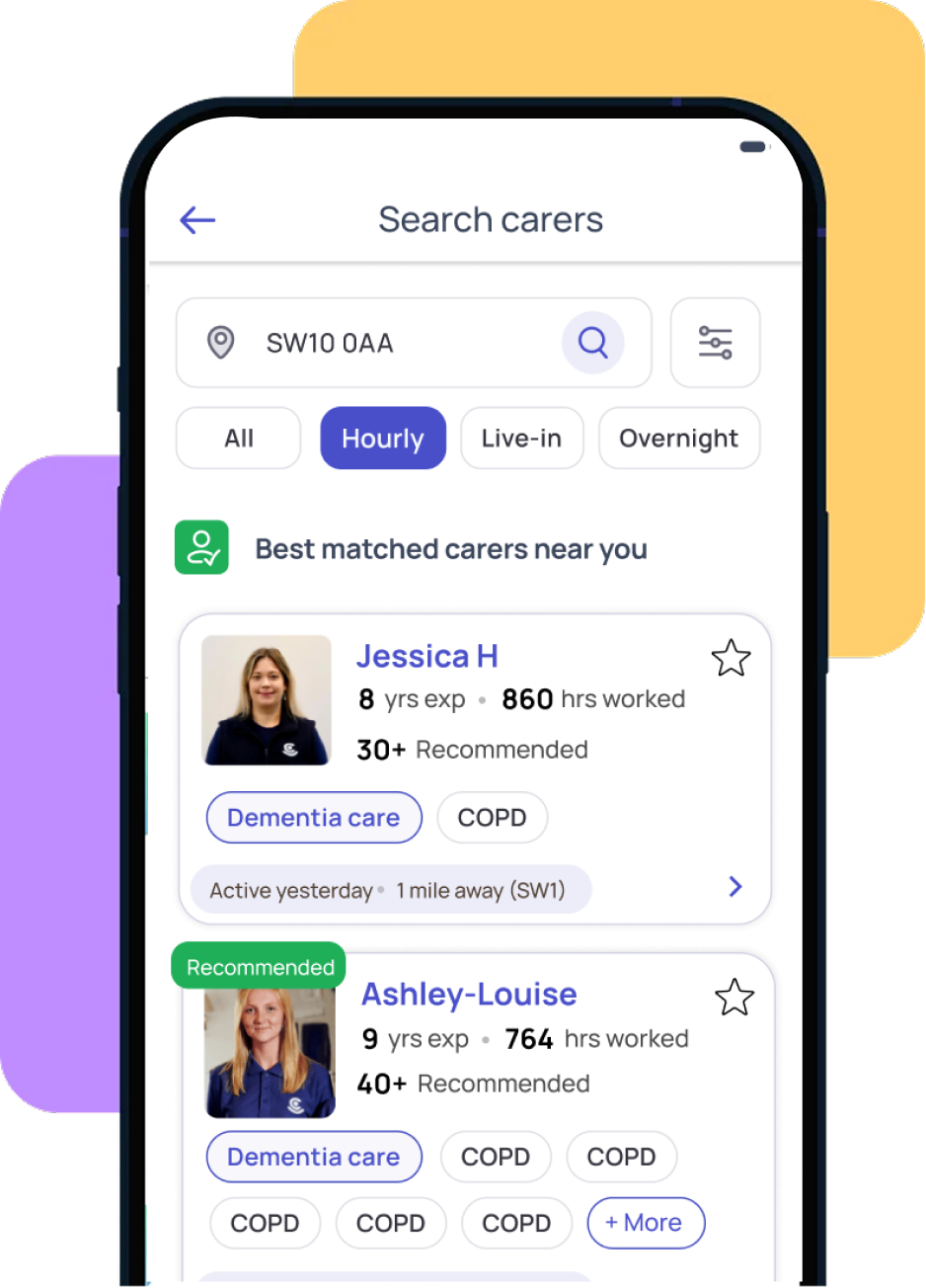
Through Curam, you can review profiles and message or video call carers before deciding. Ask about training directly, and discuss regular availability if continuity is important to your relative.
Looking after yourself as a carer
Repeated difficult evenings and interrupted nights can leave little time to recover. You may start feeling anxious before the evening has even begun.
If caring is beginning to affect your sleep, health or ability to manage day to day, tell someone. This might be your GP, another family member or a professional already supporting your loved one. Be specific about what evenings and nights are actually like, rather than feeling that you must simply keep going.
Respite care at home can give you time away while someone else supports your relative. The NHS explains that breaks from caring can help prevent exhaustion and allow you to look after yourself.
You can also explore information and family support through Dementia UK and Alzheimer’s Society. You do not have to wait until the situation becomes unmanageable to ask for help.
Frequently Asked Questions
What time of day does sundowning start?
It often begins in the late afternoon or early evening and may continue into the night. There is no fixed start time, and the pattern can differ between people. It is not necessarily tied to the sun setting.
Does sundowning get worse as dementia progresses?
It can change over time, but it does not follow a predictable course for everyone. Alzheimer’s Society says it is more common in the middle and later stages of dementia. A sudden deterioration should be assessed urgently rather than assumed to be progression.
Can sundowning happen in early dementia?
Yes. Alzheimer’s Society explains that it can happen at any stage, although it is more common in the middle and later stages. Evening confusion alone does not establish a dementia diagnosis; discuss new concerns with a healthcare professional.
Can a carer help with sundowning at night?
Yes. A Care Professional with relevant dementia experience can provide reassurance and practical support during difficult evenings or nights. Depending on when help is needed, this might be an evening visit, sleeping or waking overnight care, or more regular live-in support. A sudden change in confusion should still be treated as a medical issue first.
Find a dementia carer through Curam
If evenings are becoming the hardest part of the day, think about when another person being there would make the biggest difference. That may be around dinner, bedtime, during the night or more regularly throughout the day.
With Curam, you can search for Care Professionals with dementia experience, compare profiles and availability, and speak directly to carers before deciding who feels right for your family.
Explore dementia care at home or find a Care Professional through Curam to start looking for support.