

 Vetted & approved carers
 DBS checked & insured

You finally sit down, but you are still listening for movement upstairs. You cancel another appointment because there is nobody to stay with your partner. Someone asks how you are, and you say “fine” because explaining feels like another task.
When you care for someone, your own needs can gradually slip out of view. Admitting that you are exhausted may bring guilt, especially when the person you support is someone you love.
Struggling with caring does not mean you care any less. It can mean the demands have grown beyond what you can manage without more help.
This guide explains some of the warning signs of carer burnout, where you can turn to for help and practical ways to make more room for rest. It offers general information rather than a diagnosis or individual medical advice.
What is carer burnout?
Carer burnout is a term used to describe the physical, emotional and mental exhaustion that can build up after a long period of caring without enough rest, support or time off.
It is not a medical diagnosis, and it means more than an occasional difficult day. You may feel that you never properly recover, even when you briefly have time to yourself.
Carers UK highlights how long-term caring can affect both physical and mental health, with many carers reporting stress, poor sleep and exhaustion. If you recognise some of this in yourself, it may be a sign that you need more support around you rather than simply trying to carry on as you are.
You do not need to call yourself a carer to ask for help. Supporting a parent, partner, friend or neighbour because they cannot manage without you can be a caring role.
Warning signs to look out for
It can be more helpful to notice what has changed for you over time than to try to decide whether you are officially “burnt out”.
The signs below can have many causes, so they are not a checklist or a diagnosis. Think of them as reasons to take your own wellbeing seriously and ask for help if you need it.
Physical signs
You may notice:
- Tiredness that does not seem to lift.
- Difficulty falling asleep, staying asleep or switching off.
- Headaches or muscle tension.
- Changes in appetite or irregular meals.
- Feeling run down or finding ordinary tasks more tiring than they used to be.
Stress and exhaustion can affect your body as well as your mood. But if you have new symptoms, they are not going away or you are worried about your health, speak to your GP rather than assuming caring is the cause.
Emotional signs
Carer stress may show up as:
- Becoming more irritable or losing patience.
- Feeling resentful, then guilty about feeling that way.
- Feeling low, overwhelmed or trapped.
- Struggling to concentrate or make decisions.
- Withdrawing from friends because you have little energy left.
You can love and care for a loved one and still desperately want a break from the responsibility. Those two feelings can exist at the same time. Talking honestly about them can help other people understand what you need.
When it starts to affect the person you care for
Perhaps you are finding it harder to stay patient during familiar routines. Meals, appointments or other tasks may be getting missed. You might worry that you are too tired to help someone move safely.
Treat these concerns as a signal that the arrangement needs more support.
If you feel unable to provide essential care safely, contact adult social care and explain what is happening. Where the person already has a care team, tell them too. Be specific about what you can no longer manage and how urgently help is needed.
Why burnout happens
Caring responsibilities often grow gradually. An occasional visit becomes daily help. Then come evening calls, appointments, paperwork and interrupted nights.
Meanwhile, work, children, household responsibilities and financial pressures continue. There may be no obvious point when you stop and ask whether the arrangement is still manageable.
It can also be difficult to accept help when your relative prefers you, or when explaining their routines to someone new feels exhausting.
There is rarely one task that causes the problem. It is often the combination of practical work, constant responsibility and too little opportunity to recover.
Getting a break: practical support that helps
A real break means being able to step away for a while knowing that someone else is there to provide the care needed. You should be able to leave the house, go to an appointment, see a friend or simply rest without still feeling that you have to supervise everything.
Even a few hours of regular help each week can create some breathing space. The important thing is finding support that works for both you and the person you care for.
That support might come from relatives, community services or a paid carer. The NHS describes respite as replacement care that allows you time away from caring and helps prevent exhaustion.
Regular respite care at home
Respite care at home means someone comes in to support your relative while you take a break. They can remain in familiar surroundings and follow their usual routines.
Respite does not have to begin with a holiday or a long absence. A regular afternoon could give you time to see a friend, keep your own appointments or simply rest.
If you are nervous about introducing someone new, an initial visit together may help you explain preferences and routines before arranging time away.
Our guide to what respite care is explains the options in more detail.
Sharing the load with hourly or overnight support
Start with the part of the week that is hardest to manage.
Hourly care can be arranged around particular times when another pair of hands would make the biggest difference. That might be the morning routine, mealtimes, an afternoon when you need to work, or a regular period each week that is yours.
If broken nights are leaving you exhausted, overnight care may give you the chance to sleep while a Care Professional provides agreed support. Explain what an ordinary night looks like, including how often your loved one wakes and what help they usually need.
Short or weekly arrangements depend on the individual carer’s availability, agreed visit length and your relative’s needs.
How quickly Curam can arrange support
Through Curam, you can:
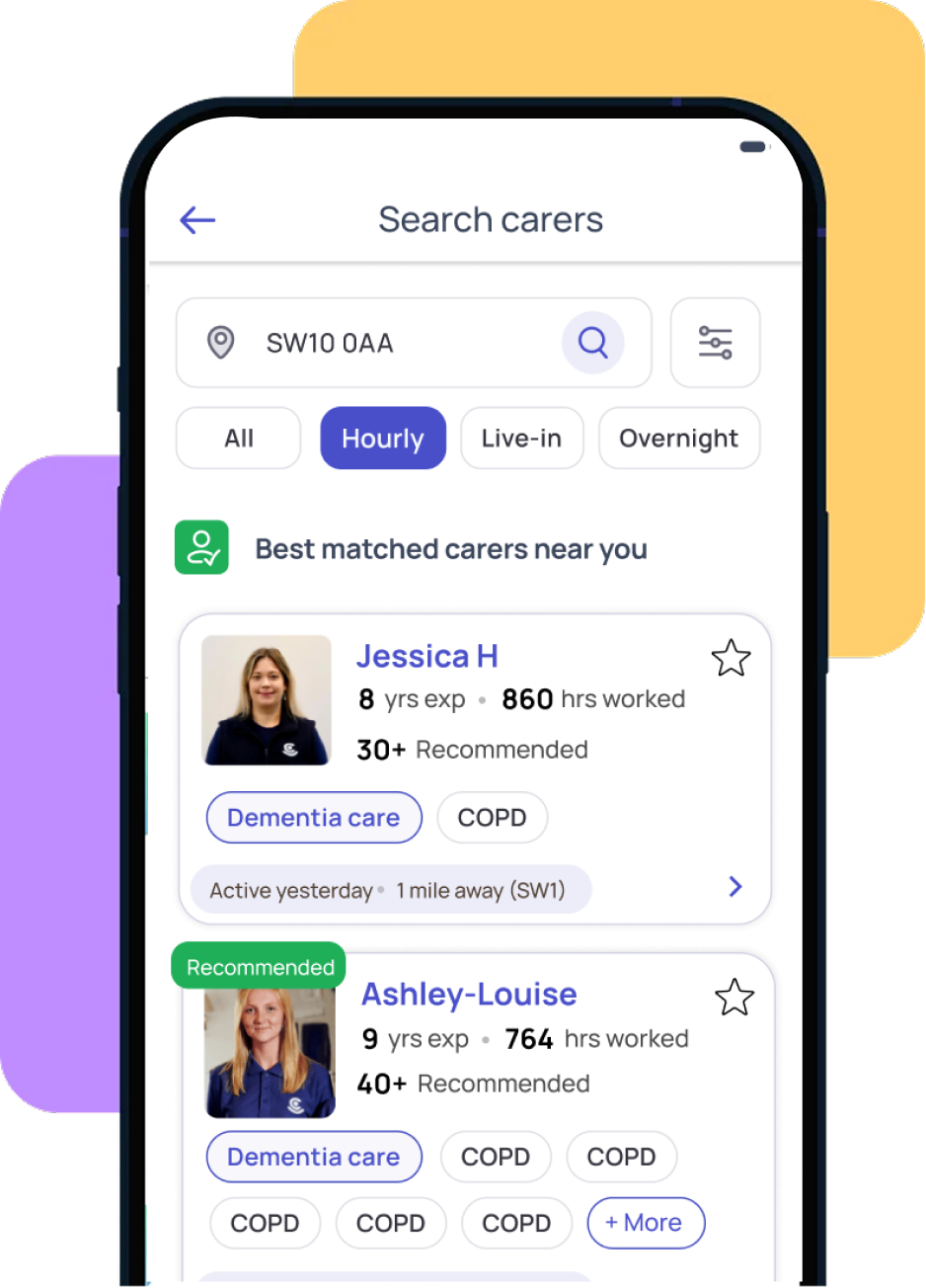
- Search by postcode or post a job with your care needs.
- Compare Care Professional profiles, experience, availability and rates.
- Message suitable Care Professionals directly or use CuramMeet, Curam’s in-app audio and video call feature, before booking.
- Choose who you would like to work with and agree the hours, tasks and start date.
Applications often arrive within hours, and most families interview and start care within a few days. Timing depends on local availability and the support required.
You stay in control of who comes into the home. Where their availability allows, choosing the same Care Professional for regular visits can also make things easier for everyone, particularly if your loved one finds new faces or changes to their routine difficult.
Support you are entitled to
If you are an unpaid adult carer in England, you can ask your local council for a free carer’s assessment. This is a chance to talk about how caring is affecting your health, work, relationships, free time and everyday life, and what might make things easier.
This is separate from the care needs assessment for the person you support. It is an opportunity to discuss what would help you, including breaks, practical assistance and local services. An assessment does not automatically mean all recommended support will be free; eligibility and funding are considered separately.
When requesting one, describe the difficult days as well as the manageable ones. Explain interrupted nights, missed appointments and what you can realistically continue doing.
Support arrangements differ across the UK. Scotland uses an adult carer support plan, while Wales commonly uses the term carer’s needs assessment. Your council, local carers’ organisation or, in Northern Ireland, Health and Social Care Trust can explain the local route.
You can also explore:
- Carers UK for information about caring, wellbeing and practical support.
- Local carers’ centres, which may offer advice, peer support and information about breaks.
- Carer’s Allowance, subject to eligibility. In Scotland, new applicants should look at Carer Support Payment instead. Check how claiming could affect other benefits before applying.
Looking after your own health
Tell your GP practice that you are a carer, particularly if caring is beginning to affect your sleep, mood or physical health. It can be easy to put off your own appointments when somebody else always seems to need you first.
Be direct about the impact. “I am awake several times every night and I am struggling to cope” is more useful than saying you are a little tired.
Small, practical changes may help you make room for yourself:
- Ask someone to cover a specific appointment.
- Arrange a meal you do not have to prepare.
- Keep regular contact with someone you trust.
- Protect some time that is not used for caring or household jobs.
These steps work best alongside enough practical support. They are not a substitute for reducing an unmanageable workload.
If you feel unable to cope and need urgent help with your mental health, contact your GP urgently or use NHS 111 and select the mental health option. You can also call Samaritans free on 116 123, at any time, if you need someone to talk to.
If you feel unable to keep yourself or someone else safe, call 999 or go to A&E.
Planning ahead so you do not reach crisis point
A simple plan can reduce the pressure of having to organise help when you are already exhausted.
Put a regular break in the diary. Treat it as part of the care arrangement, with someone clearly responsible for covering it.
Give people specific ways to help. “Could you stay with Dad on Thursday afternoon?” is easier to act on than a general request for support.
Write a short care summary. Include routines, communication preferences, meals, mobility needs and important contacts. Keep medication information accurate and agree any medication responsibilities with the relevant professionals.
Identify back-up support. Know who you would contact if you became ill or could not provide care. If you use a paid carer, discuss cover arrangements and what happens when they are unavailable.
Review the plan when needs change. A routine that worked six months ago may no longer provide enough help. You do not have to wait until it breaks down before asking for a reassessment.
Frequently Asked Questions
What are the signs of carer burnout?
Signs may include persistent exhaustion, poor sleep, irritability, low mood, difficulty concentrating and feeling overwhelmed by caring. These experiences do not confirm a diagnosis. Speak to your GP about persistent symptoms and seek practical help with the caring responsibilities.
How do I get a break from caring?
You might ask family or friends to step in, find out about support through your council or local carers’ centre, or arrange paid respite care. Even regular hourly support for part of one day each week can give you protected time away from caring to rest and relax.
Am I entitled to a carer's assessment?
In England, adult unpaid carers can request a free carer’s assessment from their local council. It looks at the impact caring has on your life and the support you may need. The process and terminology differ elsewhere in the UK.
Can a carer come in for just a few hours a week?
Yes, support for a few hours a week can be arranged through Curam, depending on local availability and the individual carer’s agreed visit length. Explain what help is needed and when, then discuss a suitable regular arrangement.
Get a break with support from Curam
You do not have to reach the point where you cannot continue before asking for help.
Think about what would take the most pressure off right now. It might be one regular afternoon to yourself, help with a difficult part of the day or someone else taking responsibility overnight so you can sleep.
With Curam, you can search for Care Professionals near you, compare profiles, experience, rates and availability, and speak directly before choosing who feels right for your family.
Explore respite care at home or find a Care Professional through Curam to start arranging some support.