




 Vetted & approved carers
 DBS checked & insured

When everyday moments start changing, a loved one keeps asking the same question again and again, or struggling with routines that once felt second nature, it can feel like everyday life has quietly shifted. Supporting someone with Dementia care isn’t about getting everything perfect. Often, it’s the small, steady routines that bring reassurance and calm.
Creating a consistent Dementia daily routine can make a real difference. Familiar patterns help reduce confusion, ease anxiety, and give structure to the day for both the person living with Dementia and the family supporting them. Across the UK, Curam has supported thousands of families arranging home care for Dementia patients, and we’ve seen how simple routines can turn stressful days into moments of comfort and connection. In this guide, we’ll share practical ideas for building a daily routine for someone living with Dementia, including helpful activities for Dementia patients, and ways technology can support Dementia care at home.
Why a Consistent Dementia Daily Routine Matters
For someone living with Dementia, the brain’s internal clock can become disrupted, leading to confusion, restless evenings, or sudden changes in energy. A predictable Dementia daily routine helps restore a sense of security and familiarity. For families providing Dementia care at home or looking for a Dementia carer, simple anchors like regular wake-up times, meals, and bedtime routines can make the day feel calmer and more manageable.
Morning Routine: Gentle Starts (7–10am)
Starting the day calmly can make a big difference for someone living with Dementia. Natural light helps regulate the body clock and may reduce evening confusion. A supportive morning Dementia daily routine might include:
- Opening curtains to let in natural light
- A warm wash and getting dressed in comfortable clothes
- A familiar breakfast such as porridge or toast
- Gentle conversation about the day ahead
For families providing Dementia care at home, keeping mornings calm and predictable helps set a positive tone for the rest of the day.
Mid-Morning Activities (10am–12pm)
Mid-morning is often a good time for gentle stimulation. The best activities for Dementia patients should feel enjoyable and familiar rather than structured or demanding. Ideas include:
- A short walk outside or light stretching
- Looking through old photographs together
- Listening to favourite music or singing along
- Simple household tasks such as folding laundry
These types of activities for Dementia patients can help maintain confidence and encourage independence
Lunch and Rest (12–2pm)
A balanced meal and quiet rest can help maintain energy levels. During Dementia care at home, families often find that:
- Simple meals such as soup, sandwiches, or home-cooked favourites work well
- Eating together encourages conversation and comfort
- Regular drinks help prevent dehydration
- A short rest in a chair can recharge energy without disrupting night time sleep
Afternoon Activities (2–5pm)
Afternoons are a good opportunity for relaxed activities for Dementia patients that stimulate the senses without causing fatigue. Examples include:
- Baking simple recipes together
- Gardening or watering plants
- Painting, drawing, or crafts
- Listening to music or watching familiar programmes
Rotating activities for Dementia patients helps keep the day engaging while maintaining routine.
Evening Routine (5–8pm)
Evenings can sometimes bring increased confusion for people living with Dementia, often referred to as “sundowning.” A calm evening routine can help reduce anxiety. Helpful steps include:
- Serving dinner earlier in the evening
- Keeping lighting soft but clear
- Choosing quiet activities such as puzzles or audiobooks
- Maintaining a relaxed and familiar atmosphere
Bedtime Routine (8–10pm)
A predictable bedtime routine helps support better sleep for someone living with Dementia. This might include:
- A warm drink such as herbal tea
- Washing, brushing teeth, and preparing for bed
- Soft lighting and a calm environment
- Reassuring words and familiar bedtime habits
Good sleep can help improve mood and focus the following day.
Helpful Tips for Dementia Care at Home
Dementia care at home becomes easier when routines and environments support the person living with Dementia. Helpful ideas include:
- Visual cues like labelled drawers or picture schedules to support memory
- Being flexible with routines when someone is having a difficult day
- Improving safety with grab rails, better lighting, and clutter-free walkways
- Sharing care responsibilities with family members or Dementia carers
- Keeping notes on what routines and activities work best
Over time, these small adjustments can make Dementia care at home feel more predictable and less stressful.

How Technology Can Support Dementia Care at Home
Technology can play a helpful role in Dementia care at home, offering gentle reminders, reassurance for families, and tools that support independence. Helpful examples include:
- Smart reminders – Devices like Amazon Echo or Google Home can remind someone living with Dementia to take medication or prepare for meals.
- GPS devices– Tools such as AirTags or GPS apps can help families locate a loved one quickly if they become lost or disoriented.
- Video calling devices – Tablets with large icons allow easy calls with family, helping reduce isolation and loneliness.
When used thoughtfully, technology can make Dementia care at home safer and easier for both families and carers
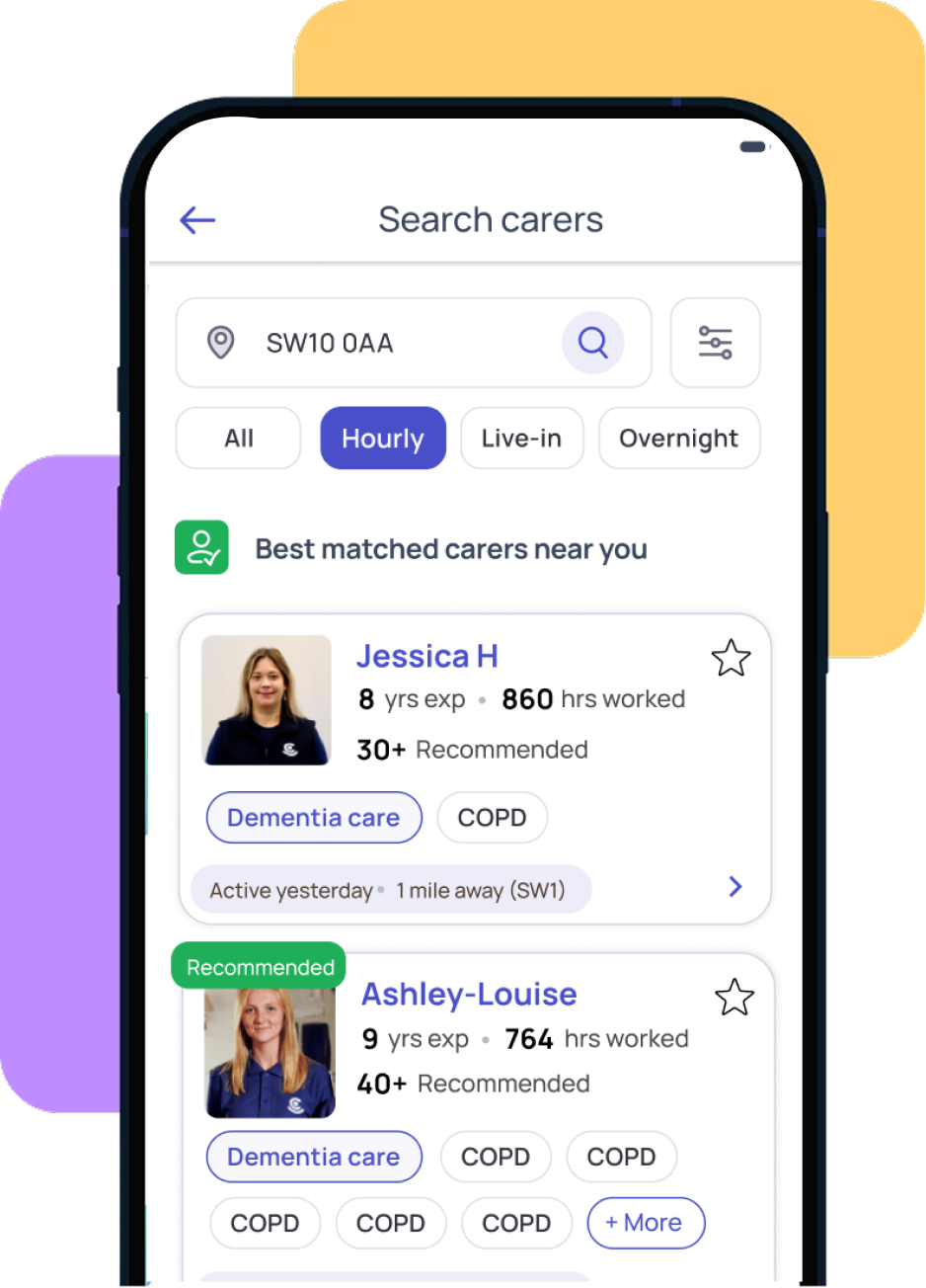
If you’re considering Dementia care at home, having the right support can make everyday life feel calmer and more manageable. Through Curam, families across the UK can connect with experienced Dementia carers available 24/7. You can browse local carer profiles, send messages directly through the platform, and even meet carers online using CuramMeet, Curam’s secure video call feature in the app. This allows families to get to know carers, ask questions, and find someone who feels like the right fit before arranging care.
Written by: Eve Leefe-Griffiths, Marketing Manager at Curam
Reviewed by: Curam Care Support Team
Last reviewed: June 2026