

 Vetted & approved carers
 DBS checked & insured

When a family member suddenly needs care, it can be a stressful and emotional time. Whether your parent has had a fall, been discharged from hospital unexpectedly or is struggling to manage at home, it is normal to feel unsure about what to do next.
Many families worry that they have left things too late or feel guilty that they cannot provide all the support themselves. The important thing is to focus on the next practical step: understanding what help is needed and finding the right support as quickly as possible.
An urgent care situation does not always mean someone needs to move into a care home. In many cases, the right home care support can help a person remain safe and comfortable in their own home.
This guide explains the steps to take when a family member needs care urgently, the different options available and how to arrange professional support quickly.
Step 1: Assess what level of care is needed
The first step is understanding what kind of support your family member needs.
An urgent situation can mean different things. Sometimes it’s a medical emergency that requires immediate healthcare support. Other times, it’s a care needs emergency where someone is safe but can no longer manage daily life without extra help.
Understanding the difference will help you take the right action.
Is this a medical emergency or a care needs emergency?
If there is an immediate risk to someone's life or safety, you should seek medical help first.
Call 999 if there is a serious emergency, such as:
- Loss of consciousness
- Severe injury
- Difficulty breathing
- Signs of a stroke
- Immediate danger of harm
If you are unsure but concerned about someone's health, you can contact NHS 111 for advice.
A care needs emergency is different. This is when someone may be medically stable but is no longer able to manage safely at home.
For example:
- An elderly parent has fallen and is now struggling to cope alone
- Someone has returned from hospital but needs support with daily tasks
- A person can no longer manage washing, dressing, meals or medication independently
In these situations, arranging home care may be the right next step.
Questions to help you understand the situation
Ask yourself:
- Can they wash, dress and use the bathroom safely?
- Can they prepare meals and eat independently?
- Can they manage medication correctly?
- Can they move around the home safely?
- Are they at risk of falls?
- Do they need someone nearby for reassurance or companionship?
- Is their condition likely to improve, or will they need ongoing support?
Having a clearer picture of their needs will make it easier to find suitable care quickly.
Step 2: Understand your options for arranging care quickly
When someone needs care urgently, there are several routes available. The best option will depend on the person's needs, location and how quickly support is required.
The main options are:
- An introductory agency that connects families directly with carers
- A traditional registered care agency
- Support through your local council
Each route has benefits, but the timescales can vary significantly.
Through an introductory agency
An introductory agency can often be one of the fastest ways to arrange professional care.
Unlike traditional agencies that allocate care workers from their own staff team, an introductory model connects families directly with self-employed carers. This gives families more choice and allows them to speak with carers who are available sooner.
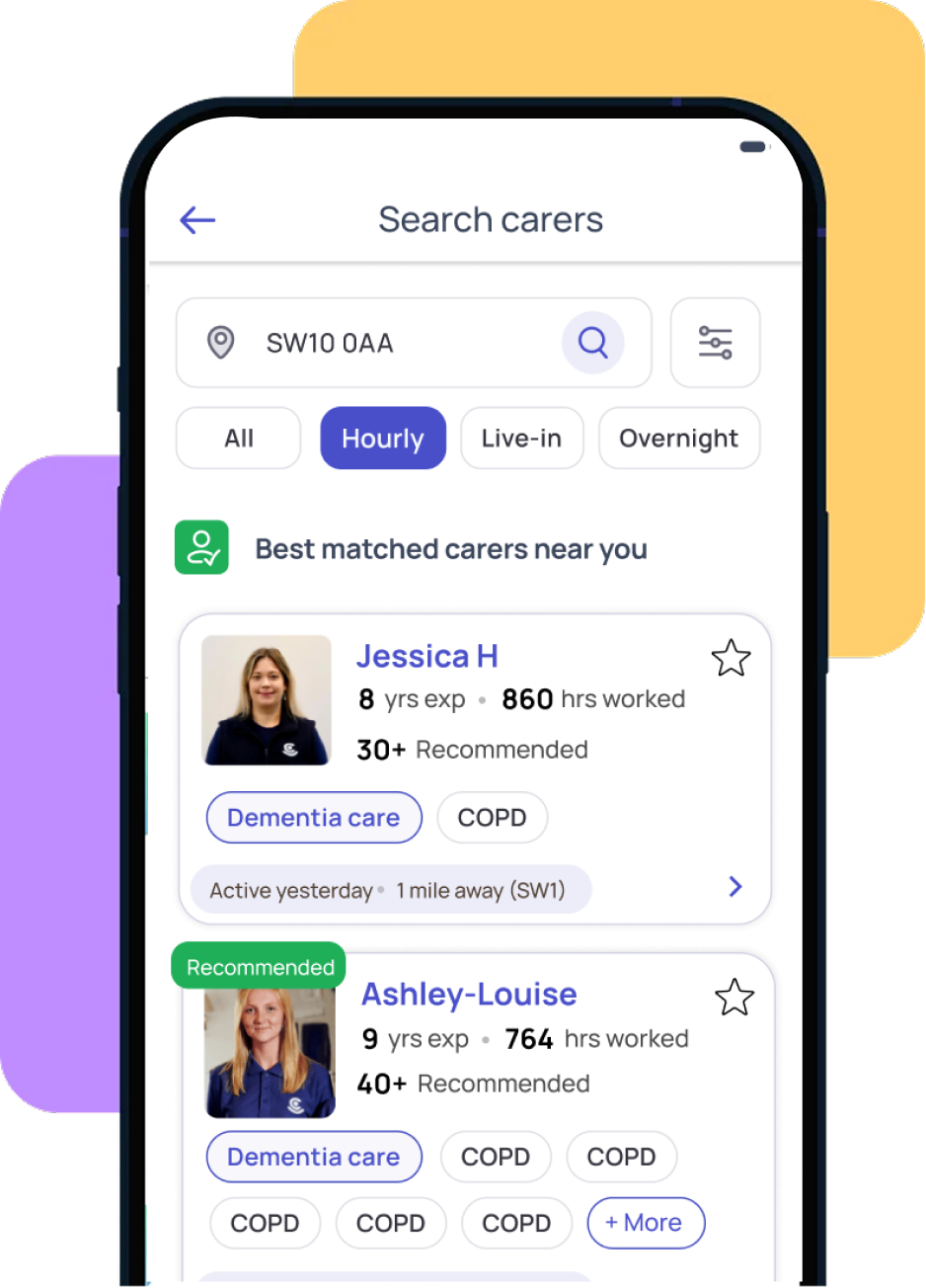
With Curam, families can search through more than 10,000 vetted carers, view profiles, check availability and contact carers directly through the app.
Depending on your location, care requirements and carer availability, support may be able to begin the same day or the following day. In some circumstances, carers have been available in under 30 minutes.
Curam also allows families to use features such as CuramMeet, where you can speak with a carer before booking, helping you feel confident that they are the right match.
Through a traditional registered agency
Traditional home care agencies can be a suitable option, particularly when planning care in advance.
However, arranging urgent care through a traditional agency can often take longer. The agency may need to:
- Complete an assessment
- Find an available member of staff
- Coordinate rotas
- Confirm schedules
Depending on availability in your area, this process can take anywhere from several days to several weeks, with some arrangements taking between one to four weeks.
For families who need care immediately, this may not always provide the speed or flexibility required.
Through your local council
Your local council may be able to help arrange care if someone meets the eligibility criteria for support.
In urgent situations, emergency duty teams may sometimes be able to provide advice or arrange short-term support. However, services can be stretched, and a care needs assessment is usually required before longer-term arrangements are made.
If you are considering council support, it can be helpful to begin this process as early as possible while also exploring private care options.
Many families choose to start looking for care through an introductory agency at the same time as applying for council support, allowing them to arrange immediate help while longer-term funding options are considered.
Step 3: Arrange care and confirm the details
Once you have identified the type of support your family member needs and found potential care options, the next step is confirming the details.
Being prepared with the right information can help the process move faster and ensure the carer understands exactly how they can support your loved one.
What to have ready before you make contact
Before contacting a carer, it helps to have a short summary of your family member's needs.
You may want to prepare:
- Their name, address and contact details
- A summary of their care needs
- Any medical conditions or health concerns
- Medication information
- Preferred care hours and days
- Whether care is needed short-term or ongoing
- Any mobility requirements
- Details about access to the property or family members who can help
You do not need to have every detail figured out before starting your search. The most important thing is having enough information to begin a conversation with a suitable carer.
What a carer can do from day one
Many families assume arranging care quickly means only basic support is possible. In reality, a professional carer can often help with a wide range of daily needs from the first visit.
Depending on the person's requirements, a carer may be able to provide:
- Personal care, including washing, dressing and support with daily routines
- Medication prompts and support with managing routines
- Mobility support and help moving safely around the home
- Meal preparation and help with eating
- Household support
- Companionship and emotional reassurance
- Support attending appointments or social activities
The right level of support will depend on your family member's care needs, but arranging care quickly does not mean compromising on quality.
How to choose a carer safely when time is limited
When care is needed urgently, it is understandable to want support in place quickly. However, it is still important to feel confident about who will be providing care.
Curam helps families make informed choices by providing access to carer profiles with information about their experience, qualifications and reviews.
Families can also look for:
- DBS checks
- References where applicable
- Previous experience
- Ratings and feedback from other families
Using CuramMeet, you can speak with a carer by video call before confirming care. This gives you the opportunity to ask questions, discuss your loved one's needs and make sure they are the right fit.
Funding urgent home care
A common concern for families is whether urgent care has to be paid for privately.
While many families choose private care because it can often be arranged quickly, there may be other funding options available depending on your circumstances.
Understanding your options early can help you make the best decision for your family.
Local authority emergency assessments
If your family member needs support urgently, your local council has a duty to assess their care needs.
In urgent situations, councils may be able to fast-track assessments or arrange short-term support while longer-term care options are considered. However, availability and response times can vary depending on your local authority and demand for services.
If you’re exploring council support, it can be helpful to begin that process while also looking at immediate care options. This allows you to avoid delays while waiting for assessments or funding decisions.
NHS Continuing Healthcare
For people with significant and complex medical needs, NHS Continuing Healthcare may be an option.
This is a package of care arranged and funded by the NHS for people who have a primary health need, rather than simply needing support with daily living.
Eligibility depends on an assessment of an individual's specific healthcare needs. For more detailed information about NHS Continuing Healthcare, families should speak with their healthcare team or visit official NHS guidance.
Planning ahead to avoid the next crisis
Once your immediate care situation has been resolved, taking some time to plan ahead can make future decisions much easier.
Many families only begin looking for care when something unexpected happens. Having a simple plan in place can reduce stress if circumstances change again.
Consider preparing:
- A short summary of your loved one's care needs
- Important medical and medication information
- Details of preferred carers or care providers
- Information about available funding options
- Emergency contact details for family members
You may also want to explore different types of care in advance, such as live-in care or respite care, so you understand your options before you need them.
Planning ahead does not mean expecting the worst. It simply means making sure your family has choices if support is needed in the future.
Written by: Max Huianu, Marketing Assistant at Curam
Reviewed by: Eve Leefe-Griffiths, Marketing Manager at Curam
Last updated: July 2026
Frequently Asked Questions
What should I do if my elderly parent suddenly needs care?
First, make sure they are safe and determine whether they need medical attention or care support. If they cannot manage safely at home, begin exploring care options as soon as possible, including home care through providers such as Curam.
Can emergency care for an elderly parent be arranged quickly?
Yes, depending on location, availability and care requirements. Curam allows families to search for vetted carers, view availability and contact carers directly, helping support arrangements happen faster, 24/7.
Can someone receive care at home instead of moving into a care home?
Yes. Many people who suddenly need support can continue living at home with the right level of care. Home care can provide help with personal care, medication, mobility, meals and companionship.
How quickly can urgent home care be arranged?
The timeframe depends on the person's needs, location and carer availability. Through Curam, families can search for carers immediately and may be able to arrange care on the same day in some circumstances.
How do I know an urgent care carer is safe and trustworthy?
Look for carers with verified experience, references, DBS checks and reviews. Curam allows families to view carer profiles and speak with carers through CuramMeet, our audio/video call feature before making a commitment.
Find emergency care through Curam
When a family member needs care urgently, having access to trusted support quickly can make a difficult situation feel more manageable.
Curam helps families connect directly with vetted carers, giving you more choice and control over who provides care.
With over 10,000 vetted carers, real-time availability and tools such as CuramMeet and Family Circle, you can search for support, speak with carers and arrange care with confidence.
Whether your loved one needs help after a hospital discharge, following a fall or because they can no longer manage alone, Curam can help you find the right carer sooner.
Start your search today and find trusted care support for your family.