

 Vetted & approved carers
 DBS checked & insured

The visits have helped your mum get back on her feet after hospital. Then you hear that Friday will be the last one. She is managing more than before, but you are still worried about how she will cope alone.
Some families only discover that reablement is time-limited when the end date is close. If that has happened to you, the next step is to find out what support your relative still needs, what the council or NHS will arrange, and what you may need to organise yourselves.
Reablement ending does not necessarily mean your relative no longer needs care. It means their short-term recovery support is coming to an end, and any ongoing help needs to be considered.
This guide gives a general overview of the usual process in England. Care services, funding arrangements and terminology differ across Scotland, Wales and Northern Ireland, so check the next steps with the team supporting your loved one locally.
What is reablement?
Reablement is short-term support that helps someone regain the skills and confidence to manage everyday life after an illness, injury or hospital stay. Usually arranged through the council or NHS, it might help a person practise washing, dressing, preparing food or moving around their home.
In England, eligible reablement is provided free for up to six weeks. It may finish sooner if someone reaches their goals or no longer needs the service. The phrase “6 weeks free care after hospital” can therefore be misleading: not everyone leaving hospital receives it, and a full six weeks is not automatic.
If your relative has not yet come home, our guide to care at home after hospital discharge covers that earlier stage.
How reablement differs from ongoing home care
Reablement focuses on helping someone do more for themselves. A support worker might guide your relative through getting dressed, rather than taking over, with visits adjusted as their confidence improves.
Ongoing home care provides continuing help with tasks the person cannot comfortably or safely manage alone. It can still encourage independence, while making sure essential support is there.
Discharge to assess and intermediate care explained
Discharge to assess means assessing someone’s longer-term care needs after they have left hospital and had an opportunity to recover, usually at home or in another suitable setting.
Intermediate care is a broader term for short-term recovery support. It can include rehabilitation and reablement, delivered at home or in a community setting. Neither term automatically means a permanent care package has been arranged.
What happens when reablement ends
Towards the end of reablement, the team should review your relative’s progress and consider whether they need further support.
There are usually three possible next steps:
- No further paid care is needed: your relative can manage, perhaps with equipment or community support.
- Ongoing care is needed: the council considers their eligible needs and whether it will contribute towards the cost.
- Care is arranged privately: your relative pays for support themselves, either longer term or while other arrangements are being explored.
The review may also consider whether some further recovery support would help. Before reablement finishes, make sure you understand what the team is recommending, what happens next and who you should contact if you have questions.
The care needs assessment and financial assessment
These assessments answer different questions.
A care needs assessment looks at the help your relative needs with everyday life, such as washing, eating and moving around. In England, the assessment itself is free, regardless of their finances. Our care needs assessment guide explains how to prepare.
A financial assessment, sometimes called a means test, considers whether the council will contribute towards eligible care costs and how much your relative may have to pay. Needing care does not automatically mean all of it will be council-funded.
Why gaps in care can happen
An end date and a new care arrangement do not always line up. An assessment may still be outstanding, or a suitable provider may not yet have availability. Sometimes, the review concludes that someone does not meet the criteria for ongoing council support, although their family still sees tasks they struggle with.
If you are concerned, contact the reablement team or adult social care department before the final visit. Explain exactly what your relative cannot manage safely and ask:
“What support will be in place when these visits finish?”
If you are worried that the proposed plan will leave your loved one without essential help, say so clearly and ask whether the decision or plan can be reviewed urgently.
Keeping care in place without a gap
You can explore privately arranged care while the council process continues. This may provide temporary support or become a longer-term arrangement, depending on your relative’s needs and funding.
Before booking, ask the council what it is arranging and when. Do not assume it will reimburse care you organise independently; clarify any funding agreement first.
Through Curam, you can choose the Care Professional who supports your loved one and speak to suitable carers before booking. Care Professionals joining Curam go through identity and right-to-work checks, biometric ID verification, and an Enhanced DBS, PVG or AccessNI check where applicable. Care booked through the platform is also covered by Curam’s insurance.
How quickly Curam can arrange a carer
Start with the date support needs to begin and the tasks your relative needs help with. You can then:
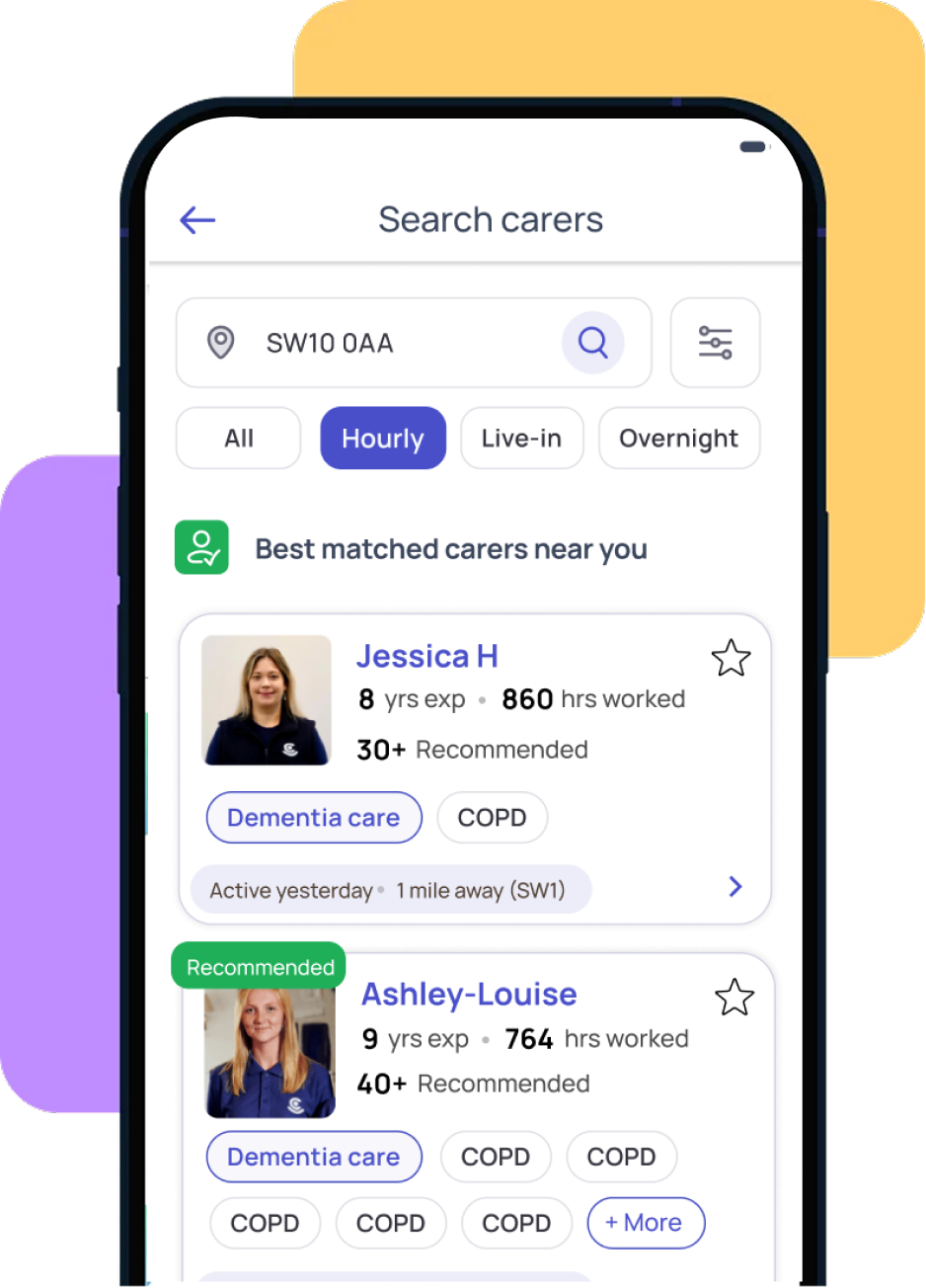
- Post your care needs or search by postcode.
- Review profiles for relevant experience, availability and rates.
- Message suitable Care Professionals directly or use CuramMeet, Curam’s in-app audio and video call feature, to discuss the support needed and ask questions.
- Agree the tasks, hours and start date with your chosen carer.
Carer applications often arrive within hours, and most families interview and start care within a few days. Timing depends on local availability and the support required, so share your deadline early.
Choosing the right level of support
Think about the times when your relative needs help, rather than simply replacing every reablement visit.
- Hourly care can help with getting ready in the morning, meals or settling down in the evening.
- Overnight care may suit someone who needs reassurance or practical help during the night.
- Live-in care provides support from a carer who lives in the home, with agreed working hours and breaks.
If your relative needs frequent help both day and night, discuss this clearly. A single live-in carer cannot provide continuous waking care; additional cover may be needed.
Signs your relative still needs support
It helps to look beyond whether your relative can complete a task once. Can they manage it consistently, safely and without becoming exhausted?
You might notice that they:
- Struggle to wash, dress or use the toilet.
- Forget medication or become unsure about what to take.
- Skip meals or have difficulty preparing drinks.
- Feel unsteady when getting up or walking.
- Become anxious about being alone.
- Have fallen or experienced near misses since returning home.
Write down specific examples and share them with the team. “Dad has not been able to prepare lunch on three days this week” gives a clearer picture than “Dad is struggling”.
Sharing examples like these can help the team understand what everyday life is really like between visits. If you have also noticed new or worsening health problems, speak to the relevant healthcare professional separately.
Paying for care after reablement
Free reablement and ongoing home care have different funding arrangements. When the recovery service finishes, your relative may receive council help, pay privately or have a combination of support.
The important point is to establish who is arranging the care, who is paying and when it will start.
If the council agrees to fund ongoing care
In England, eligible people may be offered a personal budget. The council can arrange support, or a direct payment may allow the person to organise agreed care themselves.
Direct payments can give more choice over who provides care and when they visit. They must be used to meet the needs set out in the agreed care plan. Ask the council about the conditions and any help available with managing them.
If your loved one receives Local Authority Direct Payments and you would like to use them through Curam, contact the team before arranging care so they can explain the payment process and you can check that the arrangement meets your council’s requirements.
If you are paying privately
You can arrange care directly and agree a schedule based on your relative’s needs. Before confirming, check the full cost, including platform fees and any agreed expenses.
Use Curam’s home care cost calculator as a starting point, then discuss rates and availability with individual carers.
If your loved one has complex ongoing health needs, ask a healthcare professional whether they should be considered for NHS Continuing Healthcare (CHC). In England, this funding is based on an assessed primary health need, rather than income or savings. A diagnosis alone does not establish eligibility. Read our NHS CHC funding guide for more information.
Planning before reablement ends
A few early conversations can make the handover easier.
- Confirm the end date. Ask whether it is provisional and when it will be reviewed.
- Find out who is coordinating the next steps. Keep their name and contact details somewhere accessible.
- Write a short summary of care needs. Include routines, mobility, personal care, meals and any night-time help.
- Be clear about family availability. Explain what relatives can realistically provide, including work or other caring commitments.
- Ask about outstanding assessments and funding decisions. Request expected dates and an interim plan if there is a delay.
- Shortlist carers in advance. Discuss availability before the final reablement visit, even if the longer-term plan is still being decided.
Include your relative in these conversations wherever possible. Their preferences about who visits, when they come and how they help should shape the arrangement.
Frequently Asked Questions
How long does reablement last?
In England, reablement usually lasts up to six weeks, but it can finish earlier depending on the person’s needs and progress. Ask the team to confirm the expected duration and review date rather than assuming six weeks of visits.
Is reablement free?
Eligible reablement in England is free for up to six weeks and is not means-tested. This does not mean all care after hospital is free or that ongoing support will be funded. Arrangements vary across the UK, so check with your local service.
What happens if my relative still needs care after reablement?
Ask the team to review their ongoing needs and explain the next steps. This may involve a council care needs assessment, a financial assessment and a continuing care plan. You can also explore privately arranged help while these discussions continue.
Can I arrange private care while waiting for a council assessment?
Yes. You can contact carers and pay for support while waiting. Tell the council what you have arranged and continue with the assessment process. Before committing, clarify the costs and avoid assuming that the council will refund private payments.
Keep care going with Curam
If reablement is ending and your relative still needs help, start with the part of the day that worries you most. It might be getting out of bed, preparing dinner or managing alone overnight.
With Curam, you can search for Care Professionals near you, compare experience, availability, rates, and speak directly before deciding who feels right for your family. Applications often arrive within minutes to hours, and many families interview and start care within a few days, depending on local availability and the support needed.
Find a carer through Curam and take the next step towards ongoing support at home.