

 Vetted & approved carers
 DBS checked & insured

When a family member needs full-time support at home, finding a live-in carer can feel urgent. Many families assume that arranging live-in care can take weeks because it involves finding someone who is not only experienced but also the right personal match.
The reality is that the timeframe depends on your situation, including the level of care required, where you live and the availability of suitable carers.
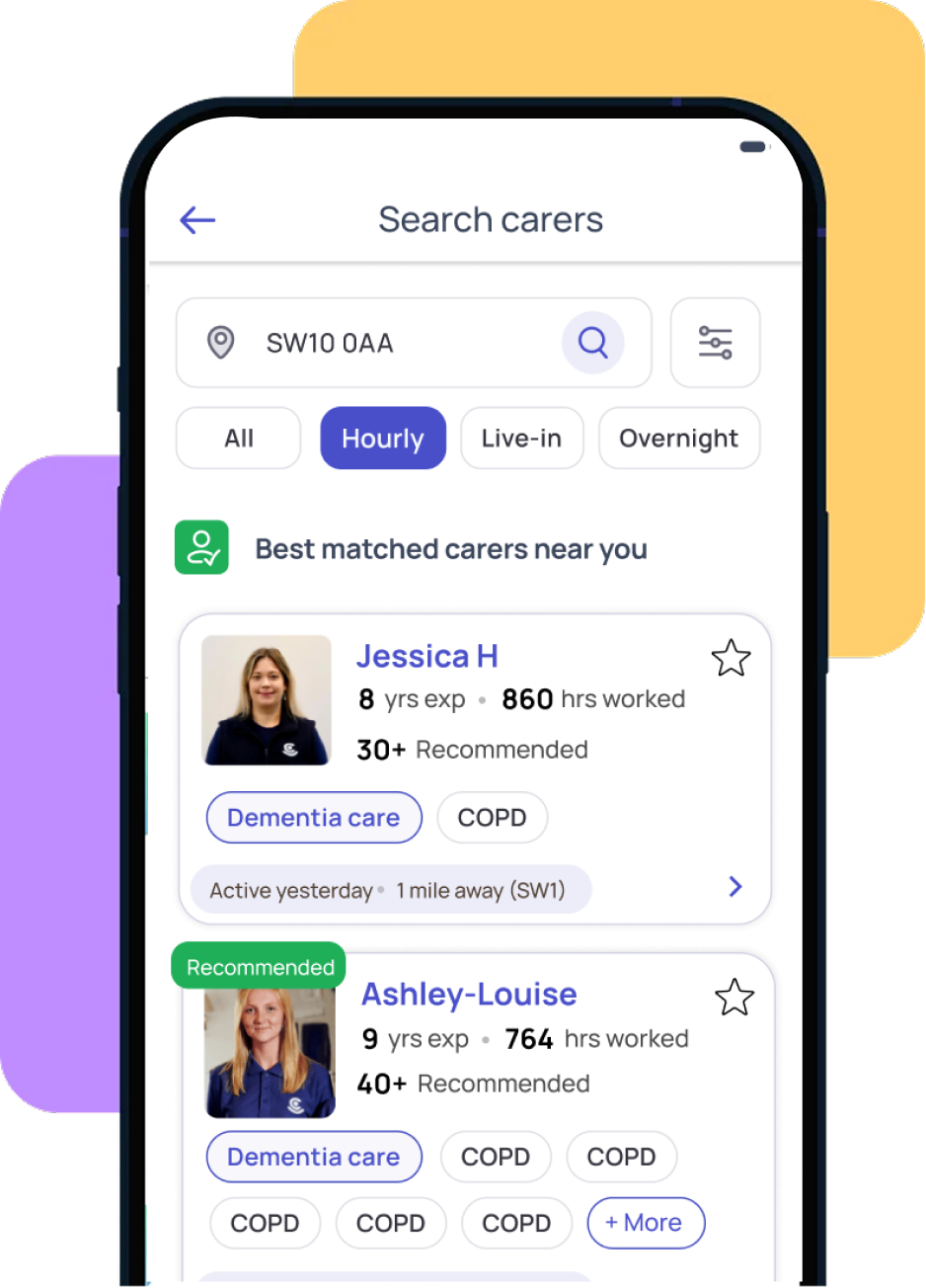
With Curam, families can search from over 10,000 vetted carers, including carers offering live-in support, view profiles, check availability and speak directly with carers. In some situations, live-in care can be arranged much faster than families expect.
This guide explains how quickly live-in care can be arranged, why traditional routes may take longer and how Curam helps families find support sooner.
What is live-in care and who is it for?
Live-in care allows a person to remain in their own home while receiving ongoing support from a carer who lives with them.
It is often considered by families who want an alternative to residential care or when someone needs more support than visiting care can provide.
Live-in care may be suitable for people who need help with:
- Personal care and daily routines
- Mobility support
- Medication prompts
- Meal preparation
- Companionship and reassurance
- Dementia care
- Support with complex needs
It can be particularly helpful when someone wants to remain independent at home but needs regular support throughout the day and night.
How long does live-in care take to organise through a traditional agency?
The time it takes to arrange live-in care through a traditional agency can vary, but it often takes longer than families expect. A traditional agency may need to:
- Assess the person's care requirements
- Search for an available carer
- Check staff availability
- Match experience and skills to care needs
- Coordinate start dates and arrangements
Depending on availability and the complexity of care required, this process can take several weeks. Traditional agencies can be a suitable option for planned care arrangements, but they may not always provide the speed and flexibility needed when care is required urgently.
Why the matching process takes time
Finding the right live-in carer is different from arranging shorter care visits.
Because a live-in carer spends significant time in the person's home, finding a good match is really important. Families often need to consider:
- The person's care needs
- The carer's experience
- Personality and communication style
- Shared interests and routines
- Availability for the required start date
For example, someone requiring dementia support may need a carer with specific experience, while someone recovering after illness may need support with mobility and daily activities.
The matching process matters, but it does not have to mean waiting weeks. Choosing a service where families can search and speak with carers directly can help speed up the process.
How Curam arranges live-in care faster
Curam takes a different approach by connecting families directly with self-employed carers.
Instead of waiting for an agency to find and allocate a carer, families can search available carers themselves and choose someone who matches their needs.
Through Curam, you can:
- Search profiles of vetted carers
- View experience, qualifications and reviews
- Check availability
- Contact carers directly through our app
- Discuss your loved one's needs
- Agree care arrangements
With over 10,000 vetted carers available through the platform and more than 6.5 million hours of care already delivered, Curam gives families access to a trusted community of carers while keeping them in control of the process.
Families can also use CuramMeet to video call carers before booking. This allows you to ask questions, discuss expectations and make sure the arrangement feels right before care begins.
The Curam live-in care timeline
Every live-in care arrangement is different, but the process is designed to be simple and straightforward.
-
Search for available carers
You can start by entering the postcode where care is needed and using filters to search for Care Professionals who may be suitable for your situation. You can then review profiles, experience, reviews and availability before deciding who you would like to contact.
Alternatively, you can post a care job with your requirements, location and preferred schedule. Suitable Care Professionals can then apply directly, giving you another way to connect with carers who match the support you need.
-
Speak with potential carers
Once you have found carers who look suitable, you can communicate directly through Curam.
This is an opportunity to discuss:
- Care requirements
- Start dates
- Daily routines
- Personal preferences
- Any questions you have
You can also arrange a video call through CuramMeet.
-
Agree care arrangements
Once you have found the right match, you can agree the details of care directly through Curam with your chosen carer. This includes when care will begin, the support required, daily routines and any practical arrangements within the home. Before the shift can begin, a service agreement must be created and the shift invoice needs to be set up through Curam, so both the client and carer are clear on what has been agreed.
-
Start care
Depending on your needs, location and carer availability, live-in care may be arranged quickly.
Starting your search early gives you the greatest choice, but Curam's real-time availability helps families explore suitable options without unnecessary delays.
What affects the timeline for live-in care?
Several factors can affect how quickly a live-in carer can start.
The level of care required
The more specific the care requirements, the more important it is to find someone with the right experience.
Factors that may affect the search include:
- Dementia care experience
- Complex medical needs
- Mobility support
- Specialist skills
- Overnight support requirements
Location and carer availability
Where your loved one lives can affect how many suitable carers are available.
Adding your postcode when searching helps you see carers who may be able to provide care in that area and understand your local options more quickly.
How quickly decisions can be made
Having key information ready can help avoid delays. Before searching, it helps to know:
- The type of support required
- Preferred start date
- Daily routine
- Any medical needs
- Home arrangements for the carer
How Care is being funded
How care is funded can also influence timescales. Some families choose private care because it allows them to arrange support directly and move more quickly.
Others may explore funding options such as Local Authority support or NHS Continuing Healthcare, where assessments and eligibility checks may affect the timeline.
Many families begin exploring immediate care options while also looking into longer-term funding routes. Same-day live-in care depends on whether a suitable carer is available and able to start immediately. Curam helps families see available carers and begin conversations quickly.
What to have ready before a live-in carer starts
Once you have found a suitable live-in carer, preparing the home and agreeing practical arrangements can help the transition go smoothly.
Families often focus on finding the right person but may overlook some of the day-to-day details that help a live-in arrangement work well. Before care begins, it is helpful to prepare:
A suitable space for the carer
A live-in carer will need their own private room within the home, with reasonable facilities and a comfortable space where they can rest when they are not providing care.
Discussing arrangements in advance helps both the family and carer understand what to expect.
Meals and food arrangements
Families and carers should agree how meals will work before care starts.
This may include:
- Whether the carer eats meals with the person they support
- Whether food shopping is included as part of the routine
- Whether a food allowance is provided
Clear arrangements help avoid misunderstandings and allow everyone to settle into a routine.
A summary of care needs and daily routines
Having written information ready can help a carer understand your loved one's needs from the beginning.
This may include:
- Personal care requirements
- Daily routines
- Medication information
- Medical conditions
- Mobility needs
- Preferences and likes/dislikes
- Important appointments or contacts
A clear overview helps the carer provide more personalised support from day one.
Access details and important contacts
Make sure the carer has the information they need to support your family member safely.
This may include:
- Keys or access arrangements
- Emergency contact details
- Family members involved in care
- GP or healthcare contact details
- Information about any household routines
Good preparation helps create a smoother start for both the person receiving care and the carer.
Questions to ask a live-in carer before they begin
Choosing a live-in carer is an important decision. Taking time to ask questions before care begins can help ensure they are the right match for your loved one's needs and lifestyle.
Useful questions to ask include:
- What experience do you have supporting someone with similar needs?
- Have you cared for someone with specific conditions such as dementia or mobility issues?
- How would you approach situations that happen overnight?
- What type of care routines are you most experienced with?
- What working patterns or breaks do you prefer?
- Are you comfortable with pets in the home?
- Are there any household arrangements you would like to discuss before starting?
A conversation before care begins helps both sides understand expectations and build trust.
Through Curam, families can review carer profiles, experience, references and ratings before making a decision. You can also use our CuramMeet feature to speak with a carer by video call before confirming care.
Written by: Max Huianu, Marketing Assistant at Curam
Reviewed by: Eve Leefe-Griffiths, Marketing Manager at Curam
Last updated: July 2026
Frequently Asked Questions
How quickly can a live-in carer be arranged?
The timeframe depends on your loved one's needs, location and carer availability. Through Curam, families can search available carers, view profiles and make contact directly, helping speed up the process.
Can a live-in carer start at short notice?
Yes, in some circumstances. Availability depends on finding a suitable carer who matches your requirements and can start when needed.
Can live-in care be arranged in an emergency?
Emergency live-in care may be possible depending on the situation and available carers. Starting a search quickly and having key information ready can help move arrangements forward.
Do live-in carers provide care overnight?
A live-in carer is there to provide ongoing support throughout the day and can offer reassurance overnight. The exact level of overnight support should be discussed and agreed before care begins.
What facilities does a live-in carer need?
A live-in carer will need their own private room and access to reasonable household facilities. Practical arrangements should be discussed before the care placement begins.
How do I know a live-in carer is trustworthy?
Look for carers with verified experience, references, DBS checks and reviews. Curam provides access to carer profiles and allows families to speak with carers before booking through our audio/video call feature, CuramMeet.
Find a live-in carer through Curam
When a loved one needs full-time support, finding the right live-in carer quickly can make a significant difference.
Curam helps families connect with over 10,000 vetted carers, allowing you to search profiles, compare experience, check availability and speak with carers before making a decision.
With real-time availability and in-app tools such as CuramMeet and FamilyCircle, arranging live-in care can be simpler, faster and more transparent.
Start your search today and find a live-in carer who can provide trusted support in the comfort of your loved one's home.