




 Vetted & approved carers
 DBS checked & insured
What Is It Like to Work as a Live-In Carer in the UK?
I decided to become a live-in carer because I wanted to make a difference to people’s lives, especially to those who need it most. I’ve been a carer and Personal Assistant for 20 years, five of which have been spent working in live-in care, and choosing this career has proven to be the most fulfilling thing I could have wished to do.
For anyone searching for rewarding care jobs in the UK, live-in care offers the opportunity to build meaningful relationships while helping people remain safe and independent in their own homes.
What Does a Live-In Carer Do?
A live-in carer’s role is to support someone in their own home, provide personal care, companionship and attend to any medical needs they may have, whilst encouraging them to remain as independent as possible. You’ll also be their companion, learning all about their needs and daily routine as you go along. You’ll assist them to wash and dress each day, prepare meals, and sometimes assist them to eat. You’ll prompt them to take their medication in line with their care plan and perhaps do gentle physio exercises together.
Although every live-in care job is different, the main aim is always to provide person-centred home care that respects the client’s routines, choices and independence.
What Is a Typical Day Like in a Live-In Care Role?
You’ll spend the day doing activities which they enjoy, such as puzzles or listening to their favourite music, and take them to activity groups such as singing, cafes, or to visit their friends and family. You’ll get to know when they just wish to be quiet for a while or take a nap. You’ll learn their likes, dislikes, routines and preferences very quickly.
This companionship is one of the most rewarding parts of working as a live-in care assistant. You are not simply completing a list of tasks; you are supporting someone to continue living their life in the way they choose.
Breaks, Downtime and Live-In Carer Pay
Once you’ve assisted them with their bedtime routine, that’s when you’ll have your own downtime. Occasionally, some clients may need assistance during the night, but this will be discussed before you accept a live-in care placement.
Live-in carers are given a two-hour break daily, which will also be discussed with the family prior to the start of the placement. You get to set your own rates of pay, which clients will be able to see on Curam’s website.
This flexibility can make self-employed live-in carer jobs particularly appealing to experienced carers who want greater choice over their clients, placements and rates. You can also use Curam’s carer earnings calculator to estimate potential income based on the type of care you provide, your location and the amount of work you choose to take on.
Starting Your First Live-In Care Job
I remember my first live-in care job, and how I felt preparing for my first day. I had so many questions running through my mind: What should I pack? Will the client like me? Will I learn the routine quickly? The good news is that these feelings are completely natural, and within hours of being in your new temporary home, things will fall into place very quickly, and you’ll realise there was no need to worry.
Having said that, you’ll still have the same doubts at each new placement, which again, is totally natural. Every client is unique, so each live-in care role will be different.
Every Live-In Care Placement Is Different
Depending on whether you’re caring for someone with Alzheimer’s or Parkinson’s, for example, or a client who’s recovering from a stroke, or even if you are just there as a companion, each placement will be different. Some live-in care jobs may focus on personal care and mobility support, while others involve dementia care, recovery support, meal preparation, or simply being a reassuring companion.
What Should You Pack for a Live-In Care Placement?
When you’re preparing to go to your placement, it’s best to pack lightly. Comfortable clothes, shoes, PJs and slippers are a must, along with your toiletries, electrical devices and anything you usually need on a daily basis in your own home. Clients usually provide your bedding and towels.
It is also helpful to take any documents or practical items requested for the placement and to check the sleeping, food and travel arrangements before you arrive.
Preparing for Your Client Interview
When you have your interview with the client, which may be held by phone or video call, you can discuss whether you will be sharing the client’s food or be given a food allowance each week. The conversation is also an opportunity to ask about the client’s care needs, daily routine, mobility, night-time support and what they expect from their live-in carer.
If you are using Curam, you can manage communication, care opportunities and bookings through the Curam App for Carers, helping you stay organised before and during a placement.
Read the Care Plan Before the Placement Starts
Before your placement starts, you’ll be given lots of information about the client’s routine, needs and personal preferences, such as them only liking to drink from a particular cup, or always watching their favourite programme at 3 pm. Reading the plan carefully will help you provide consistent, person-centred care from the first day of the placement.
Medication Support and Attention to Detail
Most importantly, you’ll be taught about their medication. Study everything carefully and don’t be afraid to ask as many questions as you need to. The client will be reassured by your attention to detail. Remember to take a pen and pad with you and write everything down. I find that videoing or recording the medication instructions on my phone is the best way to learn. Always follow the agreed plan, medication instructions and required records. Never use a personal recording unless this has been formally authorised and is appropriate under the client’s care arrangements.
Developing Specialist Care Skills
Some clients require hoisting or PEG feeding, whereas others just need mobility assistance, meal preparation and companionship. You can continue to train in new fields of care as you go, such as stoma care for example.
Building specialist skills can help you access a wider range of live-in carer jobs and support clients with more complex needs. You should only carry out tasks for which you have the appropriate training, confidence and authorisation.
Building Trust with Your Client
The first day is about building trust and settling in, and after a while everything will fall into place. You’ll soon feel like part of the family. I’ve made some lovely friends along the way!
For me, this is what makes a career in live-in care so rewarding. Each placement is a chance to make a genuine difference while helping someone remain comfortable, confident and independent at home.
Find Flexible Live-In Carer Jobs with Curam
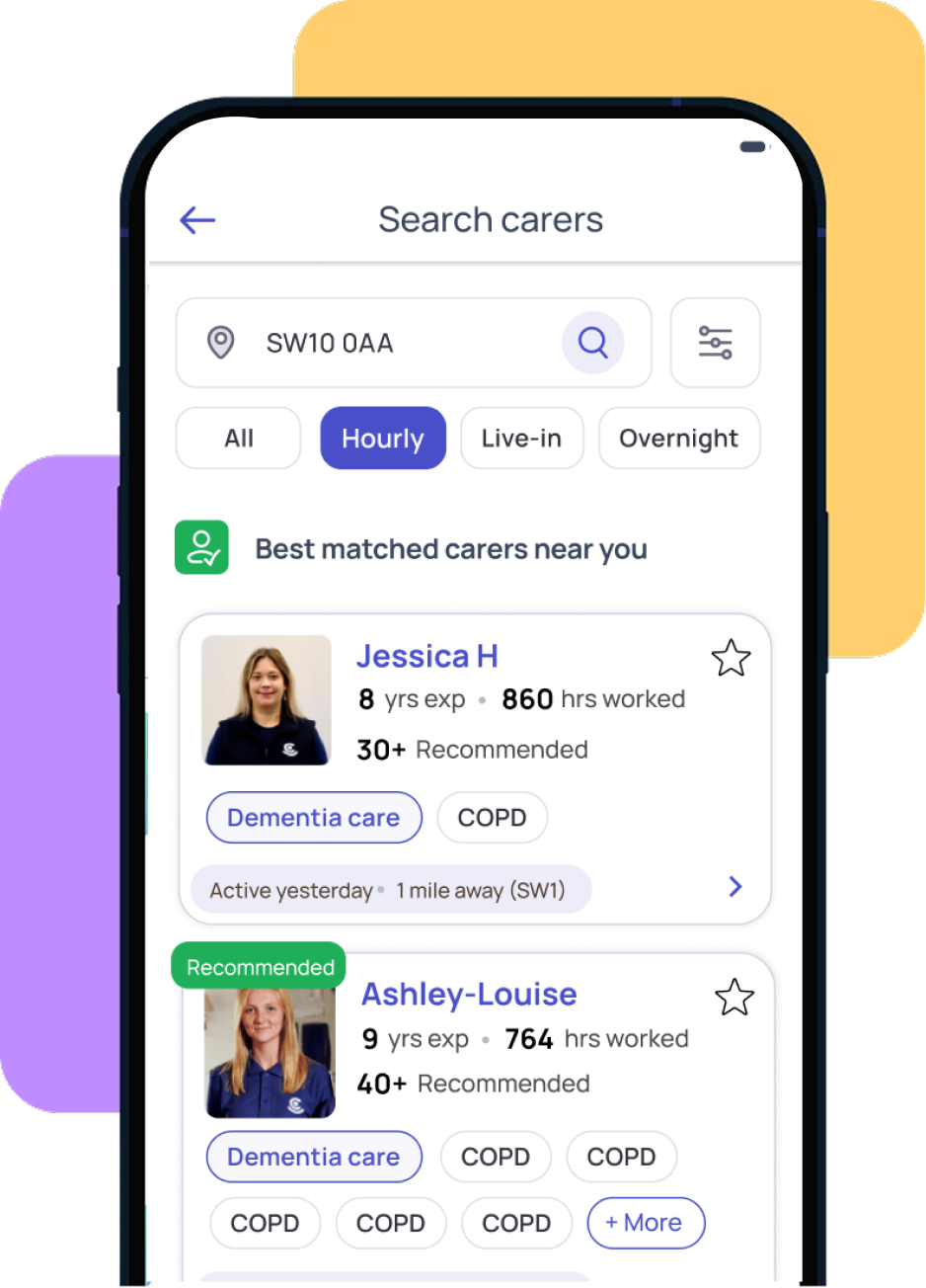
If you are searching for live-in carer jobs in the UK, Curam gives self-employed Care Professionals greater choice over who they work with, when they work and what they earn. You can create a profile, set your own rates and explore live-in care vacancies that match your experience, skills and availability.
You can also download the Curam App for Carers to manage your profile, set your availability, view care opportunities, communicate securely and stay organised throughout your working day. For more information about working through Curam, visit the Curam carer FAQs or use the carer earnings calculator to estimate what you could earn.
Written by: Christina Y, Curam Care Professional with over 20 years’ care experience
Edited and reviewed by: Eve Leefe-Griffiths, Marketing Manager at Curam
Last reviewed: July 2026