




 Vetted & approved carers
 DBS checked & insured
If you are reading this, you may have just been told that someone you love is nearing the end of their life, that their condition is deteriorating quickly, or that a hospital or hospice discharge may need to happen soon. It can feel frightening, confusing and very urgent, especially if you are trying to arrange end-of-life care at home quickly.
End-of-life care at home can often be arranged quickly, even while NHS funding is still being confirmed. The NHS Fast Track Continuing Healthcare at home pathway is designed to help people with rapidly deteriorating conditions receive care without unnecessary delay. However, families may still need practical support in place straight away, particularly when a loved one is being discharged from hospital, or their needs have changed suddenly.
Curam helps families find compassionate, vetted carers for palliative care at home, urgent care at home, overnight support, live-in care or additional visits, depending on what is needed and carer availability in the area. Curam carers provide practical, personalised support at home and can work alongside district nurses, hospice teams and other healthcare professionals.
This guide explains how fast-track end-of-life care at home works, what NHS Fast Track Continuing Healthcare means, and how to start arranging palliative care at home quickly through Curam while funding is being confirmed.
When care needs to be in place within days, not weeks
Some families have time to plan care gradually. Others are told suddenly that care needs to be arranged within days, sometimes after a hospital discharge meeting, a hospice referral, or a conversation with a consultant, GP, district nurse or palliative care team.
This can often happen during a rapid end-of-life discharge, where a loved one’s condition has deteriorated quickly and they wish to spend their final days or weeks at home, or hospital staff feel they are medically ready to leave but will need support in place before they can return safely.
In these situations, the usual timescales for arranging care can feel far too slow. Families may be trying to understand funding, speak to clinicians, prepare the home, support other relatives and find a carer all at once.
Fast-track care is designed for situations where someone’s health is changing quickly, and delays could leave them without the support they need. When someone is nearing the end of life, the priority is usually comfort, dignity, safety and making sure the right support is in place as quickly as possible.
Same-day and next-day care while the funding is confirmed
Care can often begin before every piece of paperwork is complete. When a loved one needs urgent end-of-life care at home, families do not always have to wait for NHS Fast Track Continuing Healthcare funding to be fully confirmed before putting support in place.
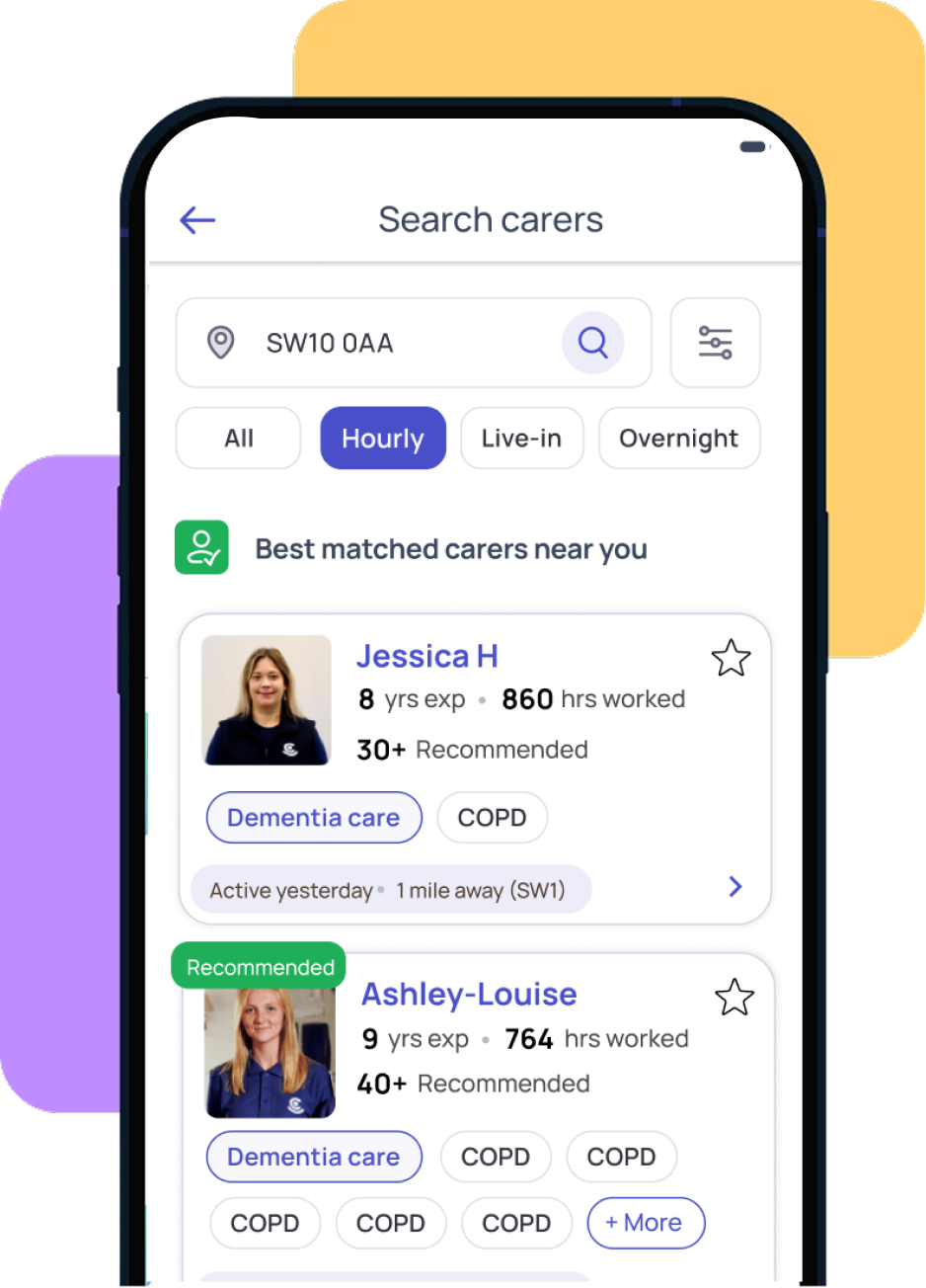
Through Curam, families can search for local carers, review profiles, message carers directly through the app and discuss availability straight away. Depending on your location, the support needed and carer availability, a vetted carer may be able to start within 24 to 48 hours, and in some situations, same-day support has also been made possible.
This can help bridge the gap between being told care is needed and the NHS funding process being finalised. For many families, this immediate support can make it possible for a loved one to return home sooner, remain comfortable at home, or avoid being left without the help they need while decisions are being made.
Curam can help families look for home care, overnight care, live-in care, 24-hour care or palliative care at home 24/7.
Why you do not have to wait for the paperwork
NHS Fast Track Continuing Healthcare is there to help fund care for people whose health is deteriorating quickly and who may be nearing the end of life. However, the application and confirmation process can still involve clinicians, paperwork and communication between teams, which can take some time.
Private care arrangements can run alongside this process. This means a family can arrange a carer privately while the fast-track application is being completed or reviewed.
For some families, temporary support is still needed for a few days while funding is being confirmed. For others, it may continue alongside NHS-funded support or be adjusted once the care package is agreed. If you are unsure what to do, it can help to speak to the hospital discharge team, district nurse, hospice team or GP, while also beginning your search for care so that support can be ready as soon as it is needed.
What is NHS Fast Track Continuing Healthcare?
NHS Fast Track Continuing Healthcare is a quicker route to NHS Continuing Healthcare funding for people who have a rapidly deteriorating condition and may be nearing the end of their life. NHS Continuing Healthcare, often called NHS CHC, is a package of care arranged and funded by the NHS for adults with significant health needs. It can be provided in different settings, including a person’s own home, making NHS Fast Track Continuing Healthcare at home one of the routes families explore.
The fast-track pathway is different from the standard NHS Continuing Healthcare assessment because it is designed for urgent situations. It should be used when someone’s condition is worsening quickly and they may be entering a terminal phase. In these cases, care should be put in place as soon as possible, usually within 48 hours of the completed fast-track pathway tool being received by the relevant NHS team.
Fast Track Continuing Healthcare is not means-tested. This means eligibility is based on health needs, rather than income, savings or property. For detailed funding guidance, families should speak to the clinician involved in their loved one’s care and read Curam’s guide to NHS Continuing Healthcare funding, the official NHS Continuing Healthcare guidance or the GOV.UK Fast Track Pathway Tool guidance.
Who can be considered for fast-track funding
Fast-track funding may be considered when someone has a rapidly deteriorating condition and may be nearing the end of life. This could include people whose health has changed suddenly, people with advanced illness, or those receiving palliative or end-of-life care where care needs are increasing quickly.
A clinician involved in the person’s care, such as a doctor, nurse, consultant or other appropriate healthcare professional, usually completes the fast-track pathway tool. Families can ask the hospital team, GP, hospice team or district nurse whether a fast-track referral should be considered.
Not every person receiving palliative care will automatically qualify for Fast Track Continuing Healthcare. The decision is based on clinical need, so it is important to speak to the professionals involved in your loved one’s care. Our guide to NHS Continuing Healthcare funding covers eligibility in more detail.
How quickly fast-track care should be arranged
The NHS Fast Track Continuing Healthcare process is designed to move quickly, helping to reduce delays and avoid added distress for the person needing care and their family. Once the fast-track pathway tool has been completed and sent to the Integrated Care Board, the care package should usually be arranged as soon as possible. The NHS guidance refers to care normally being arranged within 48 hours of the completed tool being received.
Families can help keep things moving by asking who is responsible for completing the fast-track form, when it will be submitted, who will confirm the care package and what support is expected to be in place at home.
While this is happening, families can also begin searching for private care through places like Curam so support can be arranged quickly if there is a delay, a gap in provision, or an immediate need before funding is confirmed.
How to arrange end-of-life care at home through Curam
With Curam, families can start by entering the postcode where care is needed and searching for carers nearby. You can use filters to look for carers with experience in palliative care, end-of-life care, personal care, mobility support, dementia care, overnight care or live-in care support.
You can also post a care job explaining what care is needed, where care is required, when support needs to begin and whether the care is urgent. Suitable carers can then apply directly to your posted job, giving you another way to connect with available carers at short notice.
Families can review carer profiles, experience, availability, reviews and rates before deciding who to contact. You can message carers directly through Curam to explain your care situation, ask about their experience and check whether they are able to support your loved one’s care needs.
Before booking, you can also use CuramMeet, Curam’s in-app audio and video call feature, to speak with a carer. This gives you the chance to ask questions, discuss your loved one’s needs, talk through routines and get a better feel for whether the carer is the right fit before care begins.
Once you have found the right match, you can agree the details of care directly through Curam with your chosen carer. This includes when care will begin, the support required, daily routines and any practical arrangements within the home. Before the shift can begin, a service agreement and shift invoice must be created and shared through Curam, so both families and carers are clear on what has been agreed.
A typical timeline from enquiry to first visit
Every situation is different, but urgent end-of-life care at home can often move quickly through Curam, depending on location, care needs and carer availability.
A typical process may look like this:
-
You search by postcode or post a care job explaining the urgent support needed.
-
Review suitable carers and check their experience, availability and rates.
-
You message carers directly through Curam to see if they are available.
-
Use CuramMeet to speak by audio or video call if helpful.
-
You agree the start date, care needs, routine and practical arrangements.
-
A service agreement and shift invoice are created and can be paid for before care begins.
-
Your chosen carer starts supporting your loved one at home.
In some cases, we've had a carer booked and on site in under an hour. In urgent situations, same-day support may also be possible if suitable carers are available nearby.
What a carer can help with at the end of life
A carer providing end-of-life support at home can help with many non-medical tasks that make daily life more comfortable and manageable. This may include personal care, washing, dressing, toileting support, continence care, changing bedding, preparing light meals or drinks, helping someone move safely, offering companionship and providing calm reassurance.
A carer can also support the wider family by being a steady presence in the home. They may help keep routines gentle and familiar, make sure the person is not left alone for long periods, and provide practical help so relatives can rest, spend meaningful time with their loved one, or step away briefly when needed.
For someone who is unsettled at night, overnight care may provide reassurance and practical support. If needs become more continuous, families may want to consider live-in care or 24-hour care. A home carer does not replace clinical care from nurses, doctors or hospice teams. Instead, they provide practical, compassionate support between visits from medical professionals.
Working alongside the district nurses and hospice team
End-of-life care at home often involves several people. This may include the GP, district nurses, hospice team, palliative care specialists, hospital discharge team, family members and a home carer.
A Curam carer can help support day-to-day care around clinical visits. This may include helping with comfort, personal care, food and drink, positioning, mobility, companionship and reassurance. They can also help families notice changes and pass on concerns to the appropriate healthcare professional, if agreed as part of the care arrangement.
District nurses and hospice teams remain responsible for clinical care, such as medication plans, symptom management, equipment advice and nursing tasks. A home carer can complement this by helping your loved one feel supported, settled and cared for between those visits.
This can be especially important during a rapid discharge for end-of-life care. Having a calm, experienced carer in the home can help make the transition feel less overwhelming and give families more confidence that their loved one is not being left without support.
Funding end-of-life care at home
There are usually two main routes families may consider when arranging urgent end-of-life care at home.
The first is NHS Fast Track Continuing Healthcare. If your loved one has a rapidly deteriorating condition and may be nearing the end of life, a clinician may complete the fast-track pathway tool so that an NHS-funded care package can be arranged quickly. Our guide to NHS Continuing Healthcare funding explains this route in full.
The second is self-funding private care while the NHS process is being completed, or if fast-track funding has not yet been confirmed. This can be helpful when care needs to begin immediately, especially if a discharge is imminent or the family is worried about leaving their loved one unsupported at home.
Some families use private care for a short time while waiting for funding decisions. Others continue with private care because they want more choice over who provides support, when care takes place, and how the arrangement works around their loved one’s routine.
Curam allows families to compare carers, discuss rates directly and arrange flexible care around their needs. You can start by browsing carers or posting a care job.
If fast-track funding is delayed or declined
If fast-track funding is delayed, it is important to ask the hospital team, GP, district nurse or hospice team who is handling the referral and when a decision is expected. You can also ask what interim support is available while the application is being reviewed.
If fast-track funding is declined, you can ask for the decision to be explained and whether it can be reviewed. Your loved one may still be eligible for other support, depending on their needs and circumstances. In the meantime, private care can help make sure your loved one has practical support at home. This may be short-term care while funding is being clarified, or longer-term care if the family chooses to continue arranging support privately.
Curam can help families find carers quickly, compare experience and availability, and arrange care around changing needs. If you or a loved one needs care support quickly, start by posting a job.
Find compassionate end-of-life care through Curam
When a loved one is nearing the end of their life, arranging care can feel deeply difficult, especially when decisions need to be made quickly, but you don't have to manage every part of this alone.
Curam can help you find compassionate, vetted carers who can provide practical support, comfort and reassurance at home. Whether you need urgent end-of-life care, palliative care, overnight support, live-in care or help while NHS Fast Track Continuing Healthcare funding is being confirmed, you can begin your search online and speak directly with carers who may be suitable through our app
Start by searching for carers near your loved one or posting a care job on Curam. If you are unsure where to start, you can also speak to Curam’s support team for guidance on finding suitable care.
You can also read our guide to NHS Continuing Healthcare funding, the official guidance on NHS Continuing Healthcare and the Fast Track Pathway Tool if you are trying to understand funding options. Help can often be put in place quickly, giving your loved one the chance to receive calm, respectful and personalised care at home with Curam.
Written by: Max Huianu, Marketing Intern at Curam
Edited and reviewed by: Eve Leefe-Griffiths, Marketing Manager at Curam and/or Curam Care Support Team
Last reviewed: August 2026
Frequently Asked Questions
How quickly can end-of-life care start at home?
In some urgent situations, families have found same-day care on Curam and had a carer on site in under an hour. End-of-life care at home can often start within 24 to 48 hours through Curam, depending on location, availability and the level of support needed.
Can care be arranged overnight or at the weekend?
Yes, care can often be arranged overnight or at the weekend, depending on carer availability in your area. Curam is available online 24/7, so families can search, message carers and post care jobs outside of normal office hours.
Families may need overnight care if their loved one becomes unsettled at night, needs help with toileting, is at risk of falling, or should not be left alone. Weekend care may also be needed after a rapid discharge or when family members need additional support.
What happens if my loved one’s needs change quickly?
End-of-life care needs can change very quickly. Someone may begin by needing short visits, then need longer hours, overnight support, live-in care or 24-hour care as their condition changes.
With Curam, families can speak directly with carers about increasing support, adding visits or changing the care arrangement where possible. You can also post a new care job if you need additional carers or more urgent cover.
If your loved one’s symptoms, medication needs or comfort needs change, you should contact the district nurse, hospice team, GP or relevant healthcare professional for clinical advice.