




 Vetted & approved carers
 DBS checked & insured

Live-In Care vs Hourly Care: Which Is Right for Your Loved One?
Deciding on the right type of care for a loved one can often feel like a challenge, particularly when you want to balance independence, safety and quality of life. For many families exploring home care in the UK, the choice often comes down to live-in care vs hourly care. Both care types allow people to remain in familiar surroundings while receiving personalised support, but they offer different levels of assistance depending on individual needs.
Whether you're looking for elderly care at home, support for a parent recovering from illness, or help managing a long-term condition, understanding the differences between live-in care and hourly care can help you make a confident and informed decision. The right option will depend on factors such as mobility, personal care requirements, overnight support needs, family availability and the level of day-to-day assistance required.
With Curam, families can access more than 10,000 vetted carers UK wide, including over 3,400 Care Professionals offering live-in care. Families can browse profiles, compare experience, review recommendations, check availability and message carers directly through our app. Whether you're searching for carers near me, a private carer for elderly support, Curam gives you the flexibility to find care that works around you and your loved one's needs.
Throughout this guide, we'll explain the key differences between live-in care vs hourly care, explore the benefits and costs of each option, and help you understand when one type of care may be more suitable than the other.
What Is the Difference Between Live-In Care and Hourly Care?
One of the most common questions families ask is whether live-in care or hourly care is the right choice for their loved one. Both options provide personalised support in the comfort and familiarity of home, helping people maintain independence while avoiding or delaying a move into residential care.
The key difference between live-in care and hourly care is the level and frequency of support provided. Hourly care involves a carer visiting at agreed times during the day or week to assist with specific tasksfor a couple of hours or so. Live-in care, on the other hand, means a dedicated carer stays in the home, providing regular support, companionship and reassurance throughout the day and night, when needed.
When comparing live-in care vs hourly care, there is no one-size-fits-all solution. The right option depends on a person's health needs, mobility, daily routine, safety considerations and personal preferences. Understanding how each type of home care service works can help families make a confident and informed decision.
What Is Hourly Care?
Hourly care offers flexible support for people who need assistance at specific times of the day but remain largely independent between visits. Care can be arranged as occasional visits, daily support, or several visits throughout the week depending on individual needs.
An hourly carer near you may help with personal care, meal preparation, medication reminders, companionship care, mobility support at home, shopping, household tasks or attending appointments. Some families arrange care during busy periods such as mornings and evenings, while others use hourly support to provide respite care for family carers.
For many older adults, hourly care provides the perfect balance between independence and practical support. It allows people to remain in their own homes while receiving help when they need it most. Families searching for elderly care at home in the UK often choose this option when their loved one requires regular assistance but does not need continuous supervision.
Hourly care can also be adjusted as needs change, making it a flexible and affordable home care option for many families.
What Is Live-In Care?
Live-in care involves a professional carer living in the home with the person receiving care. This allows for more consistent support, companionship and reassurance throughout the day and night while enabling the individual to continue living in familiar surroundings.
A live-in carer can assist with a wide range of daily tasks, including personal care at home, meal preparation, medication management, mobility support at home, companionship, household routines and overnight reassurance. Live-in care is often chosen by families when they need 24 hour care at home or more regular support than hourly visits can provide.
Curam currently has more than 3,400 Care Professionals offering live-in care services across the UK, helping families find experienced support tailored to their loved one's needs. Curam has over 6,500 Care Professionals who have experience supporting people with dementia care at home, recovering following illness, managing reduced mobility or requiring ongoing companionship.
For families searching for a live-in carer or exploring alternatives to residential care, live-in care can provide personalised one-to-one support while allowing loved ones to remain in the comfort of home. It can also support those needing care after hospital discharge or overnight care services.
What families say about Curam live-in carers:
"Our carer was local, carried out her caring responsibilities excellently and was also very open and adaptable to what mum needed. The Curam platform was easy to use and streamlined the process considerably” May 1, 2026 Trustpilot
"I was suddenly thrust into needing to find a live in carer urgently for my Mum for a short period. Curam made the search super easy. We set up a meeting with the carer the following day and she started the day after.“ Apr 15, 2026 Trustpilot
When Might Hourly Care Be the Better Option?
Hourly care may be the better choice for people who need support with specific tasks but do not require continuous care throughout the day. This could include help with morning routines, meal preparation, evening visits, medication reminders, companionship or providing respite for family carers.
Because care can be arranged around a person's routine, hourly care offers a flexible solution that can be increased or adjusted if needs change over time. For many families, it provides an affordable home care option while ensuring loved ones receive the right level of support.
When comparing hourly care cost, the total cost will depend on the number of visits, hours required and the carer's experience. Families using Curam can browse private carers, compare profiles and rates, and choose support that suits both their care needs and budget.
When Might Live-In Care Be the Better Option?
Live-in care in the UK may be the best option for people who need more regular support, reassurance or supervision throughout the day and night. It is often chosen when a loved one is living with dementia needs, reduced mobility, frailty, or is recovering following illness, injury or care after hospital discharge.
Live-in care can also be beneficial when a person is no longer safe spending long periods alone or when family members are unable to provide ongoing support. Having a dedicated carer in the home offers personalised assistance, companionship and peace of mind for both the individual and their family.
For those arranging care for a elderly parent at home, live-in care can provide consistent support while allowing their loved one to remain in familiar surroundings and maintain their daily routines. Many Curam Care Professionals have experience supporting people with dementia, stroke recovery, mobility challenges, mental health conditions and post-hospital rehabilitation.
When considering live-in care cost, it's important to weigh the benefits of round-the-clock support, continuity of care and the ability for a loved one to continue living independently at home. Families using Curam can compare carers' experience, availability and rates to find the right support for their needs and budget.
Live-In Care vs Hourly Care: Key Things to Compare
When comparing live-in care vs hourly care, it's important to consider the level of support a person needs both during the day and overnight. Hourly care provides assistance at scheduled times, while live-in care offers more continuous support and reassurance throughout the day.
Key factors to compare include independence, daily routine, safety, flexibility, family involvement and the overall cost of care at home. Hourly care may be suitable for people who need help with specific tasks but can manage independently between visits. Live-in care may be a better fit for those who require regular supervision, mobility support, personal care or overnight reassurance.
Families arranging home care for elderly parents should also think about how care needs may change over time. Some people begin with hourly care and later move to live-in care as their condition progresses or additional support becomes necessary.
Ultimately, the right choice depends on the individual's needs, preferences and lifestyle. Both options can provide personalised support at home, helping people maintain their independence while giving families greater peace of mind.
How Much Does Live-In Care and Hourly Care Cost?
The live-in care cost in the UK and hourly care cost in the UK can vary depending on several factors, including the carer's experience, location, specialist skills, the type of support required and the number of hours of care needed. Because every person's situation is different, there is no single cost that applies to all families.
On Curam, carers set their own rates, giving families greater transparency and choice when arranging care. This means you can browse profiles, compare private carer rates, review experience and find support that matches both your care requirements and budget before making contact.
While rates vary, the average hourly care rate on Curam is £21 per hour, while live-in care can start from around £1,100 per week. On Curam families can compare multiple carers and make informed decisions based on experience, availability and cost.
Whether you're exploring hourly support or live-in care, comparing options can help you find the right balance between quality care, flexibility and affordability. Browse vetted carers on Curam, compare rates and experience, message carers directly, or post a care job to find personalised support for your loved one.
Can Hourly Care Turn Into Live-In Care Later?
Care needs often change over time, particularly after illness, a fall, reduced mobility or after hospital discharge. For many families, support may start with hourly care and gradually increase as needs become more complex or as day-to-day assistance becomes more necessary.
It is common for families to begin with short visits such as help with meals, personal care or companionship, and later transition to live-in care if their loved one requires more consistent support or reassurance at home. This flexible approach can also help during periods of respite care at home, giving family carers a break while ensuring continuity of care.
Curam makes it easy to adapt care as circumstances change. Families can browse carers, compare experience and availability, message carers directly via our app, or book a carer online whenever support is needed. If requirements increase, you can also post a care job to find suitable carers for more intensive or longer-term support.
This flexibility ensures that care can evolve alongside a person’s needs, helping them remain safe, supported and comfortable in their own home for as long as possible.
How to Choose the Right Type of Care for Your Loved One
Choosing between different care options starts with understanding your loved one’s daily routine, level of mobility, personal care needs, overnight reassurance requirements and how much support family members are able to provide. These factors all help determine whether hourly care or live-in care is more appropriate.
Where possible, it’s important to involve the person receiving care in the decision. Discussing preferences, maintaining independence and respecting their routine can make a significant difference to their comfort and wellbeing.
If you are looking to find a carer, it can be helpful to message carers directly via our app to ask questions about their experience, availability and approach to care. Many families also choose to arrange a CuramMeet call before booking care, giving them the opportunity to understand whether a private carer for elderly is the right fit.
At Curam, we’re here to take the time to match the right carer to your loved one’s needs, helping build trust and create a more positive, consistent care experience.
How to Find Live-In or Hourly Carers on Curam
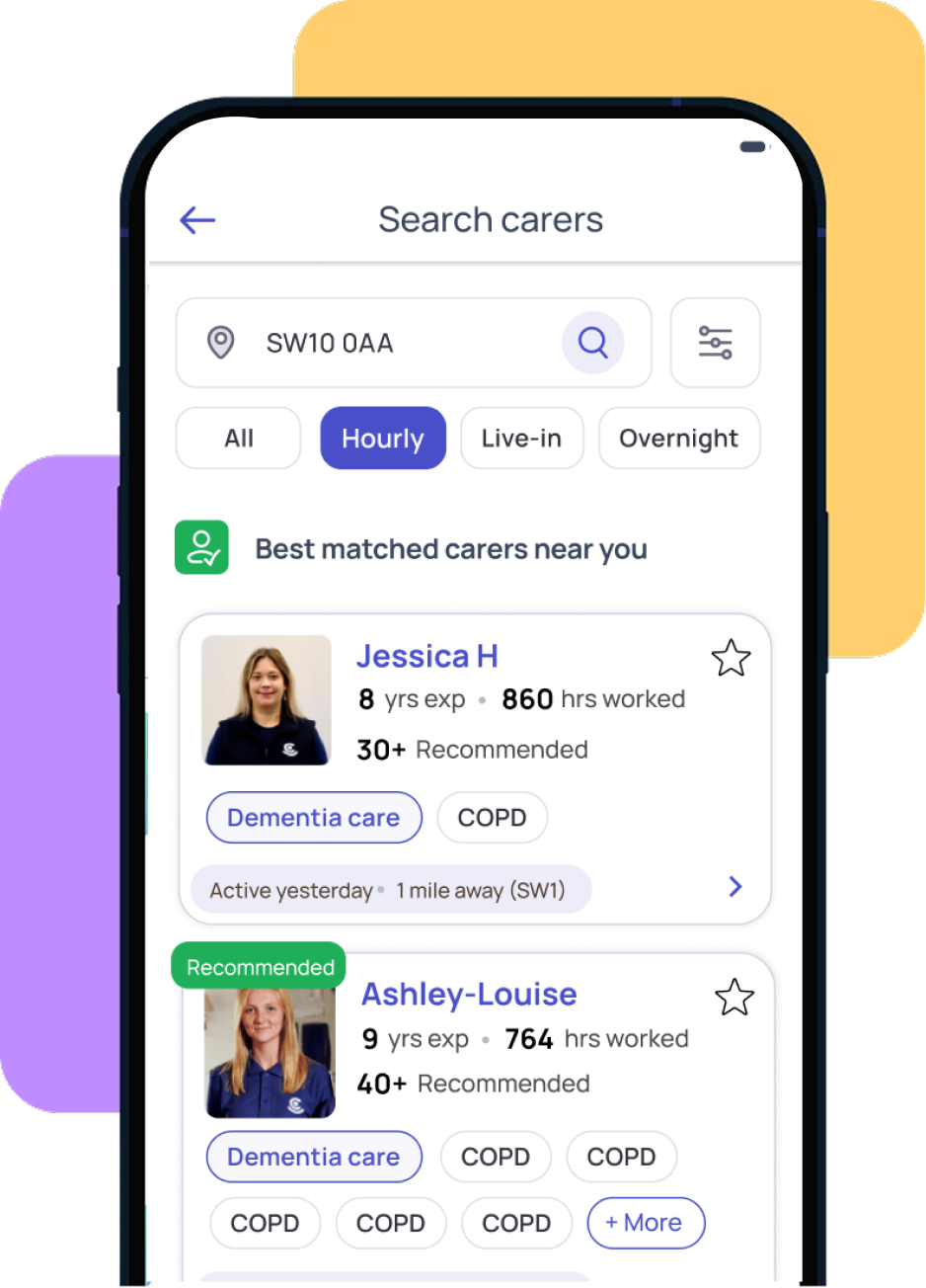
Finding the right support starts with a simple search for carers near me. On Curam, families can enter the postcode where care is needed to browse local, experienced professionals who are available for hourly care, live-in care, or other types of support.
Once results appear, you can filter carers based on specific care needs such as personal care, companionship, mobility support, dementia care or post-hospital recovery. This makes it easier to find private carers who match your loved one’s requirements.
Each profile includes detailed information such as experience, availability, specialist skills, reviews and rates. Families can compare carers side by side, helping them make an informed decision before making contact. You can also message carers directly through the Curam app to ask questions and arrange care in a way that suits your schedule.
If you prefer, you can also post a care job, outlining whether you need hourly care, live-in care, overnight support or another type of care. Suitable carers can then apply directly, giving you more choice and flexibility.
By comparing experience, availability, recommendations, rates and specialist skills, families can confidently choose the right support for their situation while ensuring their loved one receives safe, personalised care at home.
How Curam Helps Families Arrange Flexible Care at Home
Curam is designed to make arranging home care, and care at home simple, transparent and flexible for families. With over 10,000 vetted carers UK wide, an average of 10 years’ care experience, and more than 6.5 million hours of care already delivered, Curam connects families with experienced professionals they can trust.
Every carer on the platform is identity verified and undergoes DBS or PVG checks, helping families feel confident when choosing support. Profiles are fully transparent, allowing you to view experience, specialist skills, availability, reviews and rates before making contact. This level of visibility helps families compare options and find truly experienced carers UK wide.
Curam also gives families direct communication with carers, meaning you can ask questions, discuss needs and arrange care without delays. Whether you're looking for hourly care, live-in care UK, overnight care, respite care, companionship or specialist support such as dementia care or mobility assistance, Curam offers flexibility to match a wide range of needs.
This combination of choice, transparency and direct access makes it easier for families to arrange personalised care that adapts as circumstances change, helping loved ones remain safe, supported and comfortable at home.
Start Your Search for Live-In or Hourly Care Today
If you’re ready to explore care options, the first step is simple: enter the postcode where care is needed to find a carer who can support your loved one at home. From there, you can browse local professionals offering both live-in care and hourly care, depending on the level of support required.
On Curam, families can compare detailed profiles, review experience, check availability, read recommendations and message suitable carers directly through the app. This makes it easier to connect with a live-in carer near you or hourly carer near you who matches your loved one’s needs, routine and preferences.
If you prefer a more tailored approach, you can also post a care job, outlining the type of support you need, whether that’s hourly visits, live-in care, overnight support or specialist care. Care Professionals can then apply directly, giving you a wider choice of experienced carers to consider.
Start exploring flexible care options today with Curam and take the next step toward finding trusted, personalised support for your loved one at home.
FAQs
Is live-in care better than hourly care?
Neither option is inherently “better”, the right choice depends on the person’s needs, daily routine, safety and the level of support required. Hourly care may be more suitable for occasional or scheduled support, while live-in care is often better for people who need more regular assistance, reassurance or overnight support.
What is the difference between live-in care and hourly care?
Hourly care is arranged for set visits during the day or week, while live-in care means a carer stays in the home to provide ongoing support. Both options can include help with personal care, meals, mobility, companionship and reassurance, depending on individual needs.
How much does live-in care cost in the UK?
The live-in care cost in the UK varies depending on location, the level of support required and the carer’s experience. Families using Curam can compare carer profiles, experience and rates before messaging or booking.
Live-in care rates start from around £1,100 per week , with overall costs changing based on individual requirements.
How much does hourly care cost in the UK?
The hourly care cost UK depends on the number of hours required, the type of support needed, location and the carer’s experience. On Curam, families can browse carers, compare rates and message carers directly to find suitable support.
Hourly care rates may start from around £21 per hour. With Curam, families have the flexibility to choose care that suits their needs and budget, with transparent pricing and no hidden fees.
Can I post a job for live-in or hourly care?
Yes. Families can post a care job on Curam, outlining the type of support needed, location, hours and care requirements. Suitable carers can then apply directly in our app if they are available and interested, giving families more choice and flexibility.
Can I speak to a carer before booking?
Yes. Families can message carers directly through the Curam app to ask questions, discuss care needs and learn more about a carer’s experience before arranging support, and they can also arrange a CuramMeet introductory video call, which is a secure, no-obligation in-app video session designed to give families and carers a chance to meet face-to-face, talk through requirements in more detail, ask questions about experience, availability and approach to care, and get a clearer sense of compatibility before booking, helping families make a more informed and confident decision about the right support for their loved one.
Can live-in care help someone avoid moving into a care home?
Live-in care can be an alternative to residential care for some people who wish to remain at home, depending on their needs, safety and level of support required. It allows individuals to receive personalised one-to-one care while staying in familiar surroundings, though families should always assess care needs regularly to ensure the arrangement remains safe and appropriate.
Written by: Frank Amati, Marketing Intern at Curam
Edited and reviewed by: Eve Leefe-Griffiths, Marketing Manager at Curam and/or Curam Care Support Team
Last reviewed: 06/2026