




 Vetted & approved carers
 DBS checked & insured

When someone you love begins to need support at home, it can be difficult to know where to start. You may be trying to understand different home care options, work out what level of support is needed, and decide who you would feel comfortable inviting into your loved one’s home.
Two common routes are arranging care through a traditional care agency or finding a private carer directly. Both can provide valuable support, but they work in different ways. The right choice depends on your loved one’s needs, how much flexibility you want, your budget, and how involved you would like to be in choosing and managing care.
A private carer, sometimes called an independent carer, is independently chosen by families and usually provides one-to-one support directly to someone in their own home. A care agency is an organisation that chooses carers and organises and manages care on behalf of the client, including rotas, staffing and administration.
This guide compares private carers and care agencies, looking at choice, flexibility, cost, safety, continuity and management, to help you decide whether private care vs agency care is right for your family.
What Is a Private Carer?
A private carer provides one-to-one support to someone in their own home. This might be an older parent who is starting to need help with daily routines, an adult with a disability, someone recovering after hospital treatment, or a person living with dementia, Parkinson’s, stroke recovery needs or another long-term condition.
The support can be shaped around what the person actually needs day to day. For some families, this may mean hourly care for help with meals, medication prompts, personal care or companionship. For others, it may mean overnight care for reassurance during the night, short-term respite care when a family carer needs a break, or live-in care when more regular support is needed at home.
A private carer can also help with the smaller routines that make home feel familiar, such as preparing favourite meals, supporting mobility around the house, helping after hospital discharge, or encouraging someone to stay active and connected. The aim is not just to provide care, but to support the person’s independence, comfort and confidence at home.
Private carers may be self-employed, or they may be directly employed by the family or person receiving care. This depends on the arrangement in place, so it is important to understand whether you are engaging a genuinely self-employed carer or becoming an employer.
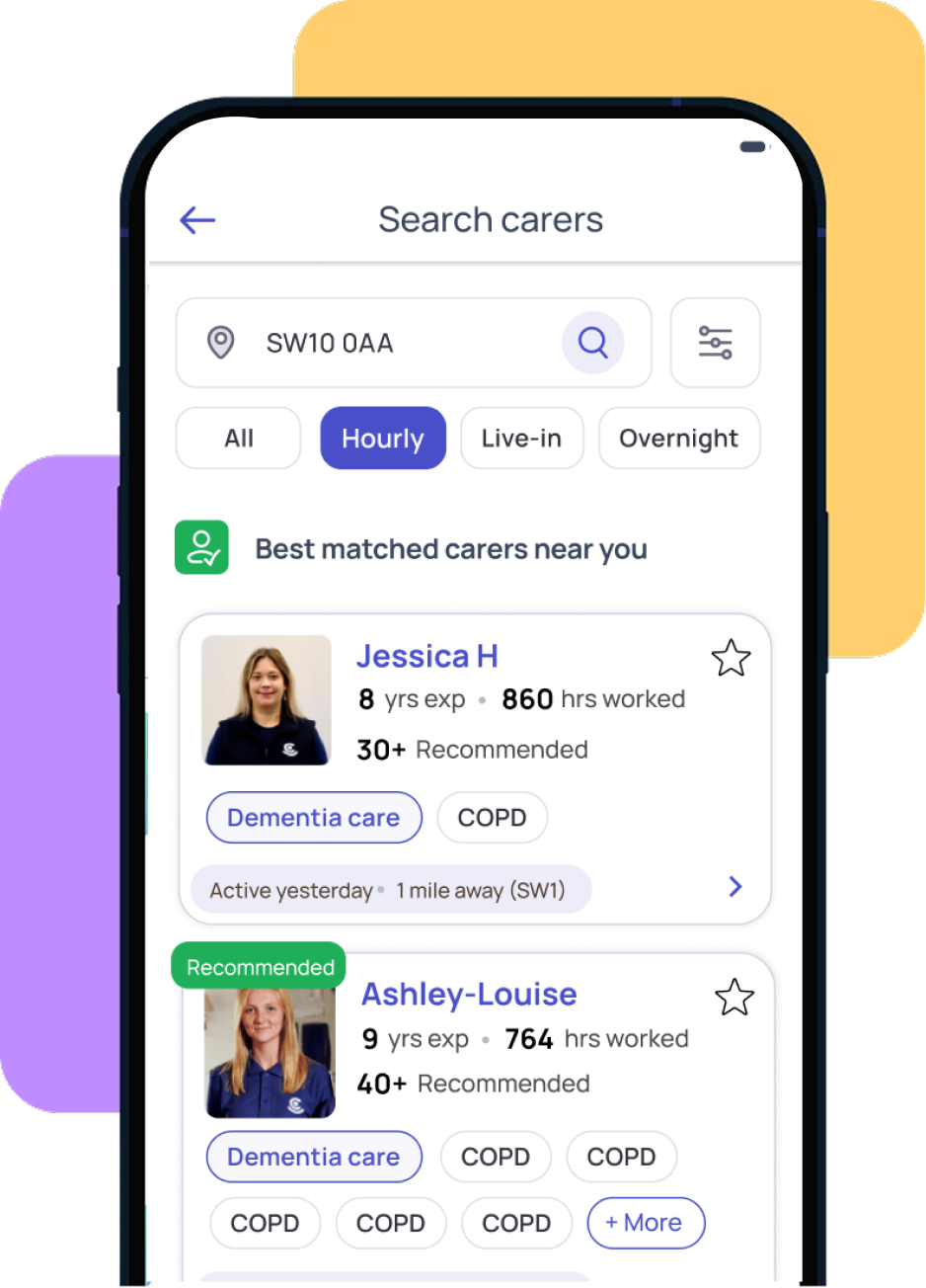
With Curam, families can search for vetted, self-employed Care Professionals, read profiles and speak directly to carers before deciding who feels right for their loved one.
What Is a Care Agency?
A care agency is an organisation that arranges and manages care for clients. Agencies usually handle staffing, rotas, administration and care planning. Depending on the agency and type of service, they may also manage training, supervision, policies and replacement cover.
Agency home care can include visits at set times of day, overnight care, live-in care, respite care or more specialist support, depending on the provider.
For some families, using a care agency feels reassuring because more of the organisation is handled for them. This can be helpful if the family does not want to manage rotas, contact carers directly or think about backup cover themselves.
However, with some agencies, clients may have less direct involvement in choosing exactly who provides care at each visit. Carers are usually assigned based on rota availability, location and staffing levels. This can work well for some families, while others may prefer more control over who comes into the home.
Private Carer vs Care Agency: The Main Differences
The main differences between a private carer and a care agency are usually choice, flexibility, continuity, cost and how much support you’d like with managing care rotas.
With private care, families can often take a more personal role in choosing who supports their loved one. This means looking for someone with the right experience and approach, as well as someone who feels like a good match. This can be especially important when care is regular, personal or long term.
A private carer can get to know the person’s routines, preferences and the small details that make daily life feel easier. Families can also speak with carers directly, ask questions and agree how support should be provided.
With agency care, more of the organisation is handled by the provider. Agencies manage rotas, staffing, administration and replacement cover where available. This can suit families who would rather have a company coordinate the care for them. However, depending on staff availability, the person receiving care may not always see the same carer.
For some families this is fine, but for others, especially when someone feels anxious around new people or relies on familiar routines, seeing the same person can make a real difference. Neither route is automatically better. A private carer may suit families who want more choice and a closer one-to-one relationship, while a care agency may suit those who prefer more of the care to be managed for them.
How Much Choice Do You Have Over Your Carer?
Choice is one of the biggest differences when comparing private carers in the UK with a traditional care agency.
When arranging private care, families can usually choose the individual carer they want to look after their loved one. You’ll sometimes have the opportunity to learn more about the carer before deciding whether they may be right for your loved one.
With Curam, families can view vetted carer profiles, message carers directly and use CuramMeet, Curam’s in-app audio and video call feature, before booking. This can make the decision feel more personal, giving you the opportunity to ask questions and get a better sense of whether the carer feels like a good match.
Usually with care agencies, carers are assigned depending on rotas and staff availability. You may be able to express preferences, but you won’t usually have the opportunity to choose the exact person who provides each visit.
Continuity can be important for many families. Seeing a familiar carer can help build trust, especially for someone living with dementia, anxiety, reduced mobility or personal care needs. Over time, the carer can learn what helps the person feel calm, comfortable and respected. With private care, families also have more clarity over who is coming into the home, because they choose the carer directly and agree the arrangement with them from the beginning.
For more guidance, you may find Curam’s guide on how to find a trusted carer near you helpful.
Which Option Offers More Flexibility?
Flexibility is another important factor when choosing between private care and agency care.
With private care, arrangements can often be discussed directly with the carer. This can make it easier to talk through your loved one’s usual routine, preferred visit times, the type of support needed and the small details that make daily life feel more comfortable.
This can be helpful if your loved one only needs a few hours of support each week, care at particular times of day, help around appointments, overnight reassurance or short-term respite care. It may also suit families whose needs change from week to week, or someone returning home after a hospital stay who needs more personalised one-to-one support.
However, flexibility will always depend on the individual carer’s availability. If they are already supporting other clients, they may not be able to cover every shift or last-minute change, so it is important to talk openly about what is needed from the beginning.
Care agency care can offer more structure, which some families may find reassuring, especially if they want a provider to manage scheduling for them. However, agency care may be less flexible in other ways. Visit times can depend on staff rotas, travel routes, minimum visit lengths and the carers available that day. This can sometimes mean families have less say over the exact time of a visit, how long the visit lasts, or which carer arrives.
Some agencies may also need more notice to change care arrangements, add extra visits or adjust times around appointments. This does not mean agency care cannot work well, but it may feel more structured and less personal if your loved one needs support built closely around their own routine.
The best option depends on the type of care needed, how much flexibility matters and how involved the family wants to be in shaping the day-to-day arrangement.
Private Carer vs Care Agency Costs
The cost of private care and agency care can vary depending on location, care needs, visit length, experience, time of day and the type of support required.
Agency rates include the cost of the carer, as well as running and managing the service, such as office staff, rota planning, training, supervision, insurance, compliance and administration, which means they tend to cost more than hiring a self-employed care professional.
Private Care Professionals on Curam set their own rates, so families can see carer rates before contacting carers, which can make it easier to understand what may work for their budget. Curam's transparent 12% client fee helps cover the platform support behind the arrangement, including safeguarding, insurance, payment protection, technology and support services. Because profiles, messaging, Service Agreements, invoices and secure payments are managed through Curam, families can also reduce the admin that often comes with arranging care separately, helping to keep the process simpler, clearer and more cost-effective.
Curam’s current hourly care cost is from £14–£30 per hour, depending on location, visit length, duties, and the carer’s rate, with the average around £20 per hour. Curam’s live-in care costs sit at around £950–£1,400 per week, depending on location and level of support needed. Traditional Care Agencies typically charge £30-£40 per hour, with live-in care coming in at around £1,600 per week.
What About Vetting and Safety?
Vetting and safety matter whichever route you choose, whether that is a private carer, a care agency or an online care platform.
Before arranging care, it's worth understanding what checks have been completed and what information is available to you. This may include identity checks, right-to-work checks, references, DBS or PVG information where applicable, relevant care experience, training, reviews, insurance arrangements and how payments are managed.
If you find a private carer independently, you may need to check these details yourself. Care agencies and care platforms may carry out their own onboarding checks, but it is still important to understand what has been reviewed before care begins.
Curam Care Professionals go through our vetting processes before they can join and offer care through the platform. This includes bank level ID checks, DBS or PVG checks where applicable, as well as a review of their care experience and profile information. These checks give families reassurance when choosing a carer, while still allowing them to compare experience, availability and personality before deciding who feels right.
Who Manages the Care?
Management is one of the most important differences between a private carer and a care agency.
A care agency generally takes over all responsibility for organising carers. This includes creating rotas, allocating carers, arranging cover, handling administration and acting as the main point of contact if something changes.
With independently arranged care, the family usually has a more direct relationship with the carer. This can make communication feel personal and straightforward, but it also means the family may need to be more involved in planning the care, agreeing hours and arranging changes.
There is also the option to directly employee your carer, this way you take on employer responsibilities. Families should read official guidance or seek advice if they are unsure. GOV.UK provides guidance on employment status and self-employment. You can also use HMRC’s Check Employment Status for Tax tool if you need help understanding someone’s status for tax purposes.
With Curam, Care Professionals are self-employed and families can agree care directly through the platform. Curam also provides platform support, service agreements, invoicing and secure payment features to help make the arrangement clearer.
What Happens If Your Regular Carer Is Unavailable?
It’s worth thinking about what would happen if your regular carer was unavailable because of illness, holiday, transport problems or a change in circumstances.
With a traditional care agency, the provider will aim to arrange another member of staff from their team. This can be reassuring if you want cover to be organised for you, although the replacement carer may not be someone your loved one already knows.
With private care, families may need to be more involved in arranging backup support. Some families choose to build a small team of trusted carers, rather than relying on one person. This can help keep care consistent while also giving you more options if someone is away. Using a larger care platform can also help, as you may be able to find other suitable Care Professionals in the same area if your needs change.
Before arranging regular care, it can be helpful to ask how much notice the carer usually gives for holidays, whether they can recommend another trusted carer, and whether they would be happy to support a handover if needed. Planning backup care early can make things feel less stressful later, especially if your loved one depends on regular support.
Is a Private Carer Better for an Elderly Parent?
A private carer is not automatically better than a care agency, but it may be a good fit for some elderly parents.
Private care may suit someone who values continuity, familiar faces and a more personal relationship with one or a small number of carers. It can also work well when the family wants to choose the carer themselves and have direct conversations about routines, preferences and support.
This may feel right if your elderly parent wants to stay in their own home, would benefit from one-to-one support, prefers seeing a familiar person, or needs flexible help around daily routines. It can also be useful when support is needed with meals, personal care, companionship, hourly visits, overnight reassurance, respite care or live-in care.
Agency care may suit families who want more of the organisation and management handled by a provider. This may be helpful if the person needs a structured rota, frequent cover, or if the family does not have time to be closely involved in the arrangement.
When choosing care for Mum, Dad or another loved one, try to involve them in the decision wherever possible. The right option should feel safe, suitable and comfortable for the person receiving care.
Is There an Alternative to a Traditional Care Agency?
Yes. Online care platforms can offer another way to arrange private home care, especially for families who want more choice than a traditional agency model but still want support from a platform.
With Curam, families are not simply assigned a carer. Instead, they can look for vetted, self-employed Care Professionals in the area where care is needed, read their profiles and decide who they would like to speak to. This gives families the chance to consider experience, availability, rates, reviews and personality before making a decision.
This can be helpful when you want to organise personalised one-to-one care quickly. You may be looking for someone who understands dementia, personal care, mobility support, companionship or another specific care need.
Curam also gives families practical support around the arrangement, including secure messaging, CuramMeet audio and video calls, service agreements, invoicing and payments through the platform. For families comparing private care vs agency care, Curam can offer a middle ground: more choice and direct communication than many traditional routes, with added reassurance from platform checks and support.
Finding Private Care with Curam
If you are looking to arrange private care at home, Curam gives families a simple way to find trusted carers.
You can start by entering the postcode where care is needed and looking at carers in that area. You can also post a care job explaining the type of care you require, preferred times, location and any specialist experience needed.
Through Curam, families can contact carers directly, ask questions, connect through audio or video calls using our CuramMeet feature before booking, and choose who provides their care.
Curam has approved over 10,000 Care Professionals across the UK, with an average of 10 years’ care experience and have delivered over 7 million care hours already. Search for elderly care, hourly care, overnight care, live-in care, respite care or more specialist support on Curam 24/7.
Start searching for trusted Care Professionals near you with Curam, or post a care job so suitable carers can apply directly.
Written by: Max Huianu, Marketing Intern at Curam
Reviewed by: Eve Leefe-Griffiths, Marketing Manager at Curam
Last updated: August 2026
Frequently Asked Questions
Is a private carer cheaper than a care agency?
A private carer can sometimes be cheaper than a care agency, but costs vary depending on location, experience, visit length, care needs and the type of support required.
Curam’s hourly care guide lists hourly care at around £14–£30 per hour, while live-in care is typically around £950–£1,400 per week. Curam Care Professionals set their own rates, so families can see carer rates before contacting carers and compare what may work for their budget. Curam also has a transparent 12% client fee, with no joining fees, tie-in contracts, handover fees or exit charges. This fee helps support the platform behind the arrangement, including safeguarding, insurance and payment protection. With Curam, profiles, messaging, service agreements, invoices and secure payments are managed through the platform, which can help reduce some of the admin time and keep the arrangement clearer from the start.
Care agency rates may be different because they often include the cost of managing and delivering the care service, such as rota planning, office support, admin and replacement cover where available. Traditional Care Agencies typically charge £30-£40 per hour, with live-in care coming in at around £1,600 per week.
What is the difference between a private carer and a care agency?
With private care, the family or person receiving care at home often has more direct involvement in choosing the individual carer, agreeing the arrangement and communicating with them day to day. Care agencies can also provide one-to-one care at home, but they usually choose the carer for you as well as manage the rota, and handle more of the organisation on behalf of the client.
Can I choose my own carer through a care agency?
This varies by provider. Some care agencies may allow families to express preferences or meet carers, while others assign carers based on rota availability, staffing and location. With Curam, families can read carer profiles 24/7, speak directly with carers and choose exactly who they’d like caring for them.
Are private carers vetted?
Curam Care Professionals go through our vetting processes before they can offer care through the platform. This includes bank-level biometric ID verification, right-to-work checks, and DBS or PVG checks where applicable. Their profile and care experience are also reviewed as part of the approval process, giving families a more reassuring starting point when searching for trusted care.
If you find a private carer independently, you’ll need to make your own checks. You may need to review identity, references, DBS/PVG information, right-to-work status, insurance and care experience yourself. Care platforms and care agencies may carry out checks as part of their onboarding process, but it is still important to understand what has been reviewed before care begins.
Is an independent carer self-employed?
Curam Care Professionals are self-employed; they offer their services through Curam and agree care arrangements directly with clients through the platform. Self-employed carers are responsible for filing their own taxes. This differs from employing a carer yourself, where a family may have to take on more responsibility for things like employment status, payroll, tax, and ongoing admin.
With Curam, families can arrange care through the platform with self-employed Care Professionals, while Curam helps support the arrangement with features such as profiles, service agreements, secure payments, invoices and platform support. This can make the process clearer and reduce some of the admin that may come with arranging care independently.
If you are arranging care directly, it is important to understand whether you are engaging a genuinely self-employed carer or employing someone yourself. GOV.UK provides guidance on employment status and self-employment. You can also use HMRC’s Check Employment Status for Tax tool if you need help understanding someone’s status for tax purposes.
Which is better for elderly care: a private carer or an agency?
Every family’s situation is different, so the best option is the one that feels safe, suitable and reassuring for the person receiving care. A private carer may suit an elderly person who values continuity, choice, flexibility and a direct relationship with one or a small number of carers.
A care agency may suit families who want more of the organisation and management handled by a provider. The right choice depends on your loved one’s needs, safety, preferences, budget and how involved the family wants to be.