




 Vetted & approved carers
 DBS checked & insured

A practical guide for UK families from Curam
Imagine this: Mum forgets where she left the car keys again, or Dad tells the same football story twice before breakfast. At first, it’s small things, but over time those moments add up. Families often find themselves asking the same difficult question: how can we keep our loved ones safe while helping them stay connected to the life they’ve built?
For many families, the choice comes down to a care home or live-in Dementia care at home. Increasingly, people across the UK are exploring live-in Dementia care as a more personal alternative. At Curam, we’ve supported thousands of families arranging Dementia care at home, and we’ve seen how having a dedicated live-in Dementia carer can help people remain in familiar surroundings while receiving the right care and support. In this guide, we’ll explore the key benefits of live-in Dementia care compared to care homes, helping families understand the options available.
What Live-In Dementia Care at Home Looks Like with Curam
With live-in Dementia care, a dedicated Dementia carer stays in your loved one’s home and provides consistent support. Carers usually work in planned rotations, often staying for one or two weeks at a time before another trusted carer takes over. This approach allows families to benefit from familiar faces while ensuring carers are well rested. Curam carers can support with:
- Personal care, including help with washing, dressing, and toileting
- Medication reminders and support with daily routines
- Preparing home-cooked meals and encouraging regular eating
- Mobility assistance around the home and outdoors
- Companionship care, sharing conversation, activities, or quiet company
- Night-time reassurance if someone wakes or feels confused
Over time, many families find their loved one builds familiarity with the small team of carers supporting them, helping Dementia care at home feel calm and reassuring.
1. Why Familiar Surroundings Matter in Dementia Care
One of the biggest challenges for someone living with Dementia is losing a sense of place. When a person moves into a care home, unfamiliar surroundings can increase confusion and anxiety. With live-in Dementia care at home, the environment stays the same. Familiar furniture, treasured photographs, and daily routines help create stability and reassurance. For many families choosing Dementia care at home, maintaining these familiar surroundings helps reduce agitation and supports emotional wellbeing. Remaining at home allows someone living with Dementia to stay connected to the routines and memories that shape their life.
2. Personalised One-to-One Dementia Care
Even in excellent care homes, staff must support many residents at once. This can make it difficult to tailor routines to each individual person. With live-in Dementia care at home, support is focused on one person and their needs. A dedicated Dementia carer gets to know daily habits, preferences, and routines. That means care can be shaped around the individual. Some people prefer a slower morning and breakfast later in the day, others enjoy familiar meals, favourite music, or time spent on hobbies they’ve always loved. For families arranging Dementia care at home this personalised approach helps ensure care reflects the person’s life, routines, and cultural traditions, not a fixed schedule.
3. Night-Time Support for Someone Living With Dementia
For many people living with Dementia, evenings and nights can be particularly challenging. Confusion may increase, and some people experience sundowning, leading to restlessness, wandering, or waking during the night. With live-in Dementia care at home, a dedicated Dementia carer is present in the home and able to offer reassurance if someone wakes feeling confused or unsettled. Whether it’s guiding someone safely back to bed, helping with the bathroom, or simply offering calm reassurance, this support can help make nights safer and less stressful. For families arranging Dementia care at home, knowing someone trusted is there can bring valuable peace of mind.
4. Preserving Independence and a Sense of Self
Care homes often follow shared routines and group activities. While helpful for organisation, this can limit personal choice. With live-in Dementia care at home, the day still belongs to them. Someone can enjoy quiet time when they wish or companionship when they need it. This flexibility helps maintain dignity and independence for people living with Dementia.
5. The Power of Familiar Companionship
Loneliness can be a real challenge for someone living with Dementia, especially in unfamiliar environments. With live-in Dementia care, familiar Dementia carers become a steady presence in the home. Over time, that relationship builds trust, reassurance, and meaningful companionship.
6. Keeping Families Close
Moving into a care home can sometimes make family visits feel more formal or restricted, with live-in Dementia care at home loved ones remain in the place everyone knows. Family can visit freely, share meals together, and stay part of everyday life while a trusted Dementia carer provides support.
7. Keeping Couples Side by Side
For couples who have spent a lifetime together, remaining side by side matters deeply and separation can be one of the hardest parts of moving into a care home. Choosing Dementia care at home means partners can continue sharing their home and daily life while a trusted Dementia carer provides the support they need.
8. A Smaller Care Environment
Care homes bring many residents and staff together in shared spaces, which can increase the spread of seasonal illnesses. Receiving personalised support at home with a small team of trusted Dementia carers can help reduce unnecessary exposure.
9. Care That Adapts as Dementia Changes
Dementia often progresses gradually, with needs changing over time. What begins as gentle reminders can later require more hands-on support. Support at home can adapt alongside those changes:
- Early stages: reminders, companionship, and outings
- Middle stages: help with personal care, medication, and daily routines
- Later stages: more specialist support and mobility assistance
This flexible approach allows families to continue Dementia care at home without the disruption of moving environments as needs evolve.
10. Costs That May Surprise You
Families often assume live-in Dementia care at home will be far more expensive than a care home. However, UK figures show the average residential care home costs around £1,300 per week, rising to approximately £1,512 per week for nursing care.
STypical live-in care packages in the UK currently range between £1,200–£1,800 per week, with an average cost of around £1,540 per week, depending on care needs and location.
Through Curam, live-in care rates average around £1,200 to £1,400 per week. Because carers set their own rates directly on the platform, families can often arrange Dementia care at home in a way that is both personalised and more cost-effective than traditional agency or care home options. Funding options such as NHS Continuing Healthcare, Local Authority support, or shared care for couples may also help manage the cost of Dementia care at home.
When a Care Home Might Be the Right Decision
There are times when a care home or nursing home may be the safest option, particularly for people who require complex medical care or specialist nursing support. Families often benefit from discussing options with a GP, social worker, or care professional to ensure the right level of support is in place.
Why UK Families Are Turning to Curam
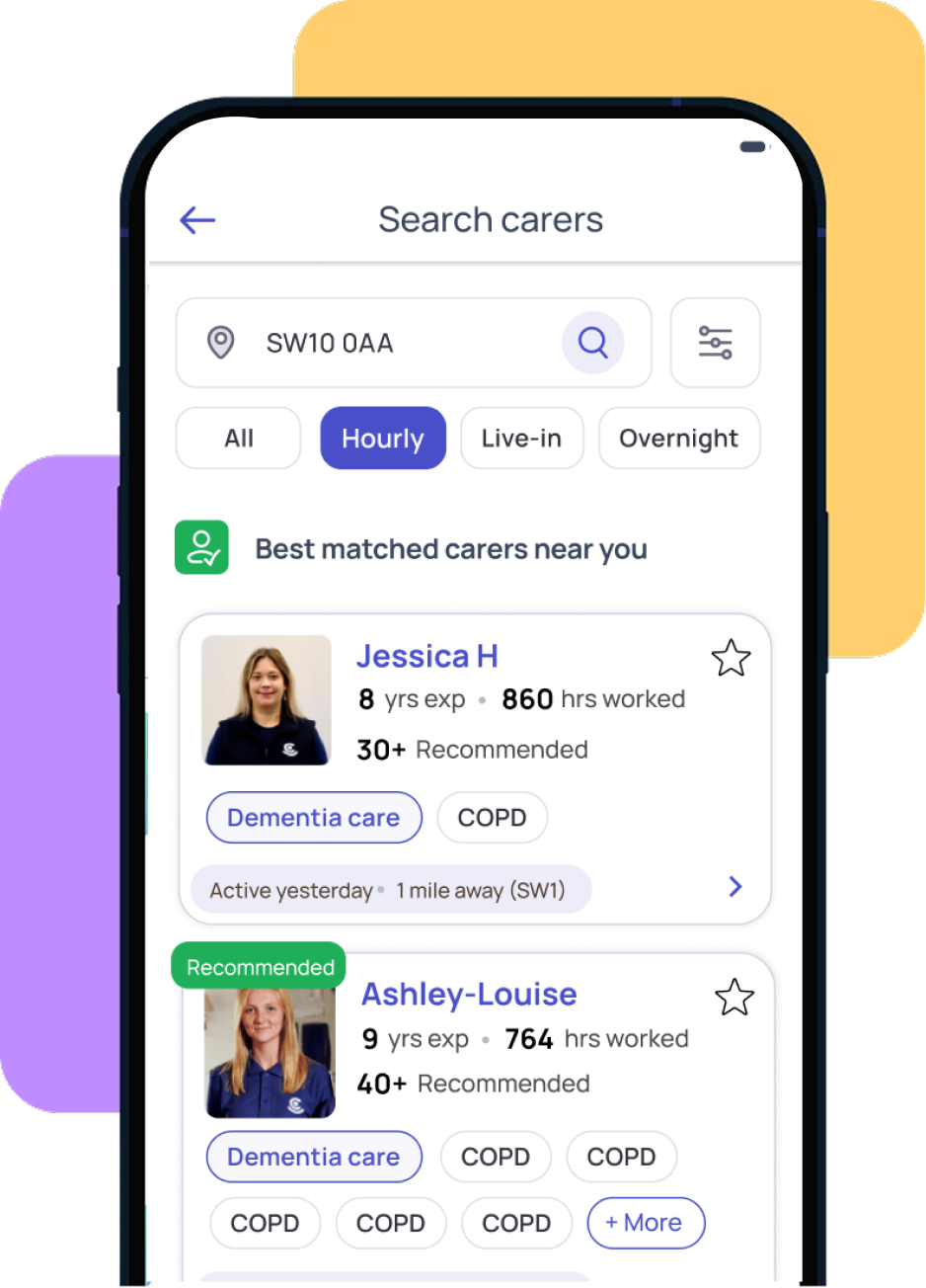
Across the UK, from the Scottish Highlands to Cornwall, families are asking questions like: How can we keep our loved ones safe while protecting the life they know? For many, the answer lies in Dementia care at home. Remaining in familiar surroundings can help maintain routine, comfort, and connection to everyday life. Curam helps families arrange live-in Dementia care at home, connecting them with experienced carers who provide personalised support while allowing loved ones to stay in the place that feels most like home. Families can browse local carer profiles, choose the person who feels right for them, send messages directly through the platform, and even meet carers safely through CuramMeet video calls in the Curam app before care begins.
Written by: Eve Leefe-Griffiths, Marketing Manager at Curam
Reviewed by: Curam Care Support Team
Last reviewed: July 2026