




 Vetted & approved carers
 DBS checked & insured

When a loved one begins experiencing memory loss or confusion, families often hear the terms Dementia and Alzheimer’s disease used interchangeably. While they are closely related, they are not the same condition. Understanding the difference can help families make informed decisions about the type of Dementia care or Alzheimer’s home care support their loved one may need.
Both conditions can affect memory, thinking, and the ability to manage everyday tasks but they can progress differently and require different approaches to care. Knowing what to expect can make it easier to plan support that helps your loved one remain safe, comfortable, and independent at home. If this sounds familiar, you’re far from alone. Around 982,000 people in the UK are currently living with Dementia, and that number is expected to rise to 1.4 million by 2040. Families across the country are searching for answers about the difference between Dementia vs Alzheimer’s, and what home care support for Dementia really looks like when someone wants to remain in the home they love.
What Is Dementia? Understanding the Condition
Dementia is not a single disease. Instead, it’s an umbrella term used to describe a group of conditions that affect memory, thinking, behaviour, and daily functioning. It occurs when brain cells become damaged, affecting how the brain communicates. Over time, this can make everyday tasks more difficult, from remembering recent conversations to managing routines like cooking, dressing, or paying bills. Common Dementia symptoms include:
- Short-term memory loss
- Confusion about the time or places
- Changes in personality or mood
- Difficulty communicating or finding the right words
- Problems concentrating or making decisions
For many families, recognising these early signs of dementia is the moment when they begin exploring dementia care at home to help loved ones remain safe and supported in familiar surroundings.
Types of Dementia: Understanding the Different Forms
There are several different types of Dementia, and identifying the specific condition can help families understand symptoms and plan the right Dementia care. Below are some of the most common types seen in the UK.
- Alzheimer’s disease
The most common form of Dementia, accounting for around 60–70% of cases. It is caused by changes in the brain often referred to as plaques and tangles, which damage brain cells. Symptoms usually begin with memory loss, but over time can affect communication, decision-making, and everyday functioning.
- Vascular Dementia
The second most common type of Dementia, often caused by reduced blood flow to the brain following strokes or small vessel disease. Symptoms may appear suddenly or progress in steps, with changes in concentration, planning, or mobility.
- Lewy body Dementia
This type is caused by abnormal protein deposits in the brain. People may experience visual hallucinations, changes in alertness, sleep disturbances, and movement symptoms similar to Parkinson’s disease.
- Frontotemporal Dementia (FTD)
A rarer form of Dementia that often affects people under the age of 65. It primarily impacts the frontal and temporal areas of the brain, which control personality, behaviour, and language.
- Mixed Dementia
Some people may have more than one type of Dementia at the same time, most commonly Alzheimer’s disease combined with vascular dementia.
Understanding the type of Dementia can help doctors recommend the most appropriate treatment and support, including the right approach to home care for Dementia patients.
Alzheimer’s Disease: The Most Common Cause of Dementia
While Dementia describes a group of conditions, Alzheimer’s disease is the most frequent underlying cause. It develops when abnormal proteins gradually damage brain cells, disrupting how the brain stores memories and processes information. In most people, the earliest changes affect recent memory and learning, which is why the first signs often include repeating questions, forgetting recent conversations, or struggling to recall names and appointments.
As Alzheimer’s disease progresses, symptoms tend to develop in stages:
- Early stage
People may experience mild memory problems, difficulty finding the right words, or challenges organising tasks.
- Middle stage
Daily activities become harder to manage. Confusion increases, people may lose track of time or familiar places, and emotional or behavioural changes can appear.
- Later stage
More intensive support is often required, including help with personal care, mobility, and eating.
Although there is currently no cure for Alzheimer’s disease, treatments and supportive care can help manage symptoms and improve quality of life.
Supporting Families Living With Dementia
When someone develops Dementia or Alzheimer’s disease, the impact extends beyond the person diagnosed. Families often become carers, navigating new responsibilities while coping with the emotional changes that come with the condition. Feelings of exhaustion, uncertainty, and worry are common as families try to balance care, work, and everyday life. Dementia care at home can help ease this pressure. Professional support allows loved ones to remain in familiar surroundings while giving families the reassurance that help is available when it’s needed.
What Dementia Care at Home Often Includes
In the UK, Dementia care at home can be flexible and tailored to the person receiving care. Support may range from a few hours a week to live-in care, depending on how needs change over time. Typical home care services may include:
- Help with personal care and daily routines
- Medication reminders and health support
- Cooking meals and supporting good nutrition
- Assistance with mobility and safe movement
- Companionship and emotional support
- Overnight care for reassurance and safety
- Full live-in dementia care where continuous support is needed
This personalised approach allows people living with dementia to remain in the comfort of home while receiving professional support.
Simple Ways to Make a Home Safer for Someone With Dementia
Creating a safe and comfortable space for someone living with Alzheimer’s or Dementia doesn’t always require major changes. Often, small adjustments around the home can make everyday life calmer and easier. Families supporting Dementia care at home often begin with simple steps such as:
- Removing loose rugs or trailing cables that could cause trips or falls
- Labelling cupboards or drawers so everyday items are easier to find
- Installing grab rails in bathrooms or hallways for extra stability
- Using large clocks or calendars to help with time and orientation
- Improving lighting so rooms and walkways are clearly visible
- Keeping familiar daily routines consistent
Small changes like these can help reduce confusion and anxiety, making home feel more safe and secure.
Why Planning Early Can Make a Real Difference
Recognising the early signs of Dementia, such as repeated stories, forgotten appointments, or increasing confusion can give families valuable time to plan ahead. Raising the topic of care early allows families to prepare gradually and make informed choices about future care. Families often use this time to begin preparing together, this might include:
- Discussing what future care and support might look like
- Putting practical arrangements in place, such as power of attorney
- Exploring options for Dementia care at home in the UK
- Making small adjustments to the home to improve safety and comfort
These early discussions can help everyone feel more confident about the road ahead, while ensuring decisions reflect the wishes of the person receiving care.
Knowing When It Might Be Time for Extra Support
Many families eventually find themselves asking the same question: “Is it time to bring in extra help?”. There’s rarely a single moment that makes the decision clear. Instead, it’s often a series of small signs that begin to add up. You might notice things like:
- Increasing falls or mobility issues
- A loved one becoming confused or disoriented more often
- Wandering outside or becoming lost in familiar places
- Wandering outside or becoming lost in familiar places
- Personal care becoming harder to manage
- Family carers feeling exhausted or overwhelmed
For many families, this is where dementia care at home can provide valuable support. Asking for help isn’t a sign of giving up, often it’s the most caring step you can take to ensure your loved one remains safe, comfortable, and supported.
Finding Moments of Joy Along the Way
A diagnosis of Dementia or Alzheimer’s disease doesn’t mean life loses its meaning or warmth. It might be listening to favourite music, spending time in the garden, taking a gentle walk, sharing stories from years gone by, or enjoying simple activities like painting or puzzles. With the right dementia care at home, these moments can still flourish. Support isn’t about taking over, it’s about helping someone continue enjoying the things that bring comfort, familiarity, and joy.
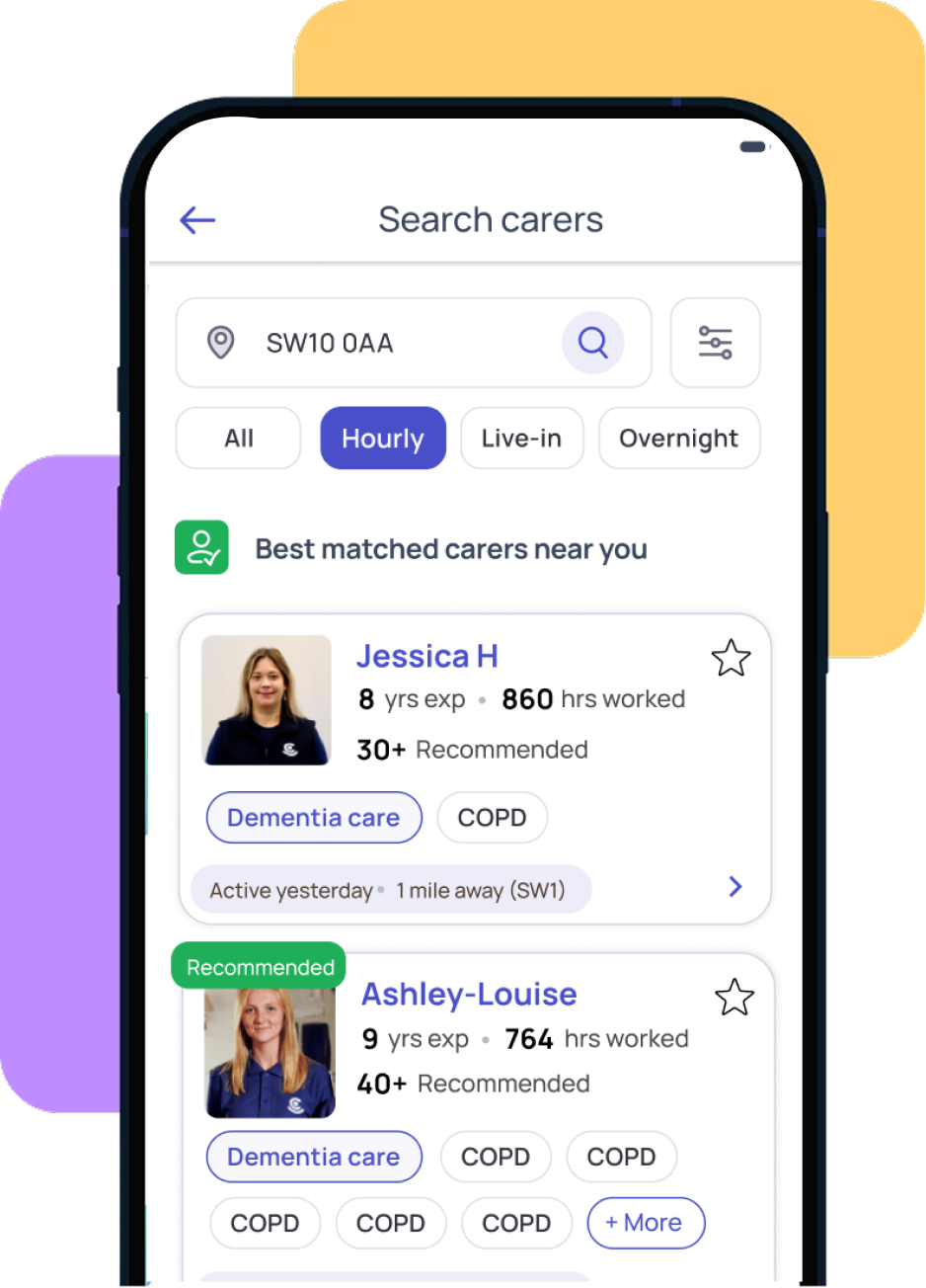
If you’re beginning to explore Dementia care at home, finding the right person to support your loved one can make a real difference. Curam connects families across the UK with experienced, vetted care professionals who provide personalised support at home. Whether you’re looking for companionship, overnight care, or live-in dementia care, the Curam community makes it easier to find carers who understand the challenges of Dementia care and can help your loved one remain safe and comfortable at home. Find carers near you below by entering your postcode and in seconds you can browse the profiles of experienced Curam Care Professionals in your area.
Written by: Eve Leefe-Griffiths, Marketing Manager at Curam
Reviewed by: Curam Care Support Team
Last reviewed: May 2026