




 Vetted & approved carers
 DBS checked & insured

A dementia diagnosis can change everyday life for both the person affected and the family around them. Simple routines such as preparing meals, remembering medication, or leaving the house safely can suddenly feel overwhelming. Many families step in to help at first, but providing consistent support can quickly become physically and emotionally demanding. For many families, arranging dementia care at home or live-in dementia support provides peace of mind that their loved ones are safe and supported by experienced care professionals.
At Curam, we’ve supported thousands of families across the UK searching for trusted dementia care at home. We understand how important it is to find someone who not only has the right care experience, but who truly understands the unique challenges of Dementia.
One of the most common questions families ask is, how do I choose a dementia carer I can trust? It’s rarely about simply finding an available carer. Families need someone who is compassionate, experienced, reliable, and able to bring calm, reassurance, and stability into everyday life.
Why Choosing the Right Dementia Carer Matters
Dementia changes how the brain works, affecting memory, judgement, communication, and sometimes personality. Everyday activities, like a trip to the shops, can suddenly become confusing or overwhelming. A loved one may forget familiar faces, repeat the same stories, or become frustrated when they struggle to understand what’s happening around them.
This is where experienced dementia carers play a vital role. More than simply helping with daily tasks, a professional carer provides reassurance, maintains familiar routines, and supports personal care with patience and dignity - helping your loved one feel safe and comfortable at home.
Why Trust Matters When Choosing Dementia Care
When someone is living with Dementia, they may not always be able to explain when they feel uncomfortable, confused, or distressed. Instead, they rely on those around them to notice the small signs and respond with patience and understanding. This is why experienced dementia carers are so important. Consistency, familiar routines, and a calm presence can help reduce anxiety and bring reassurance to everyday life.
For families arranging dementia care at home emotional wellbeing becomes just as important as physical safety. Knowing your loved one is supported by a compassionate carer brings peace of mind and allows families to spend meaningful time together rather than managing care alone.
Step 1: Start With a Clear Picture of What “Support” Means
Every family’s situation is different, and dementia doesn’t follow a set pattern. Before you choose a carer, it helps to step back and ask: what kind of support would make daily life safer and calmer right now?
Think about day-to-day needs, such as:
- Personal care (washing, dressing, toileting)
- Medication reminders to avoid missed doses
- Companionship to reduce isolation and anxiety
- Support with evening confusion (often called “sundowning”)
- Mobility support for safer movement in and outside the home
- Meal prep and gentle prompting with routines
The right match is much easier to find when you know what you’re looking for. Dementia affects everyone differently. In the earlier stages, someone may mainly need company and light-touch support. As dementia progresses, you may need overnight dementia care or even 24/7 live-in dementia care for safety and reassurance.
At Curam, we’ve matched families with companions for active, independent people, as well as experienced dementia carers for complex needs. Write your loved one’s needs down and share them during conversations with carers. Clarity now helps avoid mismatches later.
Pro tip: If your loved one can be involved, ask simple questions like: “What would help you feel comfortable?” or “Who would you like supporting you?” Preferences matter, even small ones, like choosing a carer who enjoys gardening or likes the same music.
Step 2: Post a Job and Connect With Dementia Carers
Once you understand your loved one’s needs, the next step is finding the right person to support them. One of the easiest ways to do this is by posting a care job on Curam. Creating a job listing allows you to clearly outline what support is needed, from dementia care at home, companionship, hourly care, or live-in dementia support. Experienced carers on the platform can then review your requirements and apply if they feel they’re the right match.
Job posts help carers understand the personality and preferences of the person they’ll be supporting. Sharing small details like favourite hobbies, routines, or music they enjoy can make it easier to find someone who truly connects with your loved one. Posting a job gives you control over the process, allowing you to speak with carers, review their profiles, and choose someone who feels like the right fit for your family.
Step 3: Search for Local Dementia Carers Using Your Postcode
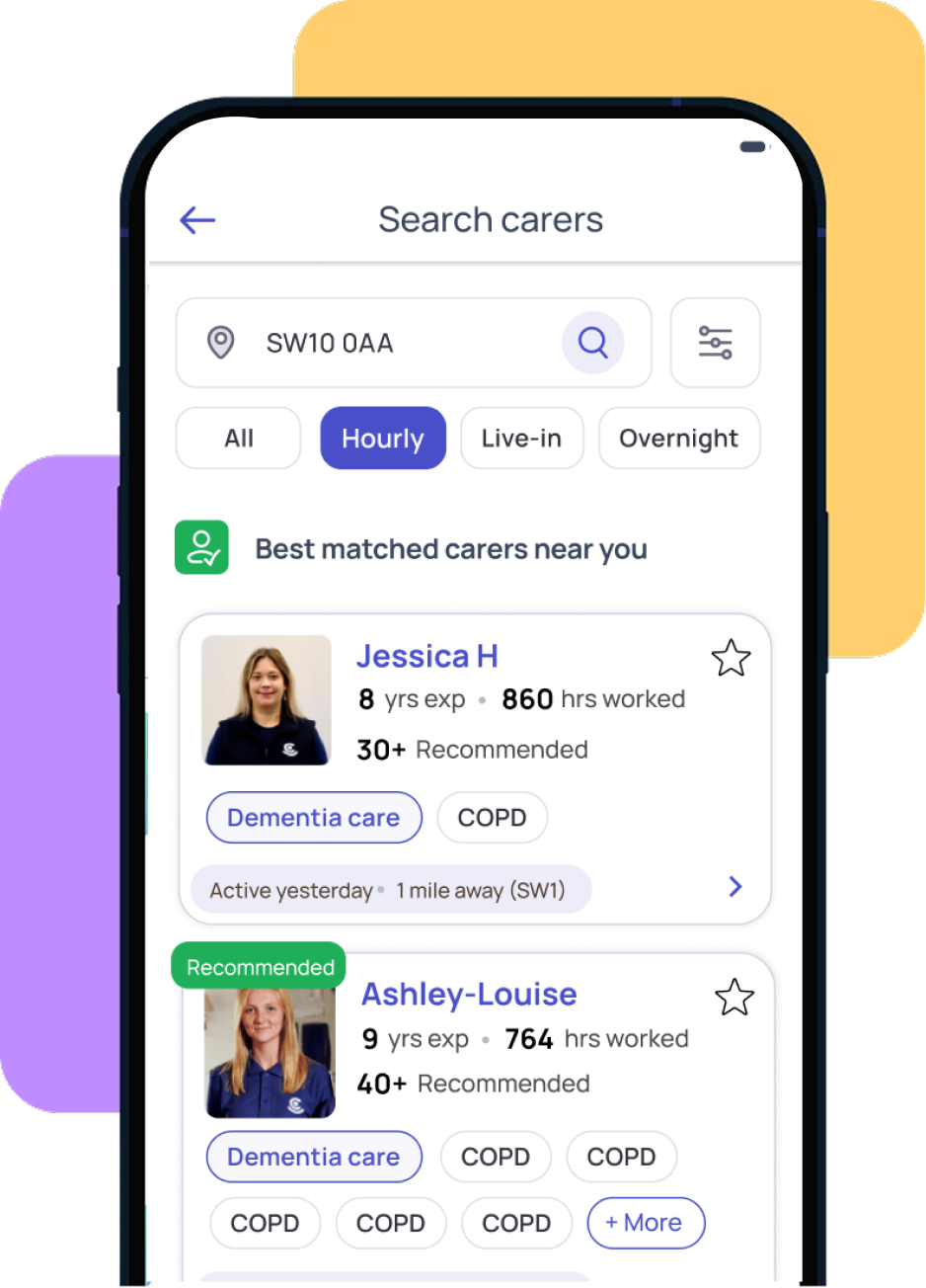
If you’d prefer to browse carers yourself, Curam makes it easy to search for dementia carers near you. You can explore profiles, learn about their dementia care experience, and see what type of support they offer, from companionship and personal care to live-in dementia care. Reviewing profiles helps you get a feel for each carer’s personality, experience, and approach to care, making it easier to identify people who may be a good match for your loved one.
Step 4: Ask the Right Questions
A conversation with a potential carer can reveal far more than a profile alone. It’s an opportunity to understand their experience, approach, and how they respond in real-life situations. Consider asking questions like:
- What experience do you have supporting someone living with dementia?
- How would you handle a situation where someone refuses care?
- How do you encourage independence while still keeping someone safe?
- Are you flexible with overnight support or unexpected changes?
Step 5: Arrange a Trial Period
Even when a carer looks perfect on paper, it’s important to see how things work in practice. Many families find that arranging a short paid trial period, often one to two weeks, helps confirm whether the match feels right. During this time, observe how your loved one responds. Trials allow both sides to build confidence and ensure the arrangement works well before committing long-term.
Step 6: Be Clear About Costs
Before arranging care, it’s important to understand the costs involved. Dementia care at home costs range depending on the level of support required. Live-in dementia care can start from around £1,000 per week and may increase depending on location, hours, and complexity of care needs. Factors that influence costs may include:
- Number of hours required
- Level of dementia support needed
- Specialist skills or experience
- Location (for example, London rates may be higher)
Being clear about costs early helps families plan confidently while focusing on finding the right carer for their loved one.
The Benefits of Dementia Care at Home
For many families, dementia care at home provides comfort and stability. Familiar surroundings, a person’s own bed, photographs, and daily routines can reduce anxiety and confusion. With one-to-one support from experienced dementia carers, care is tailored to the individual. This personalised approach helps people remain safe, supported, and independent for longer.
Building Long-Term Trust
The best dementia care at home is built on consistency and communication. Regular check-ins and open feedback help ensure care continues to meet changing needs. Strong relationships between families and carers create stability, reassurance, and long-term trust.
Written by: Eve Leefe-Griffiths, Marketing Manager at Curam
Reviewed by: Curam Care Support Team
Last reviewed: June 2026