




 Vetted & approved carers
 DBS checked & insured
Finding the right care for an adult with disabilities can feel like a big decision, especially when you want support that protects their independence, routine and dignity. Whether you're here looking for support for your adult child, a partner arranging extra help at home, or an individual looking for more independence, the right carer can make daily life feel safer, calmer and more manageable.
Good care should never feel like it is taking over. It should be shaped around the person’s routine, preferences, dignity and independence. Whether that means support with personal care, mobility, companionship, or something more specialist.
Curam connects families and individuals across the UK with experienced, vetted carers who provide flexible care at home. Whether you’re looking for a private carer for a couple of hours for a disabled adult, or disability care at home in the UK, Curam gives you a way to browse carers, compare experience, read reviews, and message support directly through our app 24/7.
When Might an Adult with Disabilities Need Care at Home?
Support that works around you, not the other way around.
Adults with disabilities may need different levels of support depending on their routine, independence, health, confidence and personal preferences. Some people may only need a few hours of help each week, while others may need overnight care, live-in care, or more specialist support at home.
Families often start looking for a carer for an adult with disabilities when support is needed with physical disabilities, neurodivergence, autism, learning disabilities, mobility, personal care, meals, medication reminders or companionship. Care may also be needed after a hospital stay, during a change in health, or when a family carer needs extra help.
Disability care at home in the UK helps adults remain in familiar surroundings while receiving support that respects their independence. For many families, the aim is not to change the person’s life completely, but to make everyday routines safer, easier and more comfortable.
Home care for disabled adults in the UK can be flexible. It may involve practical help with daily tasks, emotional reassurance, support getting out into the community, or more regular care for complex needs. The right arrangement depends on the person, their routine and what helps them live as independently as possible.
What Support Can a Disability Carer Provide at Home?
Practical help, reassurance, and independence at home.
A disability carer should provide support that fits the person’s needs, routine and independence. This may include personal care for disabled adults, such as help with washing, dressing, toileting, grooming or getting ready for the day. It may also include meal preparation, medication reminders, mobility support at home, light household tasks, companionship and reassurance.
Some carers also help with transport, appointments, shopping, social activities, or access to the community. For adults who want to maintain independence, this kind of support can make it easier to keep doing the things that matter to them safely.
Care can be arranged in different ways depending on the level of support needed. Hourly care may suit someone who needs help at set times of day, while overnight care can provide reassurance or assistance during the night. Live-in care for disabled adults may be suitable when more regular support is needed at home, and respite care can give family carers time to rest while their loved one continues receiving support.
Good care supports independence rather than removing it. The right carer understands when to step in, when to encourage, and when to give someone the space to do things for themselves.
How to Find a Carer for an Adult with Disabilities
A simple way to compare care experience, availability and fit.
If you’re trying to find a disability carer, it helps to start with the person’s daily routine and the type of support they need most. Think about whether the care needed is for personal care, mobility, meals, medication reminders, companionship, appointment support, overnight care or more specialist needs.
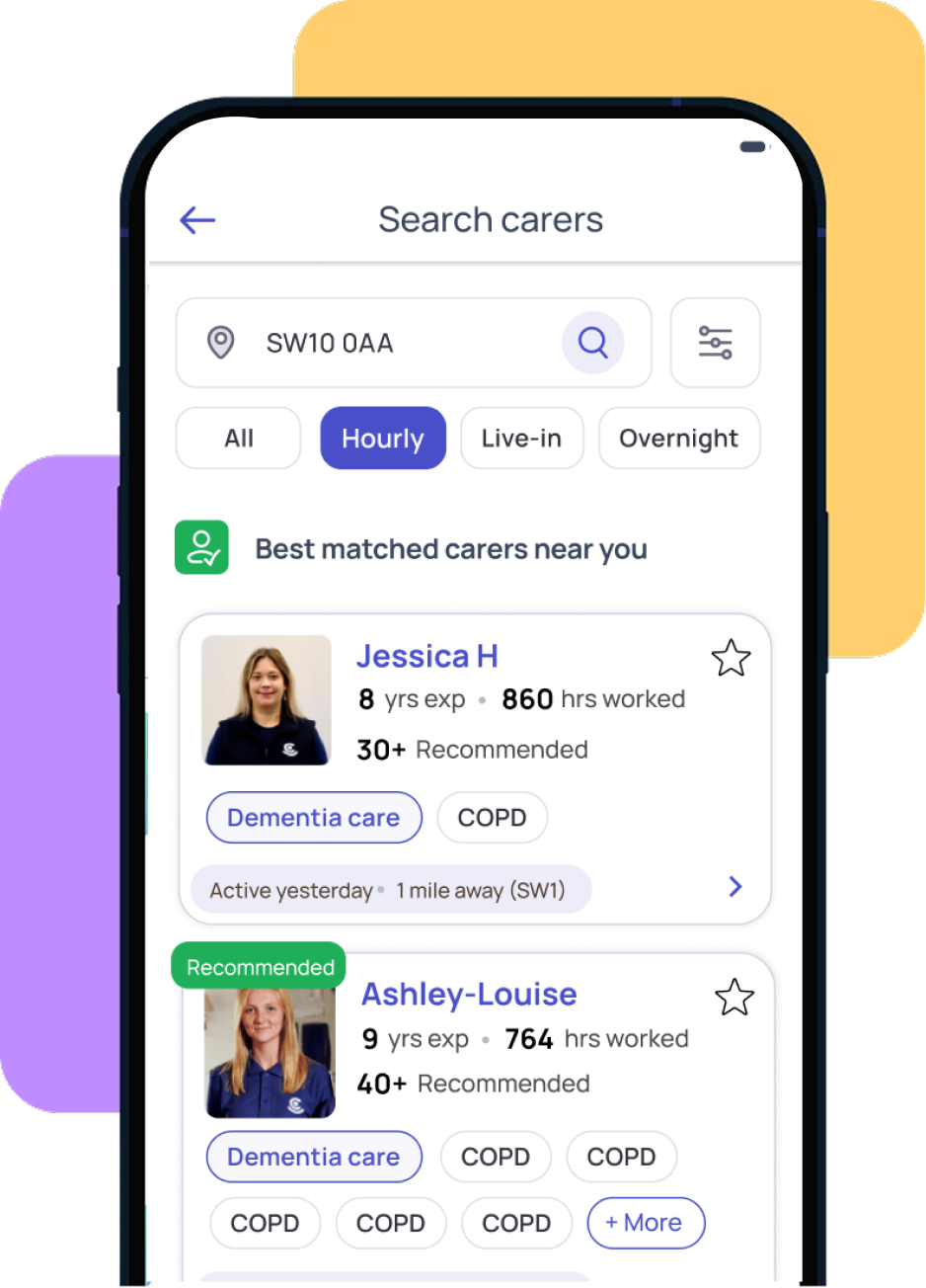
With Curam, families can begin by entering the postcode where care is needed and browse local carers in the area. You can use filters for care needs, availability, languages and specialist skills, then review carer profiles, experience, hourly rates and recommendations before making contact.
Families looking for a private carer for a disabled adult can message carers directly through the Curam app or website. You can ask questions, explain what care is needed and understand whether the carer feels like the right match. You can also post a care job, allowing carers to respond if they have the right experience and availability.
Where possible, arranging an introductory call through CuramMeet before booking can help families feel more confident. CuramMeet is Curam’s in-app audio and video call feature, allowing families, the person receiving care and the carer to speak before care begins. It gives everyone a chance to ask questions, discuss routines, talk through care needs and get a better feel for whether the carer is the right fit.
Choosing a Carer Who Understands Neurodivergence and Physical Disabilities
Experience matters, especially when care needs are specific.
Some adults need a carer with specific experience in neurodivergence, autism, ADHD, learning disabilities, physical disabilities or sensory impairments. This kind of experience can be important because care is not just about completing daily tasks. It’s also about communication, patience, routine, emotional regulation and understanding how someone prefers to be supported.
Neurodivergent adult care at home should be flexible, respectful and centred around the person’s independence. A good carer will take time to understand how the person communicates, what helps them feel calm, what can cause distress and how to support them without making them feel rushed or overwhelmed.
For adults with physical disabilities, the right carer may need experience with mobility support, personal care, equipment, transfers, appointments or daily routines. Care for adults with physical disabilities should be safe and practical, but also centred around dignity, confidence and independence.
Curam has carers with experience supporting a wide range of care needs, including over 3,330 Care Professionals with autism care experience and over 2,250 Care Professionals with Down’s syndrome care experience. Families can review carer profiles, specialist skills and client recommendations before deciding who to contact, helping them find support for adults with learning disabilities, neurodivergence, autism or physical disability needs.
Real Family Review: Supporting Independence at Home
A real example of care that protects independence.
Real client feedback can help families understand what good care looks like in everyday life. It shows how a carer communicates, responds to challenges, and supports someone as a person, not just as a list of care needs.
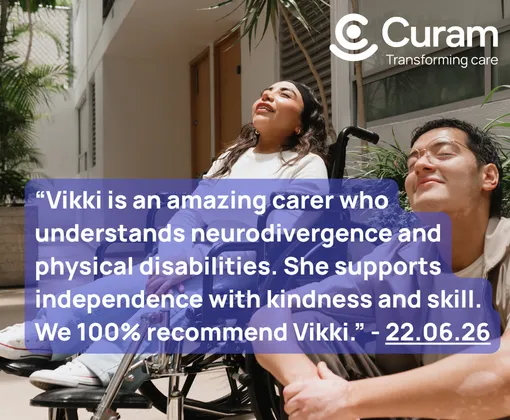
For Jesse’s mum, the right carer was someone who understood both neurodivergence and physical disability, while still encouraging independence. Vikki has experience supporting adults with physical disabilities, autism spectrum disorder, learning disabilities, arthritis, bipolar disorder, depression, visual and hearing impairments, and palliative care. One family shared this recommendation about the support she provided:
“Vikki is an amazing carer, very understanding of neurodivergence and excellent with physical disabilities and general care. Knows exactly how to look after my adult child to support them but helps them remain independent as much as possible. She tackles challenging situations with gentle humour and knows how to get the best out of the people she cares for. Her skills, knowledge and experience are second to none and I, as Jesse’s mum, wish I was as good at Vikki! We 100% recommend Vikki.” — 22.06.26
This review shows how trusted disability care at home can make such a difference. Vikki’s support was not just practical; she understood neurodivergence, physical disabilities, independence, and challenging situations, while helping Jesse feel supported and respected.
How to Know If a Carer Is the Right Fit
The right match should feel safe, respectful, and personal.
Finding the right carer is about more than availability. Suitability depends on experience, personality, communication style, trust, specialist skills and how comfortable the person feels with the carer.
When comparing carers, look at their previous care experience, recommendations, rates, availability and whether they mention experience with similar needs. For example, if you are arranging care for someone with autism, a learning disability, a physical disability or neurodivergence, it can be helpful to choose a carer who already understands those needs.
It is also worth thinking about personality. Does the carer sound patient and respectful? Do they communicate clearly? Do they understand the importance of independence and routine? Do they seem comfortable supporting the person in the way they prefer? These things matter just as much as a carer’s qualifications or years of experience.
Curam carers are vetted, with checks such as DBS/PVG, identity verification and references where applicable, so for families looking for vetted carers in the UK, this gives an extra layer of reassurance when arranging adult disability care at home.
Messaging carers directly and arranging an introductory call in the Curam app before booking can help families feel more confident. It gives everyone a chance to discuss expectations, ask questions and decide whether the carer feels like the right person for the role.
What Questions Should You Ask Before Hiring a Disability Carer?
Clear questions help you make a confident choice.
Before hiring a disability carer, it can help to ask practical questions about their experience, approach and availability. This is especially important if the person has specific needs, such as neurodivergence, autism, learning disabilities, physical disabilities, mobility support or personal care.
You may want to ask whether they have supported adults with similar needs before, whether they have experience with neurodivergence, autism or learning disabilities, and whether they can support with personal care, mobility or medication reminders. It is also helpful to ask how they encourage independence, how they approach routines, and whether they are available for hourly, overnight, respite or live-in care.
It is also worth sharing as much detail as possible about the person’s routine, preferences, communication style, and any situations they may find challenging. The more a carer understands before care begins, the easier it is to build trust from the start.
What Types of Disability Care Can Be Arranged?
Flexible disability care that can change as needs change.
Disability care at home can be arranged in different ways depending on the person’s needs. Some adults may need a few hours of support each week, while others may need daily care, overnight support, live-in care or temporary respite support for family carers.
Hourly care can be useful for support with daily routines, meals, personal care, medication reminders, or for appointments. Companionship care can help with conversation, social confidence, hobbies, community access and emotional wellbeing. Personal care at home may include support with washing, dressing, toileting, grooming and getting ready for the day or evening.
Overnight care can provide reassurance or practical help during the night, while live-in care for disabled adults can offer more regular support at home.
Respite care for families can also be arranged when a family carer needs a break, is away, or needs temporary support. This can be especially helpful when care needs are ongoing, and families need time to rest while knowing their loved one is supported.
Support can also change over time. Someone may start with a few hours of care a week and later need more regular help, or they may only need short-term support after an illness, hospital stay or change in routine. Curam helps families explore flexible care options that can adapt as needs change.
How Curam Helps Families Find Disability Care at Home
Choice, transparency and direct contact with carers.
Curam gives families more control when arranging disability care at home in the UK. Rather than being assigned a carer without much input, families can compare experience, read reviews, message carers directly in our app and choose someone who feels right for their loved one.
Curam has over 10,000 vetted carers across the UK, with an average of 10 years’ care experience and more than 6.5 million care hours already delivered. Carers on the platform are vetted, with checks such as DBS/PVG, identity verification and references where applicable.
For adults with disabilities, this choice can make a real difference. Families can look for carers with relevant experience in autism, learning disabilities and physical disability support. They can also ask questions about routines, communication, independence, mobility needs and any situations the person may find challenging.
Curam carers support a wide range of care needs, including autism care, learning disability support and physical disability support. Care can be arranged around the person’s routine, preferences, and level of independence.
Families can also post a care job outlining the support needed, including care needs, location, timings and any specialist experience required. Suitable Care Professionals can then apply directly to the posted job, giving families another way to connect with carers who may be a good fit.
For families trying to find a disability carer in the UK, this direct and transparent process can feel more manageable, especially when the person receiving care has specific or complex needs.
Start Looking for a Disability Carer Today
Begin with the postcode, then compare carers and message directly.
Looking for a carer for an adult with disabilities can feel emotional, especially when you want to find someone who truly understands your loved one. The right carer can support independence, protect dignity and help daily life feel more manageable at home.
With Curam, you can start by entering the postcode where care is needed, browsing carers near you and comparing experience, reviews, availability and rates. You can message suitable carers directly in our app or post a care job outlining the support required, and carers can apply directly to your posted job.
Whether you need help with personal care, mobility support, neurodivergent adult care at home, or home care for disabled adults in the UK, Curam can help you find the right carer for your loved ones.
Looking for a carer for an adult with disabilities? Start browsing vetted carers near you with Curam, compare experience and reviews, or post a care job so suitable carers can contact you directly.
Written by: Max Huianu, Marketing Intern at Curam
Edited and reviewed by: Eve Leefe-Griffiths, Marketing Manager at Curam and/or Curam Care Support Team
Last reviewed: June 2026
Frequently Asked Questions
How do I find a carer for an adult with disabilities?
You can find a carer for an adult with disabilities by searching by postcode, browsing carer profiles and comparing experience, reviews, availability and rates. With Curam, families can message carers directly through the app or website, or post a care job so suitable carers can respond.
It is helpful to look for carers with relevant experience in disability care, mobility support, personal care, neurodivergence, autism or learning disabilities, depending on the person’s needs.
Can I find a carer for my adult child?
Yes, parents can search for carers for an adult son or daughter through Curam. Care can be arranged around the person’s independence, routine, communication style, preferences, and support needs.
When contacting carers, it can help to include details about your adult child’s daily routine, care needs, personality and what kind of support helps them feel comfortable and confident.
What support can a disability carer provide at home?
A disability carer can support with personal care, meals, medication reminders, mobility, companionship, appointments, household tasks and community activities. Some carers may also provide overnight care or live-in care where more regular support is needed. Support can vary from carer to carer and will need to be agreed in the service agreement.
The type of support will depend on the person’s needs and preferences. Good care should help someone stay as independent, comfortable and confident as possible.
Can I find a carer with experience in neurodivergence?
Yes, some carers on Curam have experience supporting neurodivergent adults, including adults with autism, ADHD or learning disabilities. Curam has over 3,330 Care Professionals with autism care experience and over 2,250 Care Professionals with Down’s syndrome care experience.
Families can use filters, read carer profiles and speak to carers directly about their experience before booking. An introductory call through CuramMeet can also help you understand whether the carer’s approach feels right.
Is live-in care available for adults with disabilities?
Yes, live-in care may be suitable for adults with disabilities who need more regular support at home. A live-in carer can help with daily routines, personal care, meals, companionship, mobility and reassurance. Availability will depend on your location, the type of support needed and carer availability. Families can browse live-in carers through Curam and message suitable carers directly through our app.
How do I know if a carer is suitable?
A suitable carer should have the right experience, communication style, availability and approach for the person receiving care. It is helpful to review their profile, recommendations, specialist skills, rates and previous care experience. Where possible, arrange an audio/video call through our feature, CuramMeet, to e-meet before booking. This gives you, the person receiving care, and the carer a chance to ask questions and decide whether the match feels right.